
Experiences of Black male prisoners
Social determinants of justice
The interviews highlighted how social determinants of justice disproportionately funnel Black youth into the criminal justice system from a young age. Most voiced that their first encounters with the Justice system were due to racism. Black prisoners cited the following contributors to criminality; poverty, lack of safety, community violence, lack of mental health and grief support, lack of prevention programs, and/or lack of motivation for the future. Many spoke about mental health and drug use in the community. Prisoners emphasized the need for programming tailored to their talents. They spoke to the importance of front line workers with lived experience and understanding of the community. The trauma of growing up in impoverished, high-crime neighborhoods weighed heavily with the increase of gun and gang violence, sudden loss, and grief. The lack of safety and survival was an echoed concern for the younger Black prisoner population. Many did not have a positive role model who they could identify with.
“I don’t know anyone who came from where I came from and changed their life”
Once involved in the system, the deck was stacked against them. Participants faced systemic racism, inequality and discrimination, barriers due to criminal records, and lack of community support systems or affordable housing options when released.
Black prisoners voiced that young offender detention centers set them up for failure as they did not prepare them for successful reintegration or adult jail. Once experiencing the adult system everything changed and they began to face undeniable, upfront racism and inequality.
“Provincial jail is like hell and we take a plea to get out of hell”
In terms of solutions, the Black prisoners made several recommendations as depicted in Table 1.
Table 1: Recommendation on determinants of social justice
| Recommendations | Proportion of inmates recommending it | Proportion of inmates not recommending it | N/A |
|---|---|---|---|
| Addressing racial disparities in education. | 84% | 2% | 14% |
| Improving access to economic opportunities. | 86% | 0% | 14% |
| Enhancing access to mental health services. | 84% | 1% | 15% |
| Strengthening community-based support and social services. | 85% | 0% | 14% |
| Addressing systemic racism in child welfare services. | 84% | 1% | 15% |
| Addressing the needs of Black immigrants and newcomers. | 84% | 2% | 14% |
| Increasing housing stability for Black people in Canada. | 85% | 2% | 13% |
| Developing and providing culturally relevant rehabilitation programming that address that the issues that Black incarcerated people face | 84% | 2% | 14% |
The following recommendations were highlighted with recommendations/suggestions to put into action:
- Addressing racial disparities in education.
- Enhancing access to mental health services.
- Strengthening community-based support and social services.
- Developing and providing culturally relevant rehabilitation programming that address that the issues that Black incarcerated people face
Addressing racial disparities in education:
206 out of 245 prisoners concurred that tackling racial disparities in education would contribute to addressing the overrepresentation of Black individuals in the criminal justice system.
Recommendations are:
- Increase the recruitment of Black teachers and educational staff.
- Conduct cultural understanding and anti-black racism training for teachers and educational staff, encompassing frontline workers, management, principals, superintendents, and trustees.
- Allocate supplementary resources to school boards for students with ADHD, an IEP, or learning disabilities, such as hiring teachers’ assistants to deliver more personalized and daily one-on-one or small group support, as opposed to offering limited assistance outside the classroom a few days a week or transferring them to another program or school for children with learning disabilities. Given the stretched staff, additional experienced personnel should be appointed.
- Introduce additional learning opportunities that incorporate non-traditional methods, such as movement activities, theater, music, and sports.
- Provide extra support and liaisons to assist parents in advocating on behalf of their Black children.
- Incorporate a curriculum that educates about the Black experience, aligning it with the Indigenous experience and the recently implemented Holocaust curriculum.
Enhancing access to mental health services:
Out of 245 prisoners, 205 concurred that improving access to mental health supports would contribute to addressing the overrepresentation of Black individuals in the Criminal Justice System. The absence of culturally sensitive supports has left numerous Black prisoners, who have previously encountered community violence, grappling with unresolved trauma and grief. The Penal system often leads to their retraumatization. Prolonged 23-hour lockdowns in maximum-security prisons and the excessive lockdowns experienced by prisoners during the COVID-19 pandemic have significantly impacted their mental health, with observable effects persisting to this day.
Inmate participants vocalized their lack of and desire for mental health, grief and trauma supports.
“We need help! We need mental health counsellors, but they need to be from outside organizations as well as the institution because some of us will never trust the institutions”
Community participants also spoke to the lack of engaging mental health and grief supports in community.
Recommendations are:
- Employ mental health and grief therapists from the Black community.
- Increase the recruitment of grief support professionals with lived experience.
- Allocate resources to assist community organizations in delivering culturally sensitive mental health, grief, and trauma support services to Black individuals in the community.
- Foster a commitment from Correctional Service Canada (CSC) and the Solicitor General (SOLGEN) to collaborate with community organizations in delivering grief and mental health support, as well as providing programming and counseling within correctional facilities.
Strengthening community-based support and social services:
209 out of 245 prisoners concurred that strengthening community-based support and social services will help to address the overrepresentation of Black people in the criminal Justice System.
Supporting experienced grassroots organizations is the key to strengthening the community. Many organizations who receive funding are far removed and do not understand the issues that Black people on the ground face. Experienced grassroots organizations have in depth understanding but face barriers due to lack of funding, struggling in wearing all hats. There has been a strategy in the social sector to fund partnerships with anchor agencies and grassroots organizations. Unfortunately, this partnership usually becomes a power struggle and strains the grassroots organization while benefitting the larger, anchor, agency. Many grassroots in this field are used and abused. Due to these barriers the grassroots impact is limited. Funding flows to the anchor agencies who are many times not able to successfully address the issues on the ground.
Recommendations are:
- We propose a shift from funding partnerships between anchor and grassroots organizations. Instead, allocate substantial funding–rather than fragmented financial support–to established, experienced, Black-led grassroots organizations that cater to the Black community.
- We recommend endorsing collaborations with anchor agencies through trustee relationships, avoiding partnerships that involve monitored mentorship obligations.
- Allocate consistent and foundational funding to well-established grassroots community organizations, Black led, equipped with a comprehensive understanding of the needs of the Black community. Funding accessibility should extend to both prevention and intervention supports.
- Facilitate mentorship opportunities for emerging grassroots organizations by leveraging the expertise of existing, experienced grassroots entities.
- Enhance accessibility to local community centers, fostering community engagement.
- Prepare the community by providing targeted training to assist service providers in effectively supporting the reintegration of Black individuals into the community.
- Support a diverse array of prevention and intervention initiatives.
“There is nothing for Black offenders at all in any of these prisons throughout Ontario.”(Collins Bay)
“Programs are that come in are held back until last minute. Inmates do not get info about them coming in” (Collins bay)
Developing and providing culturally relevant rehabilitation programming that address issues that Black incarcerated people:
245 inmates agreed that there is a lack of culturally relevant programming for Black inmates. 207 of 245 Inmates agreed that developing and providing culturally relevant rehabilitation would help to address the overrepresentation of Black people in the criminal Justice System.
“We need programs that understand the black culture.”
Although the Commissioner’s Directive (767 Ethnocultural Offenders: Services and Interventions (please see below) states that culturally sensitive programming is a policy that Institutions are required to follow the Black inmates do not have any culturally relevant programming that addresses their various needs. Nor has the correctional staff received culturally appropriate training to assist them in understanding the Black inmate population.
- The Institutional Head will:
- ensure services and interventions are in line with paragraph 4(g) of the CCRA, specifically with respect to ethnic, cultural, religious, and linguistic differences, and are responsive to the needs of visible minorities and other groups, as they relate to the reintegration of ethnocultural offenders
- foster an environment where ethnocultural activities, services and interventions can take place
- allow offenders to form ethnocultural associations or committees that will meet their cultural needs and interests
- ensure that the specific needs and cultural interests of ethnocultural offenders are considered in the development of Correctional Plans
- ensure that staff working with ethnocultural offenders receive appropriate cultural competency training and have an understanding of their role in the provision of ethnocultural services and interventions to offenders
“We need people to run programs who understand us. Race but also coming from lived experience” (Warkworth)
Prisoners are required to attend Correctional Service Canada (CSC) mandatory programming to be considered for parole however here is a lack of culturally relevant mandatory programs geared to the Black prison population. The current programs are not in tune with Black prisoners needs. They have countlessly declared that they do not relate to the material or facilitators in these programs. Additionally, there is also a lack of culturally sensitive, community based, programming and supports for the Black prisoners. Black led community organizations and groups experience overwhelming barriers to support the Black prison population. The few culturally reflective volunteer supports are one offs and are not consistent programming.
“Part of our correctional plan we are must attend programs. Parole depends on this however the programs that are recognized are CSC are geared to the White population.“
“Jewish inmates have their programming, Indigenous have their programming but Black inmates have nothing.” (Beavercreek)
In the past, Correctional Service Canada (CSC) has only contracted one Black community organization to provide supports to the Black inmates. these programs are considered volunteer based for the inmates as they are not mandated or recognized for parole. In 2010-2015 a Black led service provider received the contract from Correctional Service Canada (CSC) to provide Social rehabilitation services for Black offenders. In 2015-2016 a different community organization received a Correctional Service Canada (CSC) contract to provide pre-release supports to the Black inmates. During this time Collins Bay did not have access to this program. From 2017–2023 no one else received a contract specifically for the Black inmates. In 2023 an organization received a contract to provide an Entrepreneurship program in Collins Bay. Everyone else, including Think 2wice, who has provided supports for the Black prisoners since 2009 has been a non-contracted (non-paid) volunteer support and faced many barriers. These barriers again impact the Black prison population.
“The prison don’t like letting in black groups and if and when they do it its super watched and rushed” (Collins Bay)
“CSC recognizes culturally sensitive programs should be a part of your correctional plan but don’t have any available” (Warkworth)
Black prisoners have expressed concerns regarding the absence of gang exit programs designed to address and eliminate their Security Threat Group (STG) and gang affiliation labels. Upon entering custody, the interventions used to manage gangs focus on assessing and segregating rival neighborhoods or gangs. Despite the rehabilitative purpose of incarceration, Black individuals lack the necessary support systems to do so. With the lack of in gun/gang interventions and programming individuals are released from custody with the same negative and gang-focused mindsets they had upon entering. This, in turn, contributes to gang violence and rivalries during community reintegration.
Many Black prisoners also spoke about being mislabeled based on the neighborhood they come from. Approximately one-half of all prison gang members were believed to be unaffiliated with a gang when they were admitted to prison (Correctional Service Canada, 2009). With no supports in place to remove the label, Black prisoners are negatively impacted throughout their incarceration and reintegration.
“We need more resources! Collins bay needs help!”
Recommendations are:
- Develop an Afrocentric Corrections Continuum of Care Model, mirroring the Indigenous Corrections Continuum of Care model, encompassing healing, programming, and liaisons for the Black prisoner population. If legislative adjustments are necessary, we recommend involving all stakeholders and initiating the process.
- Emulate the Ontario Atlantic Region’s Black Affairs department to offer resources and support tailored to Black prisoners
- Implement a diverse range of culturally sensitive programs, supports, and initiatives catering to the Black population across various domains: mental health, grief, loss, trauma, gun/gang exit, pre-release, skills/trades, parenting (father/mother), Black History/identity, education/tutoring, economic, navigating the system, mentorship/positive leadership, spiritual, arts-based, and life skills.
- Ensure a commitment from Correctional Service Canada (CSC) and SOLGEN to develop and foster diverse community partnerships to support the Black prisoner population.
- Establish community-led, culturally sensitive programming specifically for incarcerated individuals facing gun or gang-related charges or those Security Threat Group (STG) labeled, focusing on young adults in the transition ages of 18-24.
- Mandate Correctional Service Canada (CSC) or a governmental body to enforce institutions’ adherence to the Commissioners Directives, holding them accountable for implementation.
Policing
Most prisoner participants did not address the Policing recommendations. Their time was most focused on the Corrections section where they felt the most racism and inequality was faced. For those who answered, Prisoners felt profiled and were automatically assumed criminal or dangerous due to their skin color and background. Some reported physical brutality and verbal degradation at the hands of TAVIS. False charges were also mentioned, with several voicing police fabricated evidence or charges when unable to find actual wrongdoing. The overall sentiment was that the system refused to see their humanity.
Stakeholders suggestions included integrating mental health crisis teams to deescalate situations and reallocating police funding into community development programs. Recording all police interactions and associated demographic data could allow racial profiling behaviors to be identified. External inspections and disciplinary actions for offenders were also proposed. Finally, hiring more Black officers and supporting community legal organizations to educate on rights could help balance power dynamics.
Implementing these recommendations would help address the deep racial biases that characterize many Black individuals’ experiences with police. By treating all people equally with dignity and respect, the system can begin rebuilding trust and legitimacy within communities it has long subjugated.
Participants made several recommendations about policing which are captured in Table 2. These recommendations were made by 51 inmates incarcerated in Collins Bay institution.
Table 2: Recommendations on policing
| Recommendations | Proportion of inmates recommending it | N/A |
|---|---|---|
| Increasing diversity and cultural competency in police forces. |
57% | 43% |
| Integrating anti-racism and cultural competency training into the police curriculum. | 53% | 47% |
| Establishing neighborhood policing teams that build relationships with residents and local organizations. | 45% | 55% |
| Implementing clear standards and consequences for racist behavior by police officers. | 57% | 43% |
| Developing and expanding crisis intervention teams that include mental health professionals to respond to mental health-related calls. | 41% | 59% |
| Reallocating police funding to invest in community-based violence prevention programs, such as youth mentoring and restorative justice initiatives. | 57% | 43% |
| Consequences for racial profiling amongst police | 43% | 57% |
“I believe I grew up in the time of the most brutal police tactics. When TAV gang unit and carding was legal, both rightfully outlawed today. As an adolescent before I could process my through and emotions through critical thinking skills. The police were just another gang uttering threats and committing assaults, whether or not you were arrested through the guise of carding Racial profiling, carding, policing with unlawful tactics”
(Inmate in COLLINS BAY)
“In these moments I felt violated”
Collins Bay
“They make false cases to make a case and arrest innocent Black people to use as witnesses (false)”
Inmate in Collins Bay
The following recommendations were highlighted with suggestions to put into action:
- Integrating anti-racism and cultural competency training into the police curriculum
- Implementing clear standards and consequences for racist behavior by police officers
- Increasing diversity and cultural competency in police forces.
Integrating anti-racism and cultural competency training into the police curriculum
27 out of 51 prisoners believed that this recommendation will help to reduce negative interactions with Black people and police. 24 did not answer or participate in this question.
Recommendations are:
- Instilling mandatory anti-racism and bias training annually for all police officers, with testing and audits to ensure compliance. These would address implicit biases and include perspectives from Black communities.
- Training should include understanding intergenerational trauma in the Black community as well as the impacts of grief and loss through sudden and traumatic death such as gun violence.
- Evaluate the impact of the current anti-Black racism and other related types of training offered to police, in reducing the incidence of anti-Black racism.
Implementing clear standards and consequences for racist behavior by police officers:
29 out of 51 inmates participated in addressing the recommendations. 22 inmates did not answer or participate in this question for a variety of reasons.
Recommendations are:
- Body cameras to be worn and footage required for all officers to document interactions and encounters. The footage could be reviewed by oversight committees with appropriate redactions to protect privacy.
- Establishment of an anonymous reporting system for discrimination complaints could allow individuals to safely report issues. Clear accountability policies needed for offending officers.
- Creating citizen oversight committees with representation from Black communities to review policing practices and complaints in each municipality. These would have power to recommend disciplinary action.
Increasing diversity and cultural competency in police forces:
29 out of 51 inmates participated in addressing the recommendations. 22 people did not answer or participate in this question for a variety of reasons.
Recommendations are:
- When hiring, consider a police officer’s understanding of the community in which they will be serving.
- Incentivize hiring of additional Black police.
Court processes
The prisoners interviews highlighted deep concerns with systemic racial bias and lack of cultural awareness within the courts at multiple levels. Many participants recounted experiences where lawyers assigned to their cases seemed prejudiced against them from the start. The lawyers put little effort into understanding their personal circumstances and backgrounds. Several believed their legal aid lawyers carried inherent racial biases that impacted their legal strategies and effectiveness.
When it came to judges, their lack of diversity and cultural competency also proved problematic. Participants felt many judges had difficulty relating to their life experiences as Black Canadians. This disconnect influenced sentencing, with participants believing they received harsher punishments compared to equally-situated white offenders. Many pointed to excessive use of mandatory minimums, which constrain judicial discretion to consider mitigating factors that could warrant a lesser sentence.
The composition of juries also raised issues. Several inmates noted the shortage of Black jurors and felt those determining their fate could not relate to their communities and stories. Some sensed an underlying presumption of guilt or criminality among jurors based solely on their skin color. The lack of cultural awareness made them feel like the system was rigged against them before their trial even began.
In view of the challenges that Black people face in the court processes, certain recommendations were made who summary is seen in Table 3 below.
245 inmates gave feedback on all of the recommendations helping to reduce the over incarceration of Black people in the Justice system.
Table 3: Summary of recommendations on court processes
| Recommendations | Proportion of inmates recommending it | N/A |
|---|---|---|
|
37% | 63% |
|
18% | 82% |
|
36% | 64% |
|
33% | 67% |
|
35% | 65% |
|
10% | 90% |
Repeal all mandatory minimums for all controlled substances and weapons offences:
90 incarcerated interviewees agreed with this recommendation. 155 did not answer.
- Repealing mandatory minimums and allowing more case-by-case discretion was recommended. Interviewees voiced that this will help to avoid ‘painting all Black offenders with the same brush’. As we know many Black youth from high crime neighborhoods have been the target of drive by shootings because of their neighborhood (address) despite gun or gang involvement. Repealing mandatory minimums would differentiate the career criminal from those who made a mistake or who are unsafe due to the climate of the community. The federal government should repeal mandatory minimum sentencing laws and issue guidelines directing judges to consider systemic factors impacting accused persons.
Add “Black offenders” to section 718.2€ of the Criminal Code regarding sentencing principles, in recognition of the over-incarceration and systemic racism of Black persons:
43 prisoner participants agreed with this recommendation. 202 did not answer
Participants support this recommendation and believe it is very important. While some do want to use the term “Black’ when being identified, others voiced the importance of considering systemic racism when a Black person is before the courts for sentencing. Judges should be required to explicitly consider systemic racism’s impacts on the accused.
Expand the use of and funding for Impact of Race and Culture Assessments for Black individuals to help judges better understand the impact of systemic racism on the accused’s life when making sentencing decisions:
87 prisoner participants supported this recommendation, while 158 did not respond.
This recommendation holds significant importance, as legal professionals often perceive it as too expensive and/or time-consuming to engage an expert to draft Impact of Race and Culture pre-sentencing reports for Black individuals. Consequently, many Black individuals facing court proceedings lack access to appropriate assessments.
Several prisoner participants mentioned attempts by lawyers to self-prepare similar reports. However, these reports were deemed inaccurate, highlighting the lawyers’ limited understanding of the correlation between the accused’s lived experience and systemic racism.
Another identified barrier is the limited availability of organizations offering this service. While most prisoners acknowledge the potential benefits of Race and Culture Assessments for Black individuals, some expressed concerns about these reports being used adversely in their cases.
“When my friend went for sentencing the impact of Race and Assessment report but benefitted him but with me the report gave me extra time and was used against me”
Recommendations are:
- Enhance financial support for experts to train diverse community organizations in conducting Impact of Race Assessments for Black individuals.
- Augment funding to assist agencies in recruiting and training experts to carry out high-quality Impact of Race and Culture Assessments for Black individuals.
Expand the application of the Youth Criminal Justice Act (YCJA) to youth aged 12-24:
82 prisoners concurred with this proposition, while 45 dissented, and 100 abstained from expressing their opinion. This recommendation garnered diverse perspectives from prisoner participants, with a notable number expressing reservations. Concerns were voiced regarding the potential implications for specific criminal activities associated with the younger population, with some participants suggesting that broadening the application of this recommendation might enable this behavior.
Recommendations are:
- We propose against broadening the scope of the Youth Criminal Justice Act; rather, we suggest incorporating a specialized component targeting Youth in Transition, specifically those aged 18-24. This component, emphasizing support tailored to issues such as gang involvement, mentorship, and grief/mental health, would cater to the unique needs of youth transitioning from young offender facilities to the adult system. Whether housed in a separate facility or within adult jail/prison, these individuals would benefit from additional supports linked to the proposed component of the Youth Criminal Justice Act.
Increase the availability of conditional sentence orders (house arrest):
Of the interviewed prisoners, 86 expressed agreement with this recommendation, while 159 did not respond. The increased utilization of conditional sentence orders (house arrest) is recommended in cases where a comprehensive plan and support system are in place to minimize any potential threat to community safety.
Recommendations include:
- To endorse the establishment or expansion of programs specifically designed for Black individuals on house arrest. These support initiatives should encompass interventions tailored to the nature of the charges or if under the supervision of Guns and Gangs probation/parole. For instance, if the accused faces gun or gang-related charges, their support should encompass elements addressing grief, loss, trauma, gun/gang intervention, along with case management and personalized assistance.
Additional Recommendations:
- Conduct a thorough examination of the existing jury selection process.
- Implement incentives to promote diversity within the juror system, recognizing that the economic feasibility of taking time away from work and family responsibilities may be a concern for many Black individuals.
“I took a plea deal for 10 years for a crime I did not commit because I feared that the jurors couldn’t relate to me and I didn’t want to put my life in their hands. There were no Black jurors and people tend to look at themselves as family and others as not.”
Justice professionals
Out of the total 280 interviews conducted, 245 incarcerated interviewees specifically addressed and offered insights regarding Justice Professionals. They provided feedback on the following recommendations of reducing the over-incarceration of Black people in the Justice system.
The recommendations from the Black Justice Strategy encompass the following:
- Enforce mandatory anti-racism and cultural sensitivity training for judges, lawyers, crowns, and court staff, emphasizing an understanding of the unique experiences and challenges faced by Black individuals.
- Implement strategies to enhance the representation of Black professionals in legal roles, including lawyers, judges, jurors, and court staff.
- Allocate increased funding to Legal Aid services to ensure equitable access to quality legal representation for Black communities.
Provide mandatory anti-racism and cultural sensitivity training for judges, lawyers, and court staff, with a focus on understanding the unique experiences and challenges faced by Black individuals:
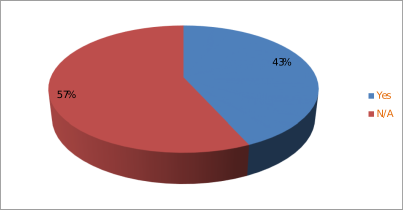
106 out 245 inmate participants agreed with this recommendation. 139 did not answer.
Text version
Pie chart displaying the proportions of inmate participants who agreed or did not answer the following recommendation: ’Provide mandatory anti-racism and cultural sensitivity training for judges, lawyers, and court staff, with a focus on understanding the unique experiences and challenges faced by Black individuals.’
Yes (43%)
No Answer (57%)
Prisoners conveyed instances of racism they have encountered involving lawyers, crown attorneys, and judges. The sentencing process further exemplifies the disparate treatment between Black and white accused individuals.
Recommendations are:
- We propose extending the scope of training to encompass all court staff, including crown attorneys, judges, lawyers, psychologists (utilized by the crown and lawyers), jurors, policymakers, politicians, Ministry staff (Safety and Corrections, SOLGEN staff), police training, law schools, Corrections Service Canada (CSC) – REACT members, NEACT members, ethnocultural members, RHQ’s, NHQ staff, institutional management (wardens, correctional officers, CO training), mental health department, medical department, wardens, deputy wardens (all staff and management), and parole officers.
- In addition to anti-racism and cultural sensitivity training, we recommend incorporating training on sudden grief, loss, and trauma within the broader context of anti-racism and cultural sensitivity training.
“When my son was going to trial, I asked the lawyer 3 years before trial to have him assessed by a psychologist as I had serious concerns about his mental health. They waited until the last few months before trial. The Psychologist did not speak to anyone else in the family to get a clear understanding, he only spoke to my son and when he did he was asked a few questions. My son was not comfortable speaking about his traumas with someone he just met. After the brief phone call the psychologist told the lawyer he was fine. I called the Psychologist and explained the situation he agreed that something sounds like its wrong. In my experience this ‘experienced’ psychologist did not understand mental health, trauma, grief and what it looks like in Black people. They ran out of time, and we were not able to have him properly assessed.” (Participant)
Implement strategies to increase the representation of Black lawyers, judges and court staff:
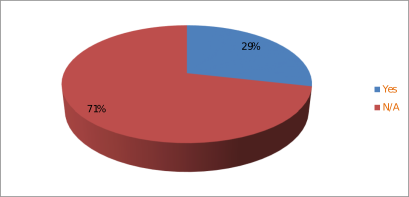
70 out of 245 prisoner participants expressed agreement with this recommendation, while 175 did not provide a response.
Text version
Pie chart displaying the proportions of inmate participants who agreed or did not answer the recommendation: ’Implement strategies to increase the representation of Black lawyers, judges, and court staff.’
Yes (29%)
No Answer (71%)
Prisoners who responded emphasized the significance of representation, underscoring the need for greater diversity in judges and crowns. The consensus highlighted that beyond racial diversity, the emphasis should be on lived experience and an understanding of the community. Many Black professionals, they conveyed, were perceived as being far removed.
Recommendations are:
- Develop strategies to augment the presence of Black judges, defense and civil lawyers, and court staff possessing lived experience and a profound understanding of the community.
- Implement initiatives to enhance the diversity of jurors.
- Introduce incentives, bursaries, and supportive measures for Black individuals pursuing legal education, particularly those with lived experience.
Increase funding for Legal Aid services to ensure equitable access to quality legal representation for Black communities:
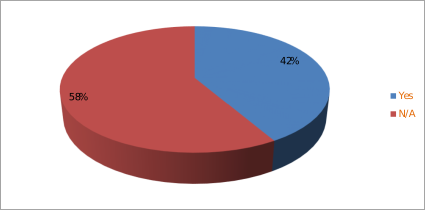
102 out of 245 prisoner participants strongly agreed with this recommendation. 143 did not provide an answer.
Text version
Pie chart displaying the proportions of inmate participants who agreed or did not answer the recommendation: ’Increase funding for Legal Aid services to ensure equitable access to quality legal representation for Black communities.’
Yes (42%)
No Answer (58%)
The reductions in legal aid funding significantly contribute to the disproportionate representation of Black individuals in the justice system. In essence, Black individuals are not receiving adequate legal representation. The constraints of legal aid permit only one lawyer change, and the process is challenging. It is imperative for Black individuals to have the option to change lawyers if they are not being adequately represented.
Moreover, the elimination of legal aid support for prisoners seeking institutional lawyers raises substantial concerns. Black prisoners face a disproportionate number of institutional charges. The absence of legal aid access compels many to accept plea deals, potentially affecting their eligibility for parole.
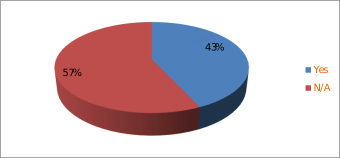
Allow for more than one change to lawyers
Allow for more than one change to lawyers – Text version
Pie chart displaying the proportions of inmate participants who agreed or did not answer the recommendation: ’Allow for more than one change to lawyers.’
Yes (43%)
No answer (57%)
Allow legal aid to fund institutional lawyers again
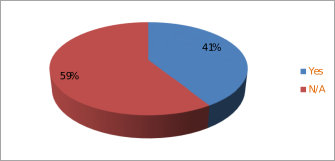
Allow legal aid to fund institutional lawyers again – Text version
Pie chart displaying the proportions of inmate participants who agreed or did not answer the recommendation: ’Allow legal aid to fund institutional lawyers again.’
Yes (41%)
No answer (59%)
Recommendations are:
- Revise policies to permit multiple lawyer changes for Black individuals before the courts
- Augment funding for legal aid to support institutional lawyers and/or legal assistance.
- Enhance financial support for legal aid to accommodate civil lawyers (lawsuits).
- Expand legal aid funding for qualified psychologists to conduct mental health assessments.
- Increase legal aid funding for bail hearings.
- Introduce heightened incentives for lawyers to accept legal aid, thereby reducing caseloads and fostering improved representation.
Additional Recommendations:
- Enforce accountability measures for judges responsible for making racist remarks towards Black and racialized defendants.
- Establish accountability standards for legal aid lawyers regarding client complaints and treatment.
- Date modified: