
4 Findings
4.1 Relevance
4.1.1 Alignment with Government Priorities and Departmental Roles and Responsibilities
ARADS is aligned with the Government of Canada’s consistent prioritization of anti-racism, diversity, and inclusion, as outlined in key documents such as the Clerk of the Privy Council’s Call to Action, departmental mandate letters, and federal budgets.
The Secretariat’s role aligns with federal and departmental priorities. Over the evaluation period, the Government of Canada consistently emphasized its commitment to anti-racism, diversity, and inclusion as key priorities. This was primarily communicated through the Clerk of the Privy Council’s Call to Action on Anti-Racism, Equity, and Inclusion in the Federal Public Service, as well as through the Speeches from the Throne, federal budgets, and mandate letters. ARADS’ mandate is aligned with these documents, as outlined in the 2021-2025 Results Framework. The Results Framework states that the mission and role of ARADS is to support Justice Canada in becoming a representative, diverse and inclusive organization and influence policy and process development to enable equitable access to justice for all Canadians.
In January 2021, the Clerk of the Privy Council issued a Call to Action on Anti-Racism, Equity, and Inclusion in the Federal Public Service, urging public service leaders to foster a diverse, equitable, and inclusive workforce. The Clerk also directed these leaders to report on their efforts to address racism and drive systemic change. Additionally, on May 9, 2023, the Clerk introduced a Forward Direction, calling on all deputies to set specific goals, track progress, establish meaningful accountability, and incorporate key success factors in the implementation of the Call to Action. The objectives of ARADS align with this Call to Action, as outlined in its Results Framework. The Results Framework includes a goal for the Department to be representative and inclusive of Indigenous communities, Black and other racialized groups, persons with disabilities, and 2SLGBTQIA+ communities at all levels.
The mandate letters for the Minister of Justice and Attorney General of Canada highlight the importance of ARADS’ role in promoting diversity and inclusion. They stress the need to “engage with and collaborate with diverse communities, actively seeking out and incorporating the diverse perspectives of Canadians. This includes women, Indigenous Peoples, Black and racialized Canadians, newcomers, faith-based communities, persons with disabilities, LGBTQ2 Canadians, and both official languages.” (2021 Mandate Letter). The letters also call for the Minister to “uphold the principles of equity, diversity, and inclusion” when implementing outreach and recruitment strategies for federally appointed leadership positions and boards, aiming to “ensure that federal workplaces are dynamic and reflective of the Canadians we serve.” (2021 Mandate Letter). Additionally, the 2023 mandate letter emphasizes the importance of addressing the deep systemic inequities and disparities within Canada’s core institutions.
ARADS is also aligned with recent federal budgets and Speeches from the Throne, which consistently highlight the government’s commitment to addressing systemic racism and promoting diversity and inclusion. For example, the 2020 Speech from the Throne emphasized commitments to combat systemic racism and discrimination, while the 2021 Speech included a focus on prioritizing efforts to address systemic racism, sexism, and discrimination within core institutions. Similarly, the 2023 budget states that “federal Black and racialized people will benefit from budget investments”, including the Action Plan for Black Employees in the Public Service. This Action Plan aims to provide targeted support for Black federal public servants who have disproportionately faced harassment, racism, and discrimination in the workplace.
These federal priorities are reflected in Justice Canada’s annual Departmental Plans, Strategic Plan and its Values and Ethics Code. The Values and Ethics Code emphasizes the principle of "Respect for People", which includes valuing diversity and recognizing the benefits of combining the unique qualities and strengths of a diverse workforce. It also stresses that public servants should work to create and maintain safe, healthy workplaces free from harassment and discrimination. The 2022-23 Departmental Plan further reinforces the Department’s commitment to “improve equity, diversity, and inclusion, and to address systemic discrimination in hiring, retention, and promotion affecting Indigenous, Black and racialized employees, or employees with disabilities.” The 2024-25 Departmental Plan continues this focus, emphasizing the need to “address harassment, discrimination, and other barriers in the federal workplace”. Furthermore, the Department of Justice’s Strategic Plan 2022-2027 emphasizes diversity and inclusion, with one of the key strategic orientations of the plan being to “Cultivate Diversity, Inclusion and a Healthy Work Environment”. As a part of this strategic orientation, the Plan lists two objectives for the Department: “To advance and support an anti-racism, anti-discrimination, and decolonization framework in policies, practices, processes, work culture, and support to employees”; and “to adopt hiring practices that are more nimble to facilitate the recruitment and development of a representative, accessible, diverse, and inclusive workforce”.
4.1.2 Relevance of ARADS Activities
Overall, ARADS is seen as relevant, particularly in promoting culture change and addressing systemic barriers within the Department. However, the unclear roles and responsibilities of ARADS, and growing demands, have led to unmet needs. This negatively affected ARADS’ perceived relevance.
Overall, the evaluation found that ARADS was perceived to be relevant and reflective of the increased focus on EDI-related topics both within the Federal Public Service and society at large over the last few years. In particular, many interviewees emphasized the relevance of ARADS in addressing systemic barriers within the Department and in promoting a culture change. Several senior management interviewees perceived ARADS as a “critical piece to the puzzle” in addressing anti-racism and anti-discrimination within the Department, and interviewees emphasized the importance of ARADS’ work in improving representation among employees and in management roles. As further discussed in section 4.3 of this report, many interviewees underlined that initiatives around data collection and monitoring progress within the Department were invaluable. For example, the self-identification and self-declaration questionnaire and the culture change survey, coordinated by ARADS, were particularly relevant and positioned Justice Canada as a leader within the federal government.
However, there were some diverging views on the relevance of the mandate and activities of ARADS, particularly among Justice employees, who had somewhat more mixed views than senior management. As further discussed in section 4.2 of this report, unclear roles and responsibilities, and along with the growing demands put on ARADS, may have led to unmet needs (e.g., requests that were not responded to). This created, to some extent, a negative perception of the relevance of ARADS activities.
4.1.3 Emerging Trends and Issues
ARADS operates in an evolving environment, which has a direct impact on its mandate and activities. Emerging trends and issues may affect ARADS’ relevance in the future.
The evaluation identified emerging trends and issues that could impact ARADS’ relevance in the future, with societal shifts away from anti-racism and EDI efforts both internationally and within Canada being the most prominent. Interviewees, both internal to Justice Canada and external, voiced their concerns that these societal shifts may result in changing priorities and decrease the focus on EDI. A few interviewees pointed out that they have already witnessed waning interest in EDI and raised concerns about implications for ARADS.
Despite these societal shifts, an environmental scan identified that a renewed focus on EDI and recommendations for systemic change are resulting in an increasing need for the activities that underpin ARADS’ work. The work linked to the modernization of the Employment Equity Act; the development of the next departmental anti-racism and EE Plan; the influence of reports such as the Dr. Zellars’ report and the Calls to Action established through the Truth and Reconciliation Commission of CanadaFootnote 3 demonstrate a need for continued departmental efforts around EDI. Additionally, the environmental scan highlighted that there are rising expectations from equity-seeking group members that may also impact ARADS’ work in the future (e.g., increased demands for data, results, and more consultations).
Finally, the EDI sphere is rapidly evolving and the focus has shifted beyond Black and racialized employees and is now also considering aspects such as ethno-religious conflicts, religious minority groups, among others. This expanded focus has already started to impact ARADS in some ways (e.g., recognition of religious minorities as EE groups) and may continue to impact ARADS’ relevance in the future.
4.2 Design and Delivery
4.2.1 Implementation of ARADS
ARADS has implemented as planned, many activities aligned with the Results Framework, despite challenges with the organizational structure that arose when ARADS was established without permanent funding.
Evolution of ARADS
ARADS was established in November 2020 to address issues of anti-Black and anti-Indigenous racism, as well as discrimination against other racialized groups within Justice Canada. The Secretariat was founded as a response to events such as the Black Lives Matter movement, the Calls to Action established through the Truth and Reconciliation Commission of CanadaFootnote 4, and the adoption of the Accessible Canada Act. An important early output of ARADS was the development of an Anti-Racism and Anti-Discrimination Results Framework for the Department. The Results Framework was approved for implementation by Justice Canada’s Executive Committee on April 15, 2021. This multi-year plan was created to enable fundamental changes to behaviors, processes, policies, and aspects of culture in Justice Canada that perpetuate systemic racism and inhibit the full participation by Indigenous, Black Canadians, other racialized groups. It also addresses systemic discrimination against persons with disabilities and the SOGIE community within Justice Canada. The Results Framework is structured around four pillars: representation; career development; anti-racism training and culture change; and measurement and leadership accountability.
To support each pillar, the Results Framework outlines a series of planned actions and corresponding results, as well as timelines. For example, in support of the ‘Measurement and Leadership Accountability’ pillar, the Results Framework includes an action to improve inclusive leadership competencies and behaviors through incorporating them as a part of performance measurement agreements for Justice employees in the EX and LC groups. ARADS measures the progress of the achievement of these action items through quantitative and qualitative measures in annual reports.
ARADS also has responsibility for the Department’s EE Plan. The Results Framework is aligned with the EE Plan, which is meant to be a complementary tool to the Results Framework. Going forward, the Results Framework and EE Plan will be integrated into one plan (2025 – 2028).
During the early part of its mandate, ARADS focused on some key initiatives that were closely aligned to the Results Framework and EE Plan:
- Implementation of a Disaggregated Data Initiative to ensure that the Department has access to the demographic data required to make informed decisions for representation and set targets based on demographic workforce projections.
- Initiation of targeted staffing processes to fill key gaps (e.g., Black Canadians, Indigenous Peoples and PWD) at EX/LC and feeder group levels.
- Support of a mentorship and sponsorship program focused on Indigenous Peoples, Black Canadians, other racialized groups, and PWD.
- Training, including advocating for the establishment of a centralized Official Languages Training Program and introducing a requirement for all departmental employees to take unconscious bias training, departmental anti-racism/anti-oppression training and the Canada School of Public Service Indigenous learning series.
Additional information about the activities ARADS undertook over the evaluation period provided is in Figure 1, below.
Figure 1: ARADS’ Timeline of Activities
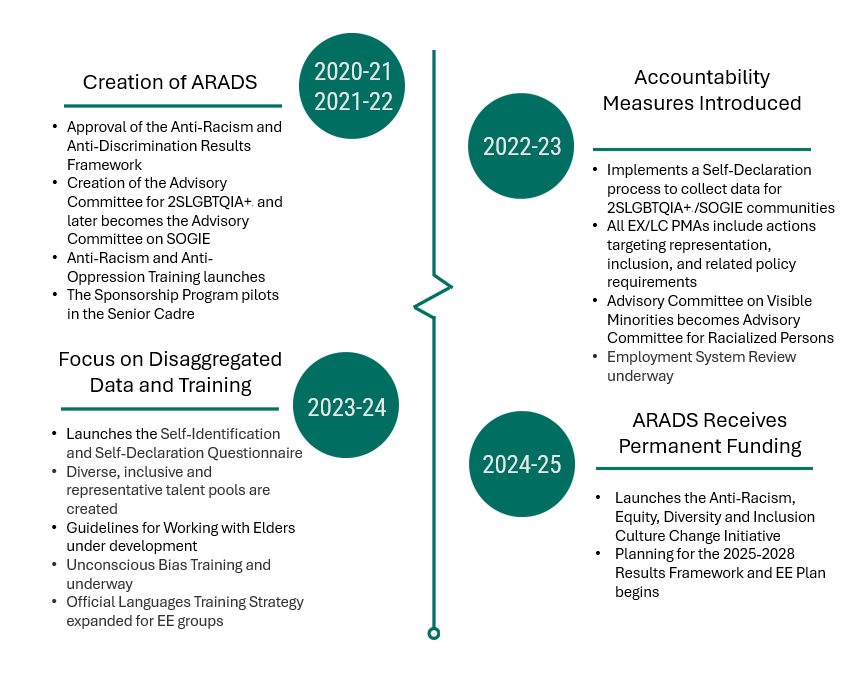
Figure 1: ARADS’ Timeline of Activities – Text version
Creation of ARADS: 2020-21 to 2021-22
- Approval of the Anti-Racism and Anti-Discrimination Results Framework
- Creation of the Advisory Committee for 2SLGBTQIA+ and later becomes the Advisory Committee on SOGIE
- Anti-Racism and Anti-Oppression Training launches
- The Sponsorship Program pilots in the Senior Cadre
Accountability Measures Introduced: 2022-23
- Implements a Self-Declaration process to collect data for 2SLGBTQIA+ /SOGIE communities
- All EX/LC PMAs include actions targeting representation, inclusion, and related policy requirements
- Advisory Committee on Visible Minorities becomes Advisory Committee for Racialized Persons
- Employment System Review underway
Focus on Disaggregated Data and Training: 2023-24
- Launches the Self-Identification and Self-Declaration Questionnaire
- Diverse, inclusive and representative talent pools are created
- Guidelines for Working with Elders under development
- Unconscious Bias Training underway
- Official Languages Training Strategy expanded for EE groups
ARADS Receives Permanent Funding: 2024-25
- Launches the Anti-Racism, Equity, Diversity and Inclusion Culture Change Initiative
- Planning for the 2025-2028 Results Framework and EE Plan begins
Staffing of ARADS
ARADS was established with temporary funding and many positions were staffed via assignments from other parts of the Department. Many interviewees pointed out that this temporary funding and staffing via assignment posed a challenge during the early implementation of ARADS. It was noted that ARADS had difficulty recruiting staff because they could not offer permanent positions, which led to staff turnover. These issues may have impacted the implementation of ARADS as well as its achievement of outcomes. At the time of the evaluation, the majority of ARADS staff were still staffed into the unit by way of assignment, secondment, acting appointments, or temporary term or casual positions. Only a few ARADS positions were indeterminate (e.g., ARADS Director). It is also notable that at the time of this evaluation, several positions, particularly on the EE team, were vacant or newly staffed.
4.2.2 Changes to ARADS Activities and Role
ARADS’ activities and role have expanded and evolved to respond to new expectations. Overall, demand for ARADS’ services has increased since it was established.
ARADS’ role and many of its activities have expanded and evolved since implementation.
The volume of work ARADS handles has grown and ARADS staff and resources were being pulled in an increasing number of directions. This expanded role was primarily seen as the result of increasing demands and expectations. ARADS was originally established with a focus on racism, but it now includes non-racialized groups within its mandate.
There is also a general trend of increased awareness of EDI, and ARADS has a reputation as the ‘go-to’ place for all things related to EDI within the Department. This led to an increase in demand for ARADS’ services, such as providing input into plans prepared by others in the Department; advice (e.g., on speeches or other communications by the Minister or Deputy Minister and other senior managers); and providing input on requests from central agencies and training. A common theme among interviewees was that the current scale of activities and demands placed on ARADS outweighs its resources.
Since its implementation, ARADS has also been implicated in or has undertaken several new initiatives. These include:
- Providing input on the amendments to the Public Service Employment Act;
- Responding to calls for change and the recommendations made in: the Clerk’s Call to Action, the Office of the Auditor General Audit, the global call for social justice for Black people in North America, as well as the recommendations and priorities established by the Black Executives Network Steering Committee to support Black executives working in the federal public sector that were outlined in Dr. Zellars’ report “Study on the Black Executive Community in the Federal Public Service”;
- Undertaking an Employment Systems Review and an Anti-Racism, Equity, Diversity & Inclusion Culture Change Survey to develop long term measurement systems and processes that provide insight into the systemic barriers facing equity groups as well as the resources and services needed to foster EE; and,
- Preparing a quarterly newsletter to share information on equity, diversity and inclusion related issues as well as to inform Justice Canada staff about the current activities and initiatives that ARADS is undertaking.
Since its implementation, ARADS has also taken on activities intended to better meet needs within Justice Canada through collaborations within the federal government, including: establishing a partnership with Statistics Canada to develop Demosim modellingFootnote 5 to better capture workforce availability data; and working on implementing actions that come out of collaboration with anti-racism secretariats in other federal government departments, such as developing a joint accountability and transparency framework.
The increased and broadened responsibilities since implementation have presented challenges for ARADS. One key challenge is ARADS’ ability to prioritize and maintain focus on spearheading strategic change within the Department. As discussed further in sub-section 4.2.3 of this report, the lack of a clear and demarcated mandate presents difficulties for ARADS in turning down requests that it may lack the capacity to respond to in a timely manner. For example, at times ARADS staff feel they cannot definitively say that certain tasks are outside of their mandate. Finally, the lack of a permanent structure has been a significant challenge for ARADS in meeting the increased demands since implementation. Due to staff turnover and recruitment challenges arising from the absence of a permanent structure, ARADS often had difficulty planning and assigning projects and tasks.
ARADS is currently developing a new Results Framework that may better reflect its demands and tasks. This exercise could present an opportunity to prioritize and clarify activities and roles. Additionally, at the time of the evaluation, a new organizational structure was being discussed, highlighting that not only ARADS’ activities but also its design is evolving.
4.2.3 Clarity of ARADS Roles and Responsibilities
The level of coordination, communication and collaboration increased over time to manage ongoing overlaps between the role of ARADS and other areas within Justice Canada, particularly as it relates to activities of the Human Resources Branch. However, additional efforts are needed to clarify and communicate the roles and responsibilities of ARADS both within ARADS and within Justice Canada to reduce misunderstandings and better support the work.
Although ARADS is responsible for anti-racism and EDI matters within the Department, other groups within Justice Canada are also involved, such as: the Human Resources (HR) Branch; the equity-seeking and diversity advisory committees; the Ombuds and Informal Resolution Services Office/Informal Conflict Management System (ICMS); the Centre for Workplace Access-Ability, Health and Wellness; the GBA+ Unit; the Reconciliation Secretariat; and the Equity Champions. The evaluation found that ARADS is making efforts to coordinate and communicate with their partners, for example through regular meetings at the senior management level and via email.
Collaboration and communication increased over the evaluation period; however, misunderstanding of ARADS’ role was identified in multiple contexts. This issue was emphasized in the interviews with most respondent groups noting a lack of clarity of roles. Interviewees also noted that ARADS could take a greater role in integrating and coordinating anti-racism and EDI efforts at Justice Canada. In particular, as it relates to providing strategic advice in areas under the purview of HR (e.g., recruitment, staffing and professional development) and in relation to coordination and support for Justice Canada’s equity-seeking and diversity advisory committees.
At the employee level, there have been cases where individuals with discrimination and racism questions or complaints mistakenly go to ARADS to request advice on matters such as staffing processes, duty to accommodate, and harassment and workplace violence prevention. For example, on occasion, ARADS personnel were asked by individual employees to provide advice regarding staffing actions to ensure they are representative and reflective of EE best practices. However, some noted that ARADS’ role was not to provide advice on specific staffing actions. Similarly, instead of utilizing the ICMS, ARADS has been approached by individual employees wishing to discuss harassment they have experienced. ARADS has also been approached by employees seeking accommodations (such as working from home), whereas this is a role believed to be under the purview of the HR Branch. Providing advice in these areas may have contributed to ARADS capacity challenges and led to a perceived lack of relevance since ARADS appears to be overlapping with other partners within Justice Canada.
At the working/project level, the line between what ARADS advises on and what HR managers advise on sometimes gets blurred in terms of who is the lead. However, the evaluation did find that, over time, these issues were increasingly addressed through improved communications between ARADS and the HR Branch. At the strategic level, ARADS is responsible for developing and reporting on the Results Framework. In terms of delivering on the initiatives contained in the Results Framework, some are the responsibility of ARADS and others are the responsibility of other groups within the HR Branch. There were capacity challenges and delays when consultations with partners were not held early and regularly, thus ensuring that initiatives were feasible and budgeted and planned for accordingly.
The Policy Sector is another area within Justice Canada where there was some role confusion with ARADS. There are instances where employees at the working/project level approached ARADS in error about Justice Canada’s Anti-Racism Policy, the Canada Black Justice Strategy and the Indigenous Justice Strategy because these policies are under the purview of the Policy Sector. ARADS also works closely with the Reconciliation Secretariat and the GBA Plus unit, both of which were found to work in a complementary fashion with ARADS and each according to their respective mandate.
As discussed further in sub-section 4.3.2 of this report, ARADS’ support for and collaboration with Justice Canada’s equity-seeking and diversity advisory committees was found to be unclear and inconsistent at times, depending on the committee, and during periods of staff turnover. This was attributed to a misunderstanding of ARADS’ roles and responsibilities by both ARADS employees and committee members.
A lack of clarity of ARADS’ roles can be attributed to a number of factors. For example, there were some initial misunderstandings when ARADS was created such as confusion on what to do when a request is made to ARADS in error. A lack of clarity also arose when moving the EE advisor positions out of HR and into ARADS, the increased number of new types of requests made to ARADS (e.g., who should be involved and in what capacity), and high staff turnover rates. Clearly defined and understood roles of ARADS is critical to the work because confusion led to employees receiving mixed messages, experiencing long response times, and receiving varying levels of support, which also resulted in some unmet needs.
4.2.4 Best Practices in Design and Delivery
ARADS reflects most of the best practices and approaches being used in other similar initiatives for addressing anti-racism, equity, diversity and inclusion. ARADS is also leading the way for some practices. It also actively works to assess and innovate on existing practices to be responsive to changing needs and demands.
ARADS’ activities and themes of representation, career development, training and culture change, and accountability, are consistent with those of other comparable initiatives across the Government of Canada. Moreover, all initiatives reviewed in the environmental scan use similar approaches to conduct their work. This includes pillar-based design frameworks with stated results; regular engagement and collaboration with key partners, including HR, EE networks and senior leadership; broad communications; and regular progress reporting.
A key difference was that ARADS is responsible for implementing the requirements of the Employment Equity Act within Justice Canada, which used to be a HR function. While three out of six federal government comparators also have this responsibility, all are housed within HR. A benchmarking report prepared by Environment and Climate Change CanadaFootnote 6 indicated that there are clear EDI and accountability benefits to keeping anti-racism/EDI functions outside of HR. For example, organizations external to HR display greater agility and are more trusted by equity-seeking employees.
Interviewees also emphasized the importance of the separation between ARADS and HR and noted that ARADS possessed greater autonomy and was able to play a more strategic role due to this separation. Interviewees also mentioned that ARADS may be able to get things approved faster than it could if it were housed within the HR Branch, due to the reporting relationship between ARADS and the Chief Financial Officer and Assistant Deputy Minister of the Management Sector.
A number of activities show how ARADS is leading the way among other initiatives engaged in this type of work, including: the implementation of the self-identification and self-declaration questionnaire; the launch of the ARADS’ culture change survey; and recognition of religious minority groups (e.g., religion was added as a category in the self-identification and self-declaration questionnaire, and ARADS regularly consults with minority religious groups).
In addition, ARADS incorporates best practices/promising approaches for addressing racism, discrimination, equity, and inclusion in organizations such as early leadership engagement; ongoing consultations with equity-seeking groups; enabling a learning environment; establishing accountability frameworks; data transparency; and institutional integration.
Overall, ARADS not only implements emerging best practices but also actively works to assess and innovate on existing practices to be responsive to changing needs and demands.
4.3 Effectiveness
4.3.1 Methods for Monitoring and Measurement in Achieving Expected Results
ARADS is effective in tracking progress and measuring achievement of expected results. ARADS places a large focus on collecting and reporting on data to inform its own decision-making as well as the decision-making of the Department. No major data gaps were identified.
ARADS gathers data and tracks and reports on its progress through multiple mechanisms as outlined below. Furthermore, ARADS is actively implementing and updating data tools and processes to monitor and measure progress in achieving expected results.
Overall, ARADS is seen as providing useful data that is used by multiple groups within Justice Canada to inform decision-making processes. This includes decisions about representation, hiring, access to language training, career development, talent development, etc. While this was identified as valuable and important, some challenges accessing data held by ARADS were cited by a few interviewees. It was noted that a few have received mixed messages around ARADS’ willingness to share data, which has contributed to frustration. However, it was also stated that recent data sharing practices have improved.
Results Framework and Employment Equity Plan
ARADS and the HR Branch monitor progress on EE and diversity goals and initiatives, as outlined in the Results Framework 2021-2025 and the EE Plan 2022-2025. Both plans are reported on together and detail progress to date. At the time of the evaluation, two reportsFootnote 7 have been released.
The results outlined in the Results Framework 2021-2025 are reported through a Performance Scorecard, which indicates whether given objectives are ‘on-track to be completed’, need ‘attention as required’ or need to ‘stop’ due to unforeseen circumstances. A list of performance indicators shows that ARADS has put data monitoring tools in place to capture EE representation, staff satisfaction with Justice Canada’s anti-racism efforts, and perceptions of EE-related tools.
The 2022-2025 EE Plan is supported by indicators that will identify and target gaps to eliminate barriers restricting EE groups, as well as provide relevant tools and resources intended to address and mitigate internal bias and foster supportive hiring practices. The EE Plan highlights ARADS’ recent revision and implementation of the EE Questionnaire to include a self-declaration tab that can capture disaggregated EE data within EE groups, such as within the 2SLGBTQIA+ community. The Plan also monitors disaggregated departmental data, including recruitment, promotion tenure, and mobility rates, to better understand the lived workplace experience of sub-groups, such as Black employees.
Self-Identification and Voluntary Self-Declaration Questionnaire and EE Dashboards
Through ARADS, Justice Canada launched the Self-Identification and Voluntary Self-Declaration Questionnaire to all employees in July 2023, which has grown to a 98% completion rate. Of note, the questionnaire represents the first time that employees who are not members of equity groups were asked to participate in this type of data collection effort. A document outlining the Workforce Representation and Availability Estimates and EE Progress Report dashboards shows how these dashboards use data from the PeopleSoft Self-Identification and Voluntary Self-Declaration Questionnaire to capture a meaningful representation of ARADS’ EE progress and results. ARADS currently tracks internal representation by using different data sources, and the data is presented in the EE progress report. The data is stored in the EE progress report dashboard, which contains quarterly and year-end progress reports on quantitative EE goals pertaining to hires, departures and promotions. Further, the reports include data relevant to equity groups, such as Indigenous Peoples, racialized groups, PWD and Women. Information pertaining to the 2SLGBTQIA+/SOGIE equity group began to be tracked and reported in 2024-25. Also, the data collected through the self-identification and self-declaration questionnaire is used to inform Justice Canada’s HR programming (e.g., in relation to language training, career development, talent management, etc.).
Culture Change Survey and Focus Groups
Perceptions of culture change are captured using the Justice Canada Anti-Racism, Equity, Diversity, and Inclusion Culture Change Survey (the Survey) and focus groups. The Survey is designed to assess culture change within the Department relative to anti-racism, equity, diversity, inclusion, accessibility, and reconciliation. It also helps to identify the issues that matter to Justice Canada employees and to highlight related challenges within the Department. The annual Survey was launched in July 2024 to gather and track disaggregated data from employees at Justice Canada to inform targeted, evidence-based actions. Staff focus groups with Survey respondents are scheduled to take place in 2025-26; the goal is to expand on Survey responses and raise additional issues. Results will be shared annually with all employees in a report that indicates the current status, progress and next steps related to culture change. As of October 2024, the overall completion rate for the Survey was 31% for employees and 34% for executives. At the time of writing, no report had been released.
Demosim Modelling
To help Justice Canada prepare for upcoming trends in the labour market, ARADS worked alongside Statistics Canada to use a Demosim modelling tool that identifies current Labour Market Availability for specific EE groups and sub-groups. Demosim was developed by Statistics Canada and is a demographic simulator tool that predicts current and future population growth with a high degree of accuracy.Footnote 8 ARADS has used this tool to establish a benchmarking methodology that projects workforce availability estimates for 2021 and every two years from thereon. This data will not only be used to supplement Justice Canada’s existing information, but the data around workforce availability will also support better representation of Justice Canada’s workforce. For example, this modeling tool has been used to establish benchmarks for Indigenous and racialized groups, including Black employees within Justice Canada. It is of note that representation targets for Black employees did not previously exist.
Data Use and Gaps
ARADS actively assesses and implements data measurement processes that aim to capture staff’s authentic lived experiences, emerging workplace barriers and overall EE-related trends in the labour market. Concrete examples of this include the self-identification and self-declaration survey and Demosim benchmarking methodology. This data has been used, in part, to establish current benchmarks for Indigenous Peoples and racialized groups as well as to update quantitative commitments in EE plans and the Results Framework. A few interviewees underlined the importance of implementing such data measurement processes by highlighting that ARADS has contributed to addressing the lack of data that was needed to inform HR purposes and to increase representation within Justice Canada. Since its inception, ARADS has been implementing and developing multiple approaches for comprehensive data measurement, which resulted in valuable and useful data. However, some opportunities for improvements were identified, such as:
- Improving access to disaggregated intersectional data;
- Including data from non-EE groups in dashboards and other data sources to allow for comparisons;
- Collecting data related to retirement intentions broken down by EE groups to improve succession planning and equitable representation in leadership roles;
- Providing a more in-depth analysis of the data that is collected (e.g., analyse trends, root causes, or the effectiveness of current initiatives) to improve the strategic value of the data; and,
- Collecting data based on the disproportionality index, particularly for classification purposes, and data around attainment rates.
4.3.2 ARADS Contribution to Justice Canada’s Response to Anti-Racism, Equity, Diversity and Inclusion Priorities
ARADS effectively contributed to Justice Canada’s response to anti-Racism, equity, diversity and inclusion priorities through the provision of strategic advice, coordination of Equity-Seeking and Diversity Advisory Committees, awareness raising and promotion of culture change. However, a number of areas for improvement were identified.
Providing Strategic Advice
ARADS’ advice is informed by the data it collects and analyzes. ARADS makes this data and analytics available for decision-makers. In particular, data dashboards and disaggregated data, the data from the Self-Declaration Identification campaign, Demosim modelling, and the data from the Results Framework tracking, all inform decision-making. For example, decisions regarding staffing and representation, additions to strategies and plans, and responses to requests from central agencies are all informed by data and advice from ARADS.
The evidence indicates that the advice ARADS provides to senior management on anti-racism, equity, diversity and inclusion approaches, HR policies, initiatives, and strategies within Justice Canada is valuable and useful. For example, ARADS has been successful in identifying existing gaps in professional development opportunities for Indigenous employees and in providing advice on how to address the gaps.
As indicated in sub-section 4.2.3, there is a lack of clarity on ARADS’ roles and responsibilities, and their capacity to respond to requests, which has had an impact on the strategic advice function. For example, some challenges were identified around a lack of clarity on who should provide strategic advice on EDI-related HR issues (e.g., pertaining to staffing processes, harassment and workplace violence complaints). These uncertainties contributed to confusion and inefficiencies. Another example is that the timeliness for providing strategic advice varies due to ARADS’ capacity to respond to an increasing number of requests. In addition, challenges were identified in terms of the advice given to EE advisory committees and guidance provided to new EE advisory committee co-chairs transitioning into the role.
Coordinating the Department’s Equity-Seeking and Diversity Advisory Committees
The EE advisory committees are comprised of volunteer employees within Justice Canada. These committees advise Justice Canada on workplace issues faced by employees who are members of marginalized groups. They plan and participate in a number of activities aligned with their EE groups and are regularly consulted by employees and sectors within Justice Canada. The EE Champions also provide advice to the advisory committees. The advisory committee members take on these roles in addition to their regular employment commitments. There are some concerns that increased rates of consultations significantly impacts the workload of advisory committee members.
ARADS provides coordination and administrative support (e.g., establishing meeting agendas, taking notes at meetings, identifying presenters, etc.) to the advisory committees. This support is critical to the advisory committees; however, there has been some inconsistency in the support provided by ARADS over time. This could be attributed in part to frequent staff turnover among ARADS EE advisors. This challenges the consistency of support in terms of the timeliness, nature and quality of support provided. It was also noted that frequent staff turnover made it challenging to develop effective relationships between the EE advisors and the committees. There is also some indication that additional support would be useful in terms of strategic advice, forward planning and regular administrative support. Moreover, findings show that not all EE groups were given the same opportunities to participate in some consultations.
In addition to the administrative support that ARADS provides to the EE advisory committees and their collaboration, it works with the employee networks (i.e., the Black Employees’ Network and the EE Managers’ Network within Justice as well as the Jewish Public Servants Network, the Muslim Federal Employee Network and the Network of Asian Federal Employees across the Government of Canada) to understand the progress that has been made on the Results Framework and to consult on the Department’s equity plan as well as other relevant issues.
There is an evolution in the ecosystem that may bring additional complexities. For example, it has been generally recognized that intersectionality is increasingly important. There is an increased number of EE groups at Justice Canada: the four traditional EE groups (i.e., women, PWD, Indigenous people and racialized individuals); and the additional group (i.e., 2SLGBTQIA+). Additionally, there have been instances where committees advocated for opposing viewpoints on issues. This has made it more challenging for ARADS to elaborate a departmental position on some topics that ensures that all perspectives are considered and that these positions are respectful of all EE groups.
Raising Awareness and Knowledge on Anti-Racism, EDI and Interrelated Topics
ARADS has taken several steps that contributed to raising awareness and knowledge on anti-racism, EDI and interrelated topics. Anti-racism and EDI training as well as outreach activities were identified as important mechanisms for raising awareness and knowledge within Justice Canada.
Training
Since implementation, ARADS has facilitated several key training courses and educational events. Some were mandatory Canada School of Public Service training such as the unconscious bias recognition training (implemented January 2021) and the Indigenous Learning Series requirement (implemented September 2021). The unconscious bias recognition training prompted staff to consider, interrogate and overcome their unconscious bias, while the Indigenous learning requirement provided staff an opportunity to reflect on cultural bias as well as to learn about Indigenous culture and Canada’s colonial history. Staff have maintained high completion rates (over 90%) for the unconscious bias training series and (over 86%) for the Indigenous learning series. ARADS, together with other partners, developed supplementary anti-racism and anti-oppression training specifically for Justice Canada employees, including:
- A DEI Approach to Interpreting and Applying the Law;
- Advancing Organizational DEI: A Roadmap for Leaders;
- Anti-Black Racism: An Intersectional Approach;
- Anti-Racism and Anti-Oppression Training;
- Antisemitism Awareness Sessions;
- Critical Race Theory;
- Essential Practice Points for Trans-Inclusivity;
- History of the LGBT Purge Awareness Session;
- Islamophobia Awareness Sessions;
- Moosehide Campaign; and,
- Neurodiversity Awareness Sessions.
These training sessions covered topics related to diversity frameworks, substantive equality and inclusion, and reviewed existing EDI policies, programs, and practices. The sessions also discussed amendments to the Employment Equity Act framework, how to provide legal advice through an EDI lens, how to set and achieve measurable EDI goals, and how to identify and respond to systemic barriers. Some post training feedback indicates that most of the participants found that the training met their expectations, and they would recommend it to their colleagues. The evaluation findings further supported the value of training and its contribution to raising knowledge and awareness of anti-racism and EDI topics, although a few interviewees noted that the training could have been more focused on real work applications.
Outreach Activities
Since its inception, ARADS’ need for communications support has grown. At the time of the evaluation, a communications advisor from the Communications Branch was heavily integrated within ARADS, which supported a more tailored communication strategy and addressed their growing communications needs.
ARADS conducted many outreach activities, including email communications (such as all staff messages), newsletters, promoting and organizing events or townhalls with guest speakers, sharing information at senior management meetings and sector meetings, promoting the ARADS information hub, etc. These outreach activities were used to share information about EDI issues and topics, current initiatives, reports and data, and recognized commemorative dates. For example, ARADS has helped to support the development and success of Latin American Heritage Month, Disability Pride Month, Indigenous Peoples’ Day, Indigenous History Month, 16 Days of Activism Against Gender-Based Violence, the National Day of Remembrance and Action on Violence Against Women and the Advisory Committee for Women at Justice’s commemorative event and fundraiser for Maison d’amitié.
The ARADS quarterly newsletter is a recent outreach mechanism. The first newsletter was distributed in May 2024 and provided, amongst other information, an overview of ARADS, project-specific updates, upcoming commemorative dates, and multiple links to training and resources.
The evaluation did not directly assess the level of awareness of ARADS’ activities by employees. However, interview data found that awareness levels varied within the Department. Awareness seems to be higher amongst senior management and sectors of the Department directly working with ARADS. Also, awareness amongst employees within EE groups appears to be higher. It seems to be lower within middle-managers and other employees.
Awareness of ARADS’ activities also depends on level of engagement and availability of time (e.g., while information is shared, employees may not have the time to read it all). There are challenges associated with employing the right mix of communication channels to reach all employees across the Department (e.g., traditional channels such as emails versus social media). Opportunities for more active awareness raising activities were identified by a few interviewees although expansion into other methods would require additional efforts within ARADS.
Promoting Culture Change within Justice
It is widely recognized that culture change, in an organizational context, is a lengthy process and the approach often needs to be multi-faceted; for example, targeting the human aspects such as values, beliefs and behaviours and the operational aspects such as processes, practices and standards. One of the pillars of the Results Frameworks aims to transform the Department’s culture into an inclusive workplace that addresses issues related to racism and systemic discrimination.
ARADS has contributed to promoting culture change within Justice Canada. More specifically, successes such as increased awareness of EDI issues and incorporating EDI more routinely in work processes (through open dialogue and intentional planning) as well as increased representation levels among Justice Canada’s workforce were identified.
As indicated previously, ARADS has raised awareness and knowledge on anti-racism, EDI and interrelated topics. This resulted in more employees and managers being aware of the issues and incorporating supportive practices into their work on a more routine basis. Specific examples were identified, such as employees feeling more empowered to discuss racism and EDI at work, leadership being more receptive to anti-racism and EDI efforts, ARADS’ role in embedding anti-racism and EDI into policies, plans, and performance management agreements, an increase in trans or non-binary staff within Justice Canada, and the use of data to address gaps in representation.
ARADS also supported the inclusion of sub-groups’ considerations in decision-making processes, including staffing processes. For example, Justice Canada has been one of the first federal departments that included the 2SLGBTQIA+ community in their organizational needs statement; recognizing the 2SLGBTQIA+/SOGIE community as an EE group and providing the same treatment to this group as to other EE groups (e.g., career development, promotion, recruitment representation based on benchmarks); introducing of the use of pronouns; and including 2SLGBTQIA+ language in job advertisements.
Additionally, some gains have been made with regards to representation of EE groups among Justice Canada’s workforce. However, there is still room to further improve representation, particularly among management positions. The importance of increasing representation among management to further advance culture change within the Department was emphasized.
Despite ARADS’ efforts dedicated to promoting culture change within the Department, a lot remains to be accomplished. One of the challenges identified was the difficulty in measuring culture change. However, the ARADS Culture Change Survey was seen as an important tool to help in this regard and several interviewees stated that the Survey would help establish a baseline. This will allow ARADS to track progress over time.
- Date modified: