
4. Findings
4.1 Relevance
4.1.1 Alignment with Government and Departmental Priorities
OIRSO aligns with departmental and government commitments to promote healthy and safe workplaces and help in the resolution of conflict.
The Government of Canada has consistently identified healthy and safe workplaces for public servants as an important government priority. OIRSO’s mandate is aligned with this priority as it stems from both a legislative requirement (ICMS), as well as from a recommended action from a Deputy Minister Task Team on Harassment (Ombuds).
Part of the mandate of OIRSO is to fulfill the department’s legislative obligation as set out in section 207 of the Public Service Labour Relations Act, which made it mandatory to have in place an ICMS. In 2005, this section of the legislation brought into the public service a new conflict management system designed to support the Government of Canada’s commitment to “fair, credible and efficient resolution of matters arising in the workplace”. Section 207 directs that “every deputy head in the core administration must…in consultation with bargaining agents…establish an informal conflict management system.”
Additionally, the Ombuds was established after a recommendation from a Deputy Minister Task Team on Harassment. In 2018, the Task Team was formed at the request of the Clerk of the Privy Council to undertake a targeted review of the public service’s harassment framework and to identify actions that would better support employees. The report entitled “Safe Workspaces: Starting a Dialogue and Taking Action on Harassment in the Public Service” made several recommendations including that departments put in place “an Ombuds-type function to provide all employees with a trusted, safe space to discuss harassment without fear of reprisal and to help navigate existing systems.” The report identified that an Ombuds-type office would provide:
- A confidential, impartial environment for employees and managers to have informal conversations on harassment;
- Resources, tools and supports;
- A venue to explore other options for resolving workplace issues, including harassment; and,
- Referrals to other services, including for restoring workplaces after harassment has occurred.
In response to the recommendation made by the Deputy Minister Task Team, in July 2020, Justice Canada announced the establishment of the Justice Ombuds Office with the objective of providing employees and managers with a safe and independent place where they can speak freely about a variety of concerns affecting them in the workplace. The Ombuds Office was also designed as part of Justice Canada's broader efforts to combat racism and promote diversity and inclusion in the Department. The new Ombuds officially joined Justice Canada in January 2021 and in the spring of 2021, the creation of OIRSO was announced, effectively bringing together the ICMS and the new Ombuds Office to support Justice Canada employees in helping them navigate through available resources and processes to help them make sound and informed decisions. In line with the recommendations from the Task Team, OIRSO began providing services such as impartial and informal consultations with the Ombuds for Justice employees looking for advice and guidance. Notably, all services provided by the Ombuds, such as informal consultations, are impartial and the Ombuds does not side with any party or defend the interests of any individual in the organization.
A review of departmental documents and other literature demonstrates that OIRSO’s objectives and activities (under the umbrella of an Ombuds and ICMS) are aligned with various departmental and federal strategic outcomes and priorities. For example, in terms of departmental priorities and strategic outcomes, the Office is aligned with Justice Canada’s:
- Values and Ethics Code which states that “we treat every person with respect and fairness, while valuing diversity and creating and maintaining a healthy and safe workplace that creates an open, collaborative, and respectful environment”.
- Human Resource Management Plan which seeks a “healthy, safe, respectful, inclusive, values-based and ethical workplace”.
- Informal Conflict Management System Policy which has a stated goal to “prevent conflicts from arising or escalating, to appropriately manage and resolve work-related issues, and to promote a harmonious and respectful workplace.”
- Policy on Dispute Prevention and Resolution which states in the goal of the Policy that “where possible, disputes should be prevented, or resolved at the earliest possible opportunity in a timely manner and before the situation escalates.”
- Strategic Plan Strategic Orientation 2: Cultivate Diversity, Inclusion and a Healthy Work Environment which is defined as building “diversity and inclusion in the Department’s legislation, policies and programs, as well as its workforce, including promotion of health, safety, and well-being for a healthy workplace.
In terms of federal strategic priorities and outcomes, OIRSO is aligned with:
- The objective of the Treasury Board’s Directive on the Prevention and Resolution of Workplace Harassment and Violence which is to “prevent occurrences of workplace harassment and violence by providing an integrated healthy, safe and respectful workplace that is free from all forms of harassment”.
- The Public Service Modernization Act, which states that “the labour-management relationship in the public service will benefit significantly from more dialogue, and less confrontation, between the parties”.
4.1.2 Need for OIRSO
There is a continued need for OIRSO services due to ongoing experiences of workplace conflict by Justice employees; an increase in service demand; and the provision of an essential function within the Department.
As with many organizations, workplace conflict exists in the Department.
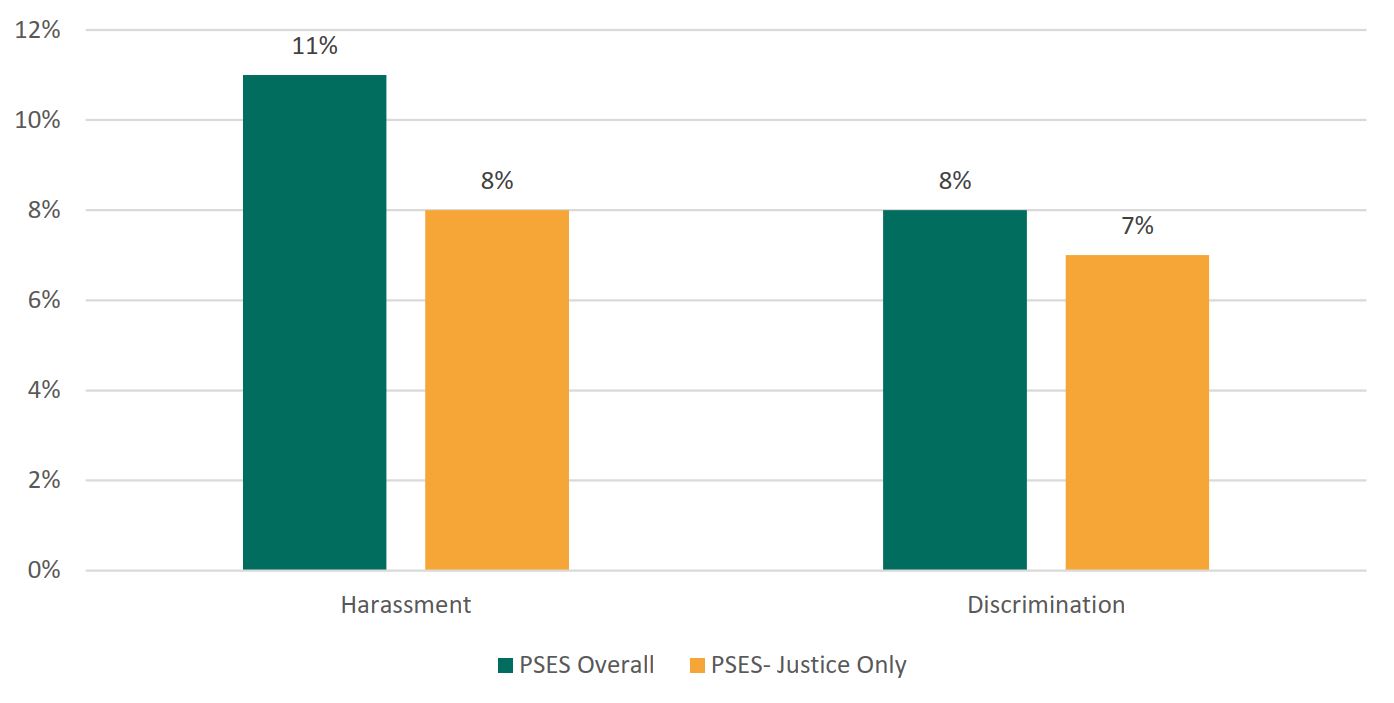
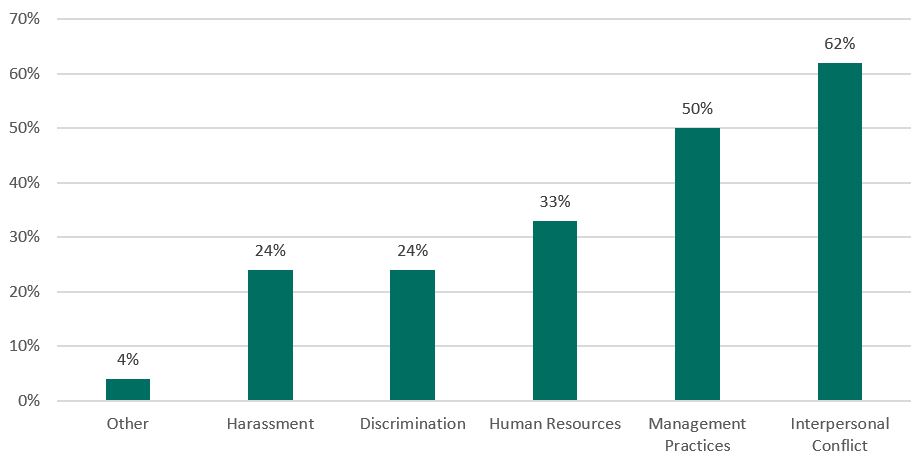
The Public Service Employee Survey (PSES) was designed to gauge employees’ opinions on a range of issues reflective of the health of the public service. Results from the 2022 PSES survey indicate that departmental employees may experience a range of workplace conflicts. For example, 8% of Justice Canada respondents reported being the victim of harassment while 7% reported being the victim of discrimination on the job within the past 12 months, with these results being like those for the Public Service overall (Figure 1). The employee survey conducted as part of OIRSO evaluation found that of those who reported experiencing conflict in the workplace, 24% reported being the victim of harassment while 24% reported being the victim of discrimination on the job within the past four years (Figure 2). These self-reported prevalence rates align with one of the top issues raised by Justice Canada employees during visits with the Ombuds. Of OIRSO’s visitors, 22% alleged harassment and 5% raised discrimination as a workplace conflict.
Text version
| Harassment | Discrimination | ||
|---|---|---|---|
| PSES Overall | PSES Justice Only | PSES Overall | PSES Justice Only |
| 11% | 8% | 8% | 7% |
Text version
| Types of Conflict | % |
|---|---|
| Interpersonal Conflict | 62% |
| Management Practices | 50% |
| Human Resources | 33% |
| Discrimination | 24% |
| Harassment | 24% |
| Other | 4% |
There are other types of conflict in addition to harassment and discrimination. In the survey conducted as part of the evaluation, almost half of respondents (49%) reported encountering some type of conflict in the workplace within the last four years. The types of conflict most reported were interpersonal conflict (63%), conflict related to management practices (50%), or conflict related to human resources (33%).
It is in the Department’s interest to implement strategies that will reduce the impacts of conflict.
Conflict in the workplace comes with significant costs and negative repercussions for the government and other Canadian organizations. According to a report by Morneau Shepell, workplace conflict costs Canadian businesses an estimated $2 billion annually in lost productivity.Footnote 2 These losses potentially arise from decreased employee engagement, absenteeism, turnover, and the time and resources spent resolving conflicts. Moreover, unresolved workplace conflicts can have detrimental effects on employees' mental health and well-being. According to the TELUS Mental Health Index, workers who experience conflict at work lose an average of 55 workdays per year.Footnote 3 Furthermore, according to an article in the Social Science & Medicine journal, unmanaged conflicts increased self-reported outcomes such as stress, poor general health, and exhaustion. That said, those who experienced workplace conflicts that were resolved through discussions were least likely to experience negative outcomes.Footnote 4 Overall, the costs and negative repercussions of unresolved conflicts in workplaces are substantial, affecting productivity, employee well-being, and organizational success.
The need for OIRSO services and activities is widely recognized by all key informants and employees who participated in the evaluation.
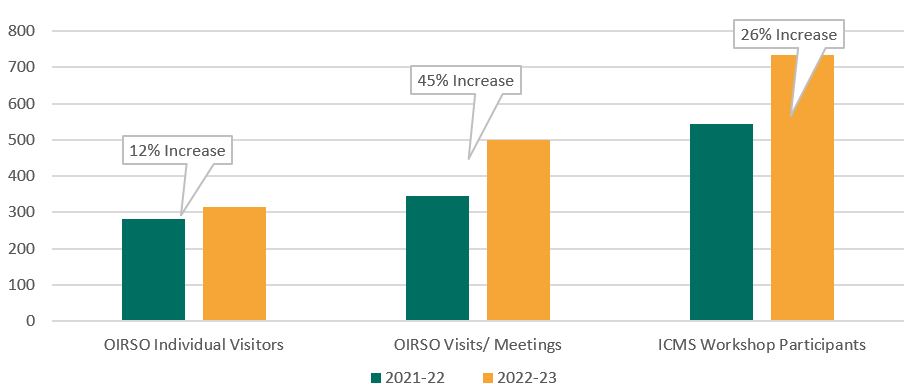
All key informants interviewed as part of the evaluation agreed that there is a need for OIRSO services. Results from the OIRSO evaluation survey found that most (84%) respondents agreed or strongly agreed that services provided by OIRSO are needed. There has also been a year-over-year increase in OIRSO’s individual visitors, meetings and ICMS workshop participants, indicating a growing demand for OIRSO services (Figure 3).
Text version
| 2021-2022 | 2022-2023 | Percentage Increase | |
|---|---|---|---|
| OIRSO Individual Visitors | 282 | 316 | 12% Increase |
| OIRSO Visits/Meetings | 346 | 501 | 45% Increase |
| ICMS Workshop Participants | 545 | 734 | 26% Increase |
4.2 Design and Delivery
4.2.1 Governance and Structure
OIRSO is functionally independent of the administration and management structure of Justice Canada, a recognized standard of practice by the Organizational Ombuds Council. This governance structure enables it to operate in accordance with its guiding principles and supports a neutral and safe space for employees to access a centralized group of informal conflict resolution services in one Office.
The accountability of OIRSO rests with the Ombuds who reports directly to the Deputy Minister and the Associate Deputy Minister, and thus is functionally independent of the administrative and management structure of Justice Canada. The Organizational Ombuds Council has identified this structure as a standard of practice within the Ombuds community as it supports a neutral and safe space for employees to discuss issues and explore options to resolve conflict. This positioning allows OIRSO to operate in accordance with the following four fundamental principles arising from the Code of Ethics and Standards of Practice of the International Ombuds Association: confidentiality, informality, impartiality, and independence. Literature also suggests that success is facilitated through speed, flexibility, visibility of and access to the Office, and an effective reporting system, many of which OIRSO has implemented.
OIRSO has implemented a governance structure that supports the management of its activities and guides the provision of its services. Further contributing to its governance activities, OIRSO has established protocols such as the ICMS Conflict Management Coaching Protocol and the Group Facilitation Protocol, and policies (e.g., Database Guidelines, ICMS Policy) that assist in guiding the provision of its services and outlining clear roles and responsibilities.
Combining services into one Office has been successful. The OIRSO Annual Report 2022-23 indicates that the merging of the Ombuds and ICMS has provided employees access to a centralized group of informal conflict resolution services, which offers a full range of alternative conflict resolution mechanisms. Key informants internal to Justice Canada interviewed as part of the evaluation noted that combining the Ombuds and ICMS into one office is appropriate because the functions complement one another. The transfer of ICMS from Human Resources in the Management Sector to OIRSO brought more visibility and independence to the Office. External key informants indicated that a joint office with the two functions brings comprehensive and added value since both are delivering an informal process. They can also refer visitors back and forth between services easier and can better share (anonymized) information for trend analysis in the organization.
Notably, the key differentiator of OIRSO is its independence, neutrality, and ability to deliver confidential services. The evaluation found that OIRSO services do not overlap or duplicate with other employee services in the Department. There was some mention by internal key informants of the potential for overlap with some similar learning and professional development offerings undertaken by the Human Resources Branch, but it was noted that the Branch and ICMS are collaborating more closely to develop and deliver training.
4.2.2 Equity, Diversity and Inclusion
OIRSO is supportive of EDI and GBA Plus and has begun to integrate these analytical processes and principlesFootnote 5 in its activities and initiatives.
OIRSO has supported EDI and GBA Plus in its activities and initiatives. It tracks, identifies, and shares trends and systemic issues related to EDI and GBA Plus through Annual Reports and Quarterly Dashboards. For instance, the Q3 2022 Dashboard identified diversity and inclusion as one of the top five psychosocial factors impacting the mental health and safety of the Justice workplace. ICMS monitors the nature of concerns being brought to them, with two indicators directed for GBA Plus analysis: diversity and value difference issues.Footnote 6 Another example is that the ICMS offers a Listening Circle on Equity, Diversity, and Inclusion. The OIRSO evaluation survey found a majority of respondents (66%) indicated that they agreed or strongly agreed that OIRSO and its services are reflective and supportive of EDI; and, when looking specifically at service accessibility, most OIRSO evaluation survey respondents who accessed OIRSO services (88%) indicated they did not experience any barriers in obtaining those services.
Additionally, the Ombuds has committed to corporate priorities and is part of another Call to Action on Anti-Racism, Equity, and Inclusion as well as the Employment Equity and Diversity Plan. It has established a collaborative approach to support the Anti-Racism and Anti-Discrimination Secretariat to work closely on matters relating to this Call to Action and ensure proper mechanisms and reporting structures are in place. For example, the Ombuds and Anti-Racism and Anti-Discrimination Secretariat jointly developed a list of exit interview questions, including a specific section on inclusion, to help identify systemic issues in employee turnover that would otherwise be unknown.
The employee survey conducted as part of the evaluation also asked generally about barriers to addressing conflict in the Department, and, while not completely attributable to OIRSO, there is still a sense among a few OIRSO evaluation survey respondents (9%) that the Department needs to do more to address EDI-related issues and barriers. For those from equity groups, these included issues related to career promotion, advancement and recruitment, lack of trust, and reluctance to use services amongst those that perceive the workplace environment as being unwelcoming. Internal key informants and the OIRSO evaluation survey results note the importance of having employee equity groups represented among ICMS practitioners and that they be knowledgeable of EDI practices. The hiring of additional practitioners with the right background and expertise (e.g., having lived experience, being trauma informed and culturally sensitive) was noted as being a challenge.
These departmental level findings are aligned with the monitoring data produced by OIRSO where EDI-related career barriers were also noted in their 2022-23 Annual Report, with employment equity groups reporting that they do not receive acting opportunities, which impacts their ability to qualify for higher positions. Additionally, persons with disabilities reported that they are being denied hiring opportunities with the perception that managers view accommodations as burdensome.
4.2.3 Monitoring and Measurement
OIRSO actively collects and monitors performance and activity data using various methods, which assists in reporting on emerging trends and issues, along with service use. Further efforts can be made to strengthen data sharing, collaboration and reporting practices.
OIRSO has established practices in monitoring and measurement and collects data to assess its performance and client satisfaction with services. It does this through various methods, including the implementation of participant surveys, client service feedback forms, visitor evaluations, tracking progress towards implementation of the Ombuds recommendations, and Slido polls used during workshops.
Many performance indicators tracked are related to service delivery and the nature of issues being raised with the Ombuds or ICMS. These include visitor feedback on how they were referred, whether discussions were respectful, if they were presented options and were helped to navigate through resources; or, collecting data aimed to gauge knowledge of the roles of the Ombuds and ICMS or awareness of the breadth of ICMS services.
This information provides transparency and informs various reporting requirements such as OIRSO’s Quarterly Dashboards and Annual Reports, which enables OIRSO to inform senior management and relevant stakeholders of emerging trends and issues and supports strategic planning and continuous improvement efforts related to service delivery.
There is, however, opportunity to strengthen data-sharing and reporting practices.
Information Sharing
OIRSO collects and monitors performance and activity data for internal use and improvement of its services. In line with its mandate to report on trends within the Department, OIRSO also shares some disaggregated data primarily through its Annual Report. For example, OIRSO collects information on the gender of visitors to the Ombuds and ICMS and it shares this information in the Annual Report. However, internal key informants note that they look to OIRSO for key information and trends in the Department, and that stakeholders and senior management could also benefit from more data transparency and data disaggregation where possible. More information about the types of services requested or more detailed EDI-related information was desired. Additionally, according to the literature review, other departments’ Ombuds may collect data in a few areas that OIRSO does not, such as vocational classification. However, key internal informant interviews and the document review also made it clear that OIRSO has a fundamental principle that they must maintain the confidentiality of their data, and that the relatively low numbers for some categories of data prevent them from sharing or reporting data more widely.
Beyond the data that OIRSO collects, some key informant interviews indicated that there would be a benefit to OIRSO integrating data from other areas of the Department and using that to inform their reporting. Key informant interviews indicated that there was some desire for increased collaboration among partners to centralize data collection for a deeper analysis of trends within the Department.
Despite these challenges, there has been some movement towards working with partners to find avenues for OIRSO to gather and report on more data. It is now an option for the Ombuds to act as an interviewer for exit interviews, which gives the Office the opportunity to gather information on systemic issues and trends that could be shared with senior management and key partners.
4.3 Effectiveness
4.3.1 Awareness of OIRSO
Although OIRSO is actively being promoted, and awareness has increased, findings suggest awareness among employees could be improved.
Literature acknowledges that a successful Ombuds Office needs to be well known within its organization to be able to service the departmental community. Leveraging communication tools and events within the Department can help the Ombuds make their presence known to employees, raising awareness about the role of the Ombuds and its staff. Ensuring that people can recognize the Ombuds (and its staff) creates a level of personal connection that can increase trust in the Ombuds Office. Literature also suggests that an Ombuds and ICMS can become more useful with time based on the increasing knowledge of the Office.
OIRSO’s awareness raising efforts have resulted in a large majority of Justice Canada employees having at least a slight level of awareness of the Office. However, there are still some employees who are not at all aware of OIRSO.
To raise awareness of the Office and its services, OIRSO has conducted engagement and outreach activities, in particular, 92 different awareness and outreach activities in FY 2022-23, both virtually and in-person, reaching 2,656 Justice Canada employees. OIRSO also shares a variety of information through its newsletters, flyers and annual reports available to employees and stakeholders.
Overall, most employees (80%) who responded to the OIRSO evaluation survey were at least slightly aware of OIRSO with 15% of respondents rating themselves as very aware and 20% of respondents rating themselves as not at all aware of OIRSO.
In comparison, a similar survey conducted in the previous ICMS Evaluation (2010) found that 40% of respondents were not at all aware of ICMS at the time. While not an exact benchmark, as the 2010 evaluation survey only included ICMS activities, it indicates that the awareness raising efforts of OIRSO have been successful.
However, data reported in OIRSO’s 2022-23 Annual Report demonstrates low awareness with 78% of respondents reporting that they know very little about the Ombuds, and 68% indicating that they were unaware the ICMS offered more than conflict resolution services. Additionally, internal key informants suggested concerns with employee awareness levels of OIRSO.
To ensure continued and expanded access to OIRSO, it will be important for OIRSO to focus its efforts on raising awareness not only among those employees who are not at all aware of the services, but for those who have a slight awareness, raising that awareness even higher to increase the likelihood that employees will have a sufficient level of awareness to access OIRSO services when needed.
Respondents were most likely to become aware of OIRSO through promotional materials and awareness presentations provided by the Office.
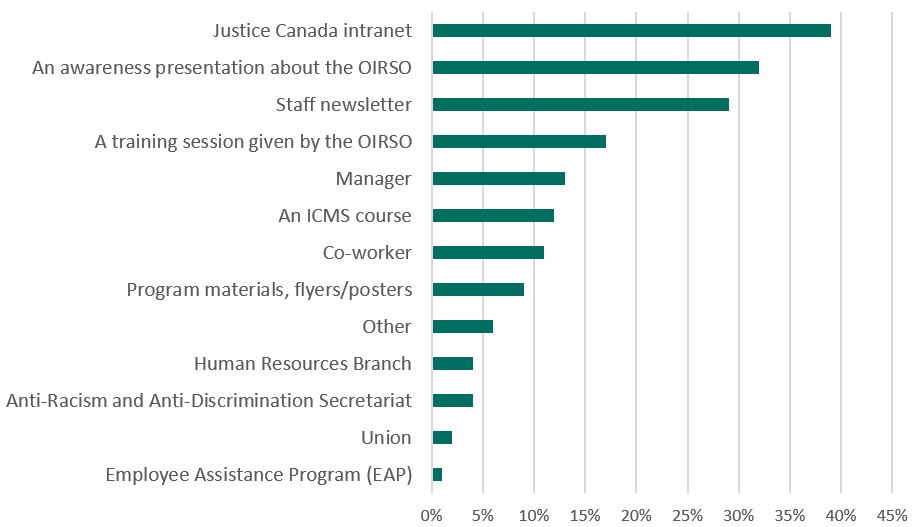
Of those who were aware of OIRSO, 39% recalled first learning of OIRSO through the Justice Canada Intranet site, awareness presentations (32%) and staff newsletters (29%). Other commonly identified sources of how employees became aware included a training session offered by OIRSO, from a manager or co-worker, or from an ICMS course (Figure 4).
Text version
| Source | % |
|---|---|
| Justice Canada intranet | 39% |
| An awareness presentation about the OIRSO | 32% |
| Staff newsletter | 29% |
| A training session given by the OIRSO | 17% |
| Manager | 13% |
| An ICMS course | 12% |
| Co-worker | 11% |
| Program materials, flyers/posters | 9% |
| Other | 6% |
| Anti-Racism and Anti-Discrimination Secretariat | 4% |
| Human Resources Branch | 4% |
| Union | 2% |
| Employee Assistance Program (EAP) | 1% |
OIRSO has been more effective in creating awareness amongst specific subpopulations.
Key informants noted that OIRSO’s outreach and communication activities have increased its visibility within the Department, and they actively promoted the use of OIRSO services to employees. However, the OIRSO evaluation survey reported discrepancies in levels of awareness based on position and location.
- A significantly higher proportion of those working in the National Capital Region (83%) were at least slightly aware of the Office compared to those working in the regions (65%).
- A higher proportion of managers (91%) were at least slightly aware compared to employees (67%).
While the survey did not offer insight into why awareness was higher or lower for specific subpopulations, key informants noted that managers were more likely to be aware of conflict resolution services and options within the Department given their management responsibilities. A similar finding was reported in the 2010 Evaluation of ICMS, where it was found that the ICMS had been somewhat more effective in creating awareness amongst managers than amongst other employees.
4.3.2 Sources of Assistance in Dealing with Conflict
Nearly half of OIRSO evaluation survey respondents indicated that they experienced conflict, the majority of which dealt with it by seeking assistance from informal sources.
The results of the OIRSO evaluation survey indicate that employees use a variety of mechanisms to deal with conflict in the workplace, as discussed below.
Most respondents who reported that they face conflict in the workplace usually attempt to deal with that conflict.
The results of the OIRSO evaluation survey indicate that nearly half of respondents (49%) encountered some type of conflict in the workplace in the last four years. The types of conflict they reported include interpersonal conflict (63%), management practices (50%), human resources (33%), discrimination (24%), and harassment (24%). Most who experienced a conflict attempted to deal with that conflict (88%). Those who did not attempt to deal with their conflict indicated that they did not believe corrective action would be taken (78%), feared it would damage their professional reputation (67%) or feared reprisal and retaliation (61%).
Respondents are more likely to turn to informal sources for assistance to deal with conflict in the workplace.
OIRSO evaluation survey respondents reported receiving assistance from informal sources, such as their manager (50%), OIRSO (43%) and friends and colleagues (38%) (Figure 5). In addition to OIRSO, employees used more formal sources in dealing with conflict include Human Resources Labour Relations, the union, and the EAP.
Nearly one-third (30%) of respondents who had experienced a conflict but did not access OIRSO services did not consider OIRSO as an option in dealing with their conflict because they were not aware of or did not know enough about OIRSO.
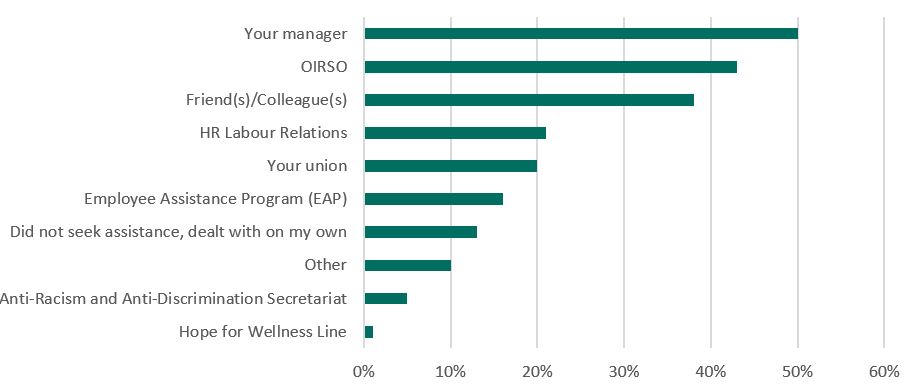
Text version
| Sources of assistance | % |
|---|---|
| Your manager | 50% |
| OIRSO | 43% |
| Friend(s)/Colleague(s) | 38% |
| HR Labour Relations | 21% |
| Your union | 20% |
| Employee Assistance Program (EAP) | 16% |
| Did not seek assistance, dealt with on my own | 13% |
| Other | 10% |
| Anti-Racism and Anti-Discrimination Secretariat | 5% |
| Hope for Wellness Line | 1% |
4.3.3 Use and Satisfaction of OIRSO Activities
OIRSO supports employees through two components: the Ombuds and the Informal Conflict Management System. Together, these two components offer an array of services, including providing advice and guidance on managing and navigating difficult situations, providing processes and tools (e.g., consultation, coaching, mediation, training), as well as providing resources or referral services.
Over a third of OIRSO evaluation survey respondents indicated that they used OIRSO’s services.
Employees are not only accessing OIRSO services to deal with an experienced conflict but are participating in training and workshop sessions and consultations as more proactive ways to address potential conflict. Approximately 36% of OIRSO evaluation survey respondents indicated that they used OIRSO services, with the majority of those respondents having accessed training, consulted with ICMS or the Ombuds, or participated in coaching (Figure 6). When dealing with specific workplace conflicts, employees most often participated in consultations with the Ombuds or ICMS and coaching.
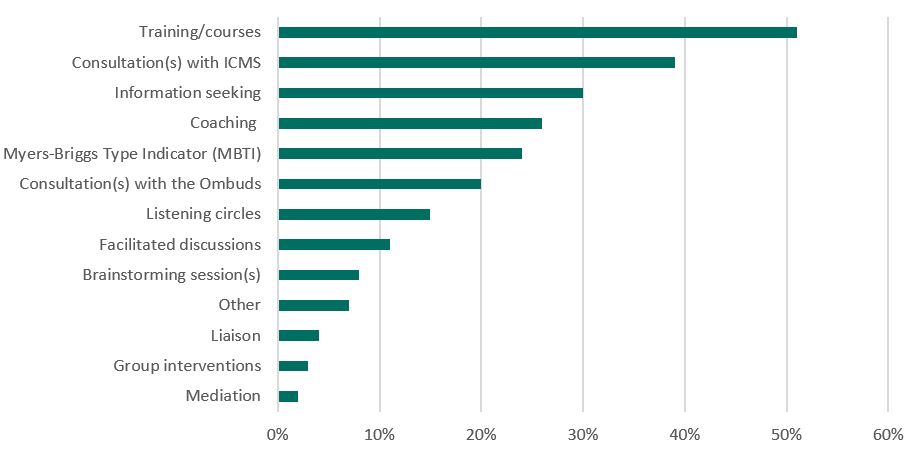
n=119.
Note: Categories are not mutually exclusive.
Text version
| Types of Services | % |
|---|---|
| Training/courses | 51% |
| Consultation(s) with ICMS | 39% |
| Information seeking | 30% |
| Coaching | 26% |
| Myers-Briggs Type Indicator (MBTI) | 24% |
| Consultation(s) with the Ombuds | 20% |
| Listening circles | 15% |
| Facilitated discussions | 11% |
| Brainstorming session(s) | 8% |
| Other | 7% |
| Liaison | 4% |
| Group interventions | 3% |
| Mediation | 2% |
In 2021-22, OIRSO reported the top two interventions by the Ombuds were support and guidance, which are primarily individual consultations (56%) and coaching (11%). The majority (56%) of consultations were with Justice employees who were seeking advice and guidance on issues regarding harassment, lack of communication and fear of reprisal.
For the same year, ICMS served 991 clients (a combination of individual and group context). They provided 257 professional service sessions (consultations, coaching, facilitated discussions, mediations, etc.) and delivered 61 learning activities and presentations, including Listening Circles, on a wide range of diversity and inclusion topics. Consistent with the OIRSO evaluation survey, the main services provided were coaching and consultations.
Coaching, a process that assists individuals develop the skills necessary to deal with conflicts on their own, consisted of nearly half (48%) of ICMS interventions. Consultation consisted of 30% of all interactions and is an important initial step in the informal conflict management process, where the individual can explore problem-solving options and make an informed choice about how to deal with their conflict.
Other common activities that ICMS offers are mediation and listening circles. Mediation is designed to help resolve conflicts early and informally and has increased 67% compared to 2021-22 data. In response to events around racism, discrimination and other forms of injustice experienced in the workplace, the ICMS team, in 2021-22, began providing listening circles to help employees effectively and safely engage in conversations on sensitive topics. In 2022-23, ICMS reported offering six sessions with 104 participants.
Referrals are happening in a reciprocal manner, both to and from OIRSO.
There are other resources available to departmental employees that provide services related to conflict management. These represent alternatives for employees, and depending on their situation, needs and the type of conflict, OIRSO may refer clients to:
- the EAP, if their issue is of a financial, personal, medical, or psychological nature;
- their respective union, if the employee is looking for support to formulate a complaint or submit a grievance; or
- Human Resources Labour Relations, if the manager is considering imposing disciplinary measures.
Over the two-year evaluation period, ICMS referrals were largely to ManagementFootnote 7 (22 instances), Labour Relations (11 instances) and the EAP (8 instances); the Ombuds refers to ICMS most frequently with 23 instances in 2022-23, but also to the EAP.Footnote 8
The number of employees referred to OIRSO from other partners is not tracked by ICMS and the Ombuds has only recently started to track this metric through visitor evaluations. As identified in the results of the 2022-23 visitor evaluations completed for the Ombuds Office, five (5) of 14 visitors were referred to the Ombuds by a different sector, indicating that referrals are happening in a reciprocal manner. Key informants also noted that they will first refer employees who are dealing with conflict to OIRSO, as the Office can either offer appropriate services or refer them to other resources. Results from the OIRSO evaluation survey support this, as some employees indicated they became aware of OIRSO through the Human Resources Branch, the Anti-Racism and Anti-Discrimination Secretariat, the EAP or a union.
Most OIRSO clients were satisfied with the services they received and were likely to refer others to OIRSO.
Overall, employees were satisfied with the services provided by OIRSO. Most OIRSO evaluation survey respondents (71%) were satisfied or very satisfied with the services they received (this holds true when results are broken down by type of service) and were likely or very likely to refer others in the Department to OIRSO (75%) (Figure 7). OIRSO Client Feedback Surveys also indicate that 100% of OIRSO visitors in 2022-23 would recommend services to others, and the case study participants were very satisfied with the services they received, indicating they would continue using the services of OIRSO.
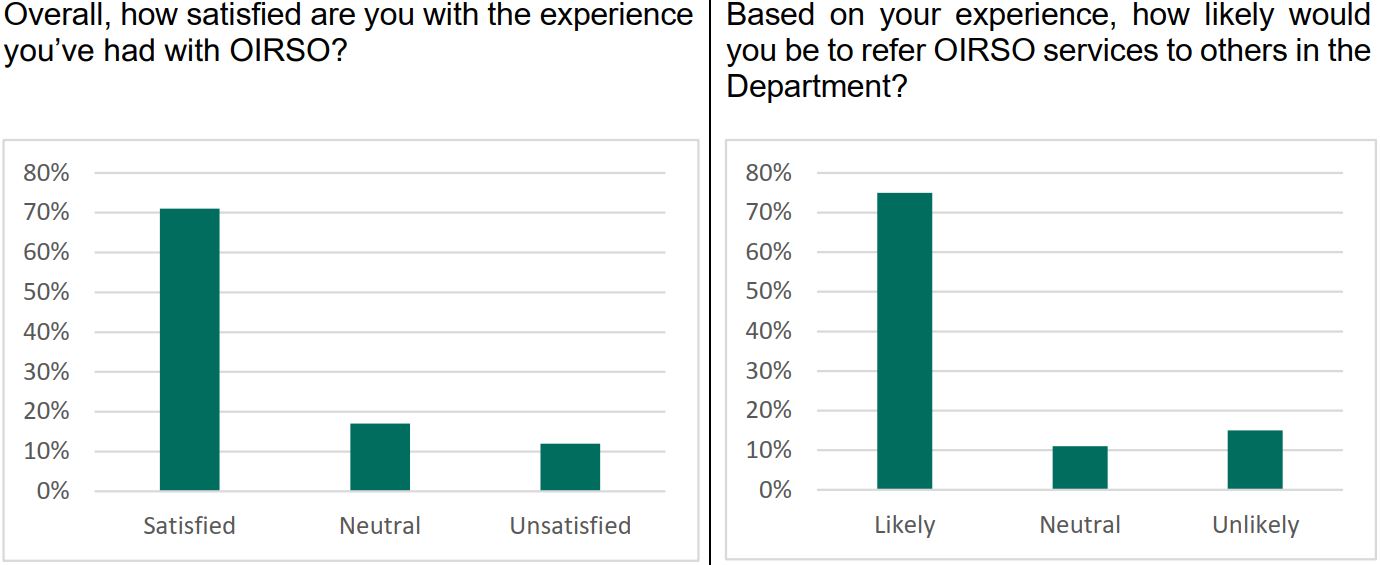
n=110
n=102
Note: Positive and negative scales were added together for ease of interpretation and presentation.
Text version
| Degree of satisfaction | % |
|---|---|
| Satisfied | 71% |
| Neutral | 17% |
| Unsatisfied | 12% |
| Probability | % |
|---|---|
| Likely | 75% |
| Neutral | 11% |
| Unlikely | 15% |
Of the services received, OIRSO evaluation survey respondents were most satisfied with coaching (97%), listening circles (94%), and training (93%). A few respondents who were less satisfied reported that their concerns were not addressed or OIRSO was unable to help.
OIRSO data and the evaluation survey indicate that past users of OIRSO services would make use of OIRSO's resources and services in the future and would recommend the service to others. The case studies suggest that OIRSO also fosters healthy collaborative relationships in their engagement with visitors and takes care to accommodate visitor needs.
Some people are unlikely to use OIRSO services in the future due to uncertainty around OIRSO’s mandate and guiding principles.
There appears to be low levels of certainty around the mandate and four guiding principles, which may be hindering the use of OIRSO services.
Respondents generally agree that OIRSO is independent and prohibitive of retaliation and reprisal (68%), confidential (74%), neutral and impartial (67%), and reflective and supportive of equity, diversity and inclusion (66%). However, 27% of respondents indicated they were still unlikely to use OIRSO services in the future. Possible reasons to explain why respondents would be unlikely to use OIRSO services came from the qualitative responses related to OIRSO’s four guiding principles, including:
- concerns with fairness and neutrality (e.g., siding with management);
- fear of or experience with retaliation and reprisal;
- concerns about confidentiality; and,
- lack of independence.
Key informants also noted similar reasons why employees might be hesitant to access OIRSO services.
OIRSO has recognized similar challenges. Its environmental analysis reported:
- a lack of common understanding of the Ombuds and ICMS’s role in informal versus formal processes, as well as what services they can and cannot provide;
- managing expectations regarding the Organizational Ombuds’ role, limitations and impact; and,
- a lack of awareness of ICMS’s services and training beyond conflict resolution consultations.
According to the literature, the perception of conflicts of interest to the organization may undermine visitor trust in, or use of, ombuds services and that without perceived anonymity, people within an organization may be uncomfortable accessing information or assistance for fear of retribution or loss of reputation.
4.3.4 Impacts of OIRSO Activities
OIRSO is having a positive impact on employee’s well-being by collaborating with others in the Department and increasing the capacity to address workplace conflict.
In support of its mandate, OIRSO supports the capacity of all Justice Canada employees by assisting them navigate through the available resources and processes to help them make sound and informed decisions and address conflict promptly and constructively.
OIRSO effectively supports employees navigate available resources to make informed decisions.
Key informants commented that the creation of OIRSO has given partners and stakeholders a safe place to refer individuals where they will be provided with guidance to help them approach various situations. OIRSO is also seen as a navigator of the system with the capacity to inform managers and employees about different recourses, including referrals to other services so that informed decisions are made. The case studies confirmed that OIRSO helps facilitate informed decision-making by listening to individual or group related issues, by providing options and recommending different types of services (e.g., ICMS-led team training) in response to the issues described.
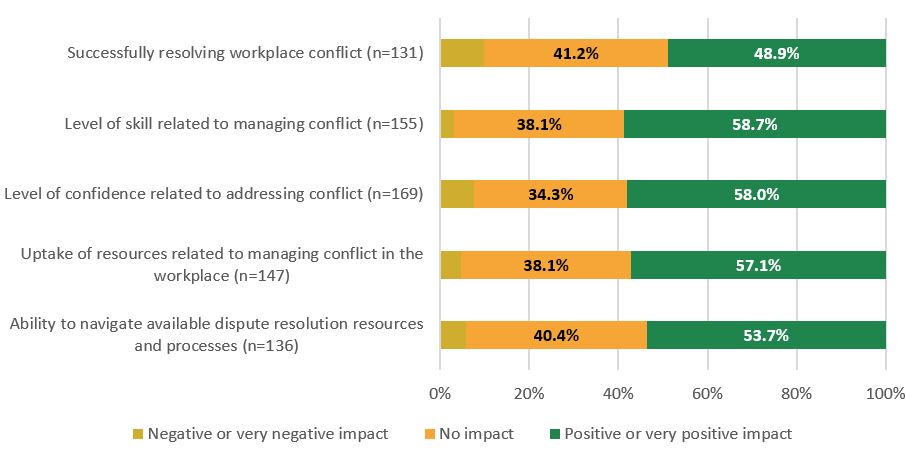
Results from the OIRSO evaluation survey indicate that, for the most part, OIRSO services have had a positive impact on respondents’ level of skill related to managing conflict, level of confidence related to addressing conflict and their uptake of resources related to managing conflict in the workplace (Figure 8 on the following page). Case study participants noted increased capacity for team building, developing positive working relationships, dealing with interactions that may raise conflict, improving communication skills, and being more at ease with less stress. Similarly, OIRSO’s client feedback survey indicates that 93% of visitors strongly agreed that OIRSO presented options and helped them navigate through those options; and 100% indicated that they felt better equipped to manage workplace conflict.
Text version
| Negative or very negative impact | No Impact | Positive or very positive impact | |
|---|---|---|---|
| Successfully resolving workplace conflict (n=131) | 9.9% | 41.2% | 48.9% |
| Level of skill related to managing conflict (n=155) | 3.2% | 38.1% | 58.7% |
| Level of confidence related to addressing conflict (n=169) | 7.7% | 34.3% | 58% |
| Uptake of resources related to managing conflict in the workplace (n=147) | 4.8% | 38.1% | 57.1% |
| Ability to navigate available dispute resolution resources and processes (n=136) | 5.9% | 40.4% | 53.7% |
Based on OIRSO’s client feedback survey, approximately 17% (FY 2021-22) and 19% (FY 2022-23) of clients decided not to file a formal complaint/grievance after using ICMS services. This is consistent with the OIRSO evaluation survey results that indicate the tendency to submit a formal complaint in relation to a conflict is low, with most respondents (82%) indicating they did not submit a formal complaint.
However, some OIRSO evaluation survey respondents indicated that OIRSO had no impact (34-41%) (i.e., 50+ respondents), with a few indicating it had a negative impact or a very negative impact (3-10%) (i.e., less than 15 respondents). Of those who indicated that OIRSO had a negative impact, some said the options or solutions were ineffective; there was a lack of communication or follow-up; and there was a perceived bias in favour of management.
OIRSO complements the capacity of other areas of the Department to address workplace conflict.
OIRSO contributes to departmental capacity to address workplace conflict through the unique structure of the Office, collaboration with stakeholders and partners, upward feedback, competencies of OIRSO staff and capacity within the Office.
Key informants acknowledged that Ombuds and ICMS functions can be seen as a unique safe place for employees and act as an early detection system for emerging issues, by sharing overall trends/themes derived from their data with partners to mitigate broader issues before they escalate (e.g., harassment, discrimination). They also commented that OIRSOs ability to help build capacity may be hindered by a lack of common understanding of the Ombuds and ICMS’s role in conflict management, particularly with regards to informal vs. formal processes, as well as expectations of what services OIRSO can and not provide.
As per the Informal Conflict Management System Resource Guide on professional knowledge, skills and abilities required, OIRSO practitioners had the required competencies to achieve its mandate. Practitioners are trauma-informed and trained in the topics of conflict resolution, mediation and facilitation, group interventions, mental-health related situations in the workplace, and diversity and inclusion. Additionally, the OIRSO evaluation survey results identify that OIRSO is thought to have adequate or very adequate skill levels/expertise of personnel (62%). The high levels of satisfaction with services received also point to having a strong complement of staff to deliver on its mandate. However, most did not know if the capacity of OIRSO was adequate to handle the volume of demand.
OIRSO has developed collaborative working relationships with stakeholders and works alongside them to identify departmental issues and trends and to develop tools and resources to respond to client needs.
The evaluation found that OIRSO has effectively engaged with key partners and stakeholders to discuss broad issues, policies and initiatives occurring within the Department. The Office collaborates on opportunities related to its mandate, including sharing insights to better support employees. These key partners and stakeholders include members of the senior management team, some sections of the Human Resources Branch such as Wellness, Labour Relations, Respect in the Workplace and Occupational Health and Safety, as well as the Anti-Racism and Anti-Discrimination Secretariat, Champions, Bargaining Agents and central agencies. Commitments to collaboration and supporting activities are outlined in OIRSO’s Terms of Reference.
Internal key informants provided examples of collaboration through the exchange of referrals of clients which is discussed in more detail in section 4.3.3.
There is also the provision of advice and exchange of information through regular bilateral meetings held by the Ombuds and senior management. OIRSO has also jointly developed tools and resources with other stakeholders, such as the managers’ toolbox and roadmap, along with training and workshops tailored to client needs.
OIRSO is effective at identifying trends and using an upward feedback mechanism to provide recommendations to senior management and it contributes to driving change in the Department.
The literature suggests upward feedback is an important function of an Ombuds, facilitated by their independence in the organization. An Ombuds can play a role in the identification of trends and issues developing within an organization and collaborate with senior managers to raise awareness and facilitate actions to mitigate issues.
The evaluation found that the upward feedback provided by OIRSO is useful. OIRSO is identifying trends, meeting with senior leaders and making recommendations meant to address emerging systemic issues. The Office also follows up on the official recommendations it makes. The evaluation found that there is a high value placed by senior management on the upward feedback received as it provides an objective, non-influenced picture of what is happening in the Department.
As a result of OIRSO’s recommendations, some of the following changes have been made in the Department over the two-year period covered by the evaluation: implementing training; posting accessible information and a toolkit on harassment and violence prevention; implementing tools and methods to engage employees with other levels of management; and changing the departmental Talent Management process.
There are early indications that OIRSO is contributing to well-being and change in departmental culture.
Although change in workplace culture is a longer-term outcome, there is evidence to suggest that small changes are being recognized, and OIRSO is contributing to the well-being of employees primarily through its activities, such as training and workshop delivery and upward feedback provided to management.
The OIRSO evaluation survey results demonstrate views that culture is changing, with some respondents (39%) noting that Justice’s departmental culture has increased positively by at least “a little”. Client feedback surveys, administered by OIRSO, indicate that most OIRSO users (71%) identified that the services they received improved their well-being.
Ongoing instances of conflict within the Department and an increase in the uptake of ICMS services should not be misinterpreted as an indicator of an unhealthy workplace. In fact, it may suggest the opposite. The absence of conflict is not a sign of organizational health. A healthy organization is one in which people feel comfortable voicing differences or having disagreements and can work through them. The increase of formal complaints and uptake in informal resolution can be indicative of movement towards a healthier organizational culture and increasing trust in departmental resources; and openness to discuss workplace issues.
Literature suggests that change in culture takes time, and the longer an Ombuds function is in place, the better informal conflict resolution options are recognized and start to change trust in the system. Two years is still early for the creation of OIRSO to be able to track changes in workplace culture.
4.4 Efficiency
4.4.1 Costs and Benefits to Employees and the Department
Informal processes, such as ICMS, are perceived to bring benefits, such as being timelier, requiring fewer resources, and are less adversarial compared to formal processes that involve the effort of more people, taking more time, and can negatively impact well-being.
Across several sources of academic literature, findings indicate that a rights-based process (formal) is more costly than applying an interest-based approach. A formal process is more costly in terms of 1) employee well-being; 2) productivity rates; 3) time taken from other management responsibilities; and 4) decreased morale (e.g., employee absenteeism). Further, the literature indicates that formal processes tend to be less rewarding for the parties as the process takes control away from the parties, is less flexible, and is slower to achieve resolution. The evaluation found that the formal grievance process is substantially more complex for the Department to execute than that of an employee or manager using ICMS.
Though it was not possible to quantify the cost savings in the case of services provided by OIRSO at Justice Canada, the literature indicates that the provision of informal conflict resolution results in cost savings. Conflict is costly to organizations, with one study done by HR consultancy Morneau Shepell finding that conflict costs Canadian businesses over $2 billion a year. Furthermore, another study conducted by the Conference Board of Canada, absenteeism costs the Canadian economy over $16 billion a year.Footnote 9 OIRSO provides the Justice Canada employees with an opportunity to address conflict, and also presents an alternative to the formal grievance process. A report from the Federal ICMS Network summarized an Employment and Social Development of Canada paper, noting that grievances are estimated to cost, from the first level to the final adjudicated decision, as much as $40,000 per file. The average cost of mediation can range from $4,000 to $5,000.Footnote 10
Beyond cost savings, the OIRSO evaluation survey results found that the top three benefits of using an informal conflict resolution option suggested by some respondents are: preserving relationships (36%), faster resolution (29%), and less stress (22%) (Figure 9).
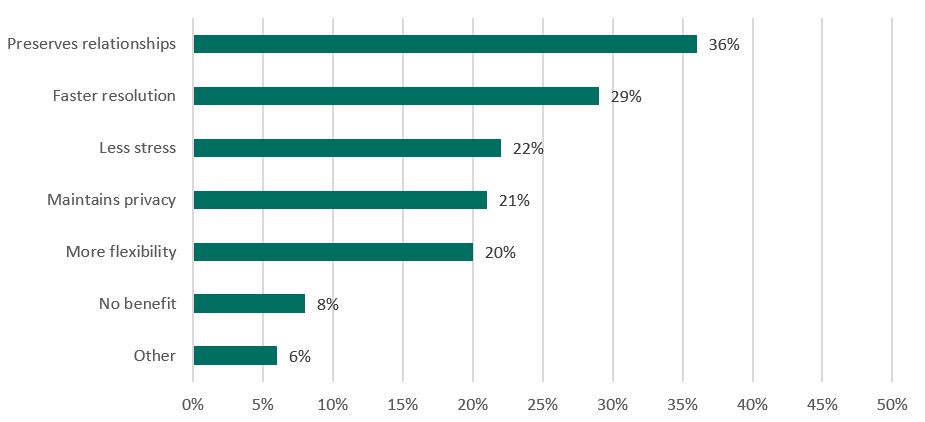
N=335
Note: Respondents could select up to two options
Text version
| Top benefits | % |
|---|---|
| Preserves relationships | 36% |
| Faster resolution | 29% |
| Less stress | 22% |
| Maintains privacy | 21% |
| More flexibility | 20% |
| No benefit | 8% |
| Other | 6% |
These benefit areas are consistent with the feedback provided across key informant groups with mention of OIRSO processes being supportive through the provision of tools and resources, being less adversarial, faster, allowing participants to be decision-makers, and services are more focused on the relationship between sides, which is empowering for the parties. Additionally, key informants noted that with faster processes, additional conflicts or escalating impacts can also be avoided.
Some concerns mentioned by OIRSO evaluation survey respondents about using an informal conflict resolution option include concerns over follow through (i.e., real resolution and change) and the accountability for implementing resolutions (e.g., trust issues). Key informants did not cite any drawbacks to using an informal mechanism but were clear that there are instances where a formal process is needed and should be used.
4.4.2 Service Delivery Efficiency
OIRSO has delivered its services in an efficient manner. The Office has met its service standard for responding to requests and has been able to deliver more services with only a slight increase in expenditures, resulting in lower cost per activity delivered.
OIRSO is noted to be meeting its set service standard (72 business hours following an initial request was respected).
In its second year, OIRSO has delivered a greater number of activities than in its first year, with an overall growth rate of 31%, a 2% increase in actual dollars expended, and a 0.5 increase in FTEs. Specifically, OIRSO’s cost per activity has decreased from $2,078 in 2021-22 to $1,700 in 2022-23 – a change of $378.Footnote 11 While two areas saw a decrease in activities (e.g., learning and outreach), the number of visits to the Ombuds and ICMS has increased by 45% (Table 4).
Although OIRSO has been able to increase the number of activities it delivers with a limited increase in financial expenditures, sustainability may become a concern if growth rates continue along the same trajectory. The more successful the Office is at raising awareness of its services, the more it could expect to see an increased demand in services. It will be important for OIRSO to be aware of potential risks related to capacity issues.
| Activity Category | 2021-22 Number of activities |
2022-23 Number of activities |
Growth in number of activitiesFootnote 12 |
|---|---|---|---|
| Ombuds visits | 89 | 129 | 45% |
| ICMS Professional service sessions | 257 | 372 | 45% |
| ICMS Learning activities | 61 | 45 | -26% |
| Joint Outreach activities | 64 | 47 | -27% |
| Total number of activities | 1,016 | 1,327 | 31% |
- Date modified: