
4. Findings
4.1 Relevance
4.1.1 Continued Need for ILA/ILR and Additional Supports
There is a continued and growing need for support services for victims of IPV navigating the family justice system. Ongoing efforts are required to fill gaps that remain within the family justice system to meet the needs of specific groups who face disproportionate risks of IPV or unique challenges in accessing support and justice.
GBV and IPV remain pervasive in Canada, with rates of violence increasing. GBV refers to violence based on gender norms and unequal power dynamics, perpetrated against someone based on their gender, gender expression, gender identity, or perceived gender, and it can include physical, emotional, sexual, or economic abuse.Footnote 3 IPV, a specific type of GBV, refers to violence committed by current and former legally married spouses, common-law partners, dating partners and other intimate partners.Footnote 4 Relatedly, family violence is a form of abuse or neglect that a child or adult experiences from a family member, or from someone with whom they have an intimate relationship, whether current or former.Footnote 5 The impacts of IPV can be extremely severe and long-lasting. Harms resulting from IPV include:
- Physical harms, including minor to severe injury, short and long-term health consequences, stress-related illness, or death;
- Psychological/emotional harms including mental health consequences (i.e., depression and anxiety/PTSD); and
- Financial harms including costs related to lack of access to finances, missed wages, professional consequences, and legal support.
There is a continued and growing need for support services for victims of IPV navigating the family justice system, driven by the increasing prevalence of IPV in Canada. This need for support has been compounded by particular challenges associated with the COVID-19 pandemic. Additionally, diverse and underserved groups face unique challenges navigating the family justice system and accessing legal supports.
Rates of IPV have been increasing and continue to be underreported
As demonstrated in Figure 1, police-reported data indicates that IPV and family violence have increased in recent years. According to Statistics Canada, from 2018 to 2023, rates of police-reported family violence rose by 17% and IPV rose by 13%. For both forms of violence, women and girls account for the majority of victims.Footnote 6 In 2022 alone, there were 129,876 victims of police-reported family violence and 117,093 victims of IPV aged 12 years and older.
According to a 2019 Statistics Canada survey, among instances of police-reported violence, the most common type of IPV was physical assault, followed by other offences involving violence or the threat of violence, and sexual assault.Footnote 7 Furthermore, homicide rates related to IPV have increased over recent years, from 77 victims in 2019 to 90 victims in 2021.Footnote 8 Of the total 788 homicides reported in Canada 2021, 154 victims were killed by a family member, further illustrating the severity of family violence of which IPV is a significant component.
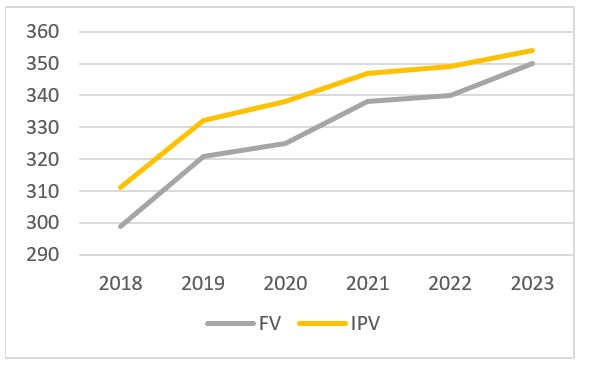
Text version
| Fiscal Year | Family Violence | Intimate Partner Violence |
|---|---|---|
| 2018 | 299 | 311 |
| 2019 | 321 | 332 |
| 2020 | 325 | 338 |
| 2021 | 338 | 347 |
| 2022 | 340 | 349 |
| 2023 | 350 | 354 |
Moreover, rates of IPV are likely even higher than these numbers suggest, with IPV largely underreported to police. For instance, 44% of women and girls who have ever been in an intimate partner relationship self-reported experiencing physical, psychological, or sexual abuse in the context of an intimate relationship in their lifetime.Footnote 9However, according to a 2019 Statistics Canada survey, 80% of people who had experienced IPV did not report it to the police.Footnote 10
COVID-19 pandemic and GBV and IPV
The COVID-19 pandemic highlighted and intensified the challenges of GBV and IPV. Family violence in Canada was 4% higher in 2021 compared to 2019, likely due to increased time spent at home and social isolation during the pandemic.Footnote 11 Key risk factors contributing to the rise in IPV included financial instability (the pandemic caused widespread job losses with many households experiencing multiple layoffs, leading to significant financial stress) and caregiver burnout (the added burden of caregiving responsibilities).Footnote 12
There are ongoing needs for victims of IPV
The justice system is complex and often fragmented, requiring individuals to possess a significant level of awareness and knowledge to navigate it effectively. At the same time, victims of IPV and GBV typically face a range of complex, intersecting needs and unique circumstances. Many victims contend with additional challenges, such as housing instability, health issues, or immigration concerns, which further exacerbate their already challenging circumstances. Moreover, due to their victimization and other life circumstances, many victims are traumatized, and these emotional and psychological impacts further complicate their ability to navigate the justice system. As a result, victims can encounter significant barriers when trying to interact with the system, and in some cases, they may experience re-traumatization through their engagement.
In addition, there are specific challenges in accessing the legal system for certain groups, highlighting the difficulties these groups face when navigating legal assistance, such as Francophone individuals obtaining timely French-language resources and middle-income earners, who do not qualify for free services but cannot afford legal fees and are often left without options.
There are ongoing and significant needs for groups at greater risk of IPV, particularly those who face disproportionate levels of vulnerability. While IPV can impact anyone, certain groups experience higher rates of violence or face unique challenges in accessing support and justice.

Text version
78% of IPV victims are women and girls
Women and girls are disproportionately affected by IPV, both in terms of frequency and severity. The majority of those that experience IPV are women and girls, with 8 in 10 (78%) victims/survivors of police-reported IPV in 2022 being women and girls. The rate of IPV is more than three times higher among women and girls than among men and boys.Footnote 13
Additionally, among people who experienced IPV in a 12-month period, women were twice as likely as men to have experienced at least one form of IPV on a daily or almost daily basis. Moreover, the violence that women experience tends to be more severe. For instance, from 2009 to 2022, 79% of victims of intimate partner homicide were women and girls, highlighting the extreme and often fatal consequences of IPV for women.Footnote 14 Furthermore, young women and girls are at a particularly high risk for IPV. Police-reported IPV in 2023 among women and girls aged 12 to 24 years was nearly seven times higher than that for men and boys of that age group.Footnote 15

Text version
61% of Indigenous women experience IPV in their lifetime
Indigenous women and girls are disproportionately at risk, experiencing some of the highest rates of both violent and non-violent victimization among all population groups in Canada. According to Statistics Canada, 61% of Indigenous women experienced some form of IPV in their lifetime (since the age of 15) compared with 44% non-Indigenous women.Footnote 16 Additionally, the rate of spousal violence for Indigenous peoples (7.5%) is more than double that of non-Indigenous people (3.4%).Footnote 17
Needs and barriers faced by Indigenous peoples stem from systemic barriers such as racism and colonialism, intergenerational trauma, higher rates of poverty, overcrowded housing, and addiction issues. Indigenous women may also face unique barriers to reporting experiences of violent victimization or seek help following victimization including lack of access to culturally appropriate resources, inaccessibility of support services, a general distrust of law enforcement, and lack of confidence in the criminal justice system.

Text version
5.1% of people with disabilities report spousal violence
People with disabilities are at greater risk of IPV victimization due to a higher dependence on an intimate partner, particularly when the intimate partner provides care. Those with a disability may face barriers to using or consulting victim services, such as a lack of information about available services and difficulties accessing transportation. In addition, those who have a disability and wish to leave a violent relationship may have greater difficulty leaving that relationship because of an increased likelihood of financial and physical dependence on an intimate partner. Data shows that 5.1% of people with disabilities reported spousal violence in the past five years, compared to 2.7% of those without disabilities.Footnote 18
Immigrants and refugees
Though evidence indicates that rates of IPV among immigrants in Canada are the same or lower than non-immigrants,Footnote 19 immigrant and refugee women face added vulnerabilities in accessing resources, such as unfamiliarity with Canadian legal systems, which can complicate their ability to access help and legal protections. Their immigration status and limited support networks often create additional barriers to leaving abusive relationships and finding resources.Footnote 20

Text version
IPV 1.8 times higher in rural areas
Those living in northern, rural, and remote communities, including the territories and prairie provinces face higher rates of violence. IPV rates are 1.8 times higher in rural areas than urban areas (548 vs. 300 per 100,000 population).Footnote 21 Across Canada, from 2018 to 2023, IPV had the highest rate in northern regions, and these rates are highest in Nunavut, Northwest Territories, Yukon, Saskatchewan and Manitoba.Footnote 22 In addition to the disproportionate rates of IPV, victims of IPV who live in rural communities are more likely to feel isolated or trapped due to the remoteness and lower availability of community services.Footnote 23

Text version
67% of LGBTQI+ women experience IPV
2SLGBTQI+ people are also at greater risk of IPV. Notably, 67% of LGBTQI+ women who have been in an intimate partner relationship at some point have experienced at least one form of IPV since the age of 15, whereas 44% of heterosexual women have reported the same.Footnote 24 Furthermore, transgender women are also more likely than others to experience physical violence within an intimate relationship and have negative interactions with police following an incident.Footnote 25
Responsiveness to Needs
The evaluation found that the project funding provided by the two JPIP funding streams have been responsive in meeting the needs of victims of IPV and are serving a diverse group of clients including those from groups with higher rates of victimization. Projects are designed to be culturally sensitive and safe, trauma-informed, and use a gender-based approach. Project recipients aimed to hire staff with the required skills and expertise or provided training to enhance these competencies, to try to ensure staff are trauma-informed, culturally competent, and knowledgeable in relevant legal areas. Furthermore, projects supported a diverse range of victims of IPV, including women, Indigenous Peoples, those living in rural/remote areas, and official language minority communities. For example, in 2022-23, the Yukon Department of Justice’s Strengthening Safety, Access and Justice for Yukon Victims of Crime project provided ILA/ILR services to 115 victims of IPV and sexual assault, 71% of whom identified as female and 31% of whom identified as Indigenous.
ILA/ILR and Additional Supports projects responded to demand for services and the complexity of IPV cases by filling existing gaps in the community. Funding recipients highlighted successes of their projects in addressing key gaps for victims of IPV. They noted that Additional Supports projects made progress against gaps related to the justice system's sensitivity to IPV, coordination between services, and cultural awareness. For example, to improve the justice system’s sensitivity to IPV and the intersection with cultural awareness, a project based in Ontario focused on developing course content for judicial education models. Course content includes topics such as coercive control, the experiences of Muslim women involved in the immigration system in Canada with regard to IPV and family violence; and lessons on the experiences of First Nations, Métis and Inuit women and how the history and legacy of colonialism has impacted Indigenous communities and contributes today to the disproportionate risk of IPV and family violence facing Indigenous women and girls. Beginning in 2024, this content has been made available to more than 2,500 judges in Canada through a funding recipient’s website available only to judges.
ILA/ILR funding recipients indicated that the main gaps addressed relate to the complexity of the legal system and victims’ ability to navigate that complex system, as well as the lack of access to affordable legal support. This includes integration of social or family court support workers, and collaboration with partner organizations, allowing for a holistic approach and wraparound services such as triage services, risk assessment, safety planning, housing, interpretation and counselling services. For example, an Ontario-based legal clinic noted that, given the complexity of family law, their lawyer’s support in guiding and assisting clients through the various steps required to complete and file forms was invaluable. The clinic also has wraparound services available from a social worker to assist clients with issues related to housing and income support.
However, funding recipients identified ongoing gaps, including limited-service capacity, with many clients requiring more legal support than their project can provide. Projects tended to be fully subscribed and implemented as planned, but the majority of funding recipients (especially in the ILA/ILR stream) reported being unable to fully meet the high level of demand for services. For those who can access the services, one potential barrier is the limited number of ILA/ILR hours of service that can be made available to a victim of IPV, due to the high demand (i.e., four hours per individual) particularly when their case is complex in nature and may require more time than allotted by the service. The time allotment was noted among some funding recipients as an approach used to meet the high demand placed on their services.
4.1.2 Consistency with Government Priorities, Federal Roles and Responsibilities
ILA/ILR and Additional Supports are aligned with federal and departmental roles and priorities, including improving access to the justice system, strengthening its response to family violence, and increasing engagement, awareness and understanding of the family and criminal justice system.
The evaluation found that the two JPIP funding streams are well aligned with federal priorities, particularly the Federal GBV Strategy. The pillar of “Promoting a Responsive Justice System” focuses on improving legal responses to GBV and enhancing training for law enforcement and judicial personnel.Footnote 26 The provision of tailored legal advice and representation through ILA/ILR projects contributes directly to these objectives by reducing re-traumatization of IPV victims, increasing confidence in the justice system's response to GBV, and supporting informed decision-making and navigation through criminal and family justice systems. By funding projects that expand or develop family court support worker models or improve coordination within the justice system in cases involving family violence, the two JPIP funding streams enhance the justice system's responsiveness to GBV and ensure survivors receive the support they need throughout the legal process.
The National Action Plan highlights the need for a coordinated response involving health, the GBV sector, and housing and social services to address both immediate and long-term needs of victims. Its goals include ensuring reliable and timely access to culturally appropriate and accessible services, as well as improving health, social, economic, and justice outcomes of those impacted by GBV.Footnote 27 The JPIP funding directly aligns with these goals by expanding legal services and supports for victims and survivors, increasing access to justice, and contributing to a more responsive justice system.
The Additional Supports funding stream align particularly well with this commitment, as JPIP’s family violence component aims to enhance the justice system’s ability to recognize and address family violence while increasing public awareness. Additional Supports contributes by funding projects that help IPV survivors navigate the family justice system, expand access to family court support workers, and improve coordination between the family and criminal justice systems.
Both funding streams emphasized a GBA Plus approach in project design and implementation, discussed further in section 4.2.3. This approach aligns with the National Action Plan’s priority of ensuring equitable access to justice for Indigenous, racialized, and 2SLGBTQI+ communities, who are disproportionately impacted by family violence and IPV. It is also consistent with Budget 2021 commitments that allocated funding to support Indigenous women and 2SLGBTQI+ organizations providing GBV prevention programming.
Internal key informants reported that the funding streams not only align with federal strategies but also with departmental roles and responsibilities and the long-term goal of JPIP to increase access to the justice system and strengthen the Canadian legal framework. The funding streams support Justice Canada’s role in ensuring that Canadians in contact with the justice system have access to appropriate services that promote a fair, timely and accessible justice system. They also contribute to strengthening the justice system’s response to family violence, increasing public awareness, and promoting public engagement in addressing family violence. Internal key informants further noted that GBV programs remain a departmental priority.
4.1.3 Sustainability of Funded Projects
The need for ongoing GBV services extends beyond the current funding agreements, with most recipients lacking sustainable funding. Despite this, knowledge and resources developed through the projects will continue to be used.
Funding recipients were asked what measures, if any, were implemented to support the sustainability of their project beyond the period of the current funding. Their responses demonstrate that the need for ongoing GBV services extends beyond the current funding agreements, and that most recipients lack sustainable funding. A few funding recipients secured additional funding, such as partnerships with provincial governments, while others plan to rely on internal funds or existing infrastructure to sustain some activities.
Among the ten ILA/ILR projects, two received additional funding from a provincial government while the remaining eight are currently trying to find another source of funding or noted that no other funding is available. Of the ten Additional Supports projects, four stated that internal funds or existing infrastructure would be used to continue services in some format, one of which elaborated that they have obtained consistent and reliable government funding that will maintain two permanently staffed positions. Of the six projects across the two JPIP funding streams who signaled some form of ongoing funding sustainability, two were projects led by provincial or territorial governments and four by not-for-profit organizations.
Several representatives from each funding stream noted that knowledge and resources developed through their project activities would remain available or would be leveraged to make future or ongoing work possible. Case studies also showed that lessons learned, and resources developed by the project will be shared or integrated into future work. For example, carrying forward the program’s lessons learned, making project resources available online, and strong relationships through using a collaborative model will continue beyond the funding period.
More generally, funding recipients were asked if Justice Canada could do anything differently to better support future projects. Many responded that they had no suggestions for improvement in how Justice engages with them, as they feel well supported by the Department and the funding. However, among the suggestions provided, funding sustainability was top of mind. Five ILA/ILR recipients and four Additional Supports recipients said that they would like to see Justice Canada continue or increase funding. Relatedly, a few recipients indicated that they would like more proactive information about funding availability and other related funding streams for which they may be eligible and therefore able to continue their activities. Beyond funding levels or eligible activities, the only other suggestion provided was to continue or increase the facilitation of information sharing between funding recipients; the premise being that others may be able to benefit and be inspired by what others are doing with the funding.
4.2 Design and Delivery
4.2.1 Calls for Proposals, Application and Reporting Process
Overall, the CFP, application, and reporting process were found to be generally clear and not overly burdensome. Key areas of success that facilitated the process included the early support and engagement provided by JPIP officials along with guidance materials. Potential opportunities exist to further streamline and coordinate the CFP process to reduce the administrative and reporting burden and provide additional assistance to those from smaller or grassroot organizations, where possible.
CFPs and Application Process
Evidence suggests that overall, the CFP and application process were clear and not overly burdensome. One key area of success noted among funding recipients that facilitated this process was the early support and engagement provided by JPIP officials. This consisted of the following:
Information sharing and awareness raising activities
- At the onset of implementing the CFP process, JPIP officials proactively organized an information session. The goal was to explain the purpose of the CFP to ensure that there was a clear understanding of the eligibility criteria, reporting requirements, and parameters of the funding. Guidance materials and templates were shared, which were indicated as being helpful to facilitate awareness and improve understanding of the process.
- This initial engagement provided the opportunity for individuals to ask questions, seek clarification, and understand the process, particularly for those who were unfamiliar with it. This helped to support JPIP officials ensure that the proposals they received met the requirements. Funding recipients indicated they were more aware of the funding stream expectations, noting that they “noticed the efforts” being made by JPIP officials to ensure they were successful in the process.
- This information session was recorded and made available throughout the CFP as a reference tool that could be accessed by funding recipients to obtain ongoing support.
However, one barrier identified during the CFP and application process related to the experience level and size of an organization. Those who had previously engaged in a CFP process and were more familiar with the expectations and how to engage with JPIP officials qualified the process as “straightforward”. These funding recipients also established a rapport with JPIP officials and felt they could easily reach out given the previously established relationship. Larger organizations also noted that they had the capacity and infrastructure to support the CFP and application process, which can require dedicated capacity and resources. Those from smaller or grassroot organizations indicated an additional burden given their more limited resources and time to dedicate to the process as well as having more limited experience with this type of federal process.
Some suggestions to strengthen the CFP and application process were identified. For example, funding recipients specified that a more streamlined and coordinated process would be beneficial, particularly in the case for ILA/ILR. Given most ILA/ILR funding recipients provide services to both victims of sexual assault and IPV, having the two separate funding streams placed an additional burden on the application process (i.e., projects needed to apply to both funding streams). Funding was also received from both JPIP and the Victims Fund, in these instances, making the tracking and monitoring of funds a bit more complicated.
It was noted that having one process in the future would reduce the complexity of the CFP. In addition, there was a potential opportunity for JPIP officials to engage with other federal government departments, for example Women and Gender Equality Canada (WAGE), Employment and Social Development Canada, or Public Safety, who were launching similar CFPs related to the GBV, which would have been helpful in ensuring a similar process and coordination been undertaken where possible.
Other suggestions among funding recipients related to abbreviating the application process, such as retaining key information from organizations (e.g., standard background information) that can be used in future CFPs and sending out advance notice of CFPs so there is sufficient time for applicants to prepare.
Reporting Process
Funding recipients, in general, perceived reporting requirements to be appropriate and reasonable. For instance, reporting requirements were similar to other federal departments’ processes, and funding recipients appreciated the guidance materials (e.g., reporting template, instructions, etc.) provided by JPIP officials. However, a few challenges were raised related to the client feedback survey. Although JPIP officials consulted funding recipients in the development of the survey and integrated the collection of survey data into existing data collection efforts, the survey was found to have low participation rates. This was given the voluntary nature of the survey and sensitive nature of IPV. Another challenge was related to the financial reporting, as some funding recipients were unfamiliar with the financial language used and found the template to be a bit complicated and onerous.
In general, funding recipients had the flexibility to use the funds as necessary (e.g., to hire human resources, expand services and cover administrative expenses). However, in some instances, there were lapses in funding, which occurred particularly in the first FY funding was received. This is not atypical given projects are in the implementation phase and can experience unforeseen barriers that prevent all allocated funds from being spent (e.g., delays in project timeliness due to difficulties in hiring staff, etc.).
4.2.2 Areas of Success in Implementation and Delivery
Targeted efforts to foster strong working relationships among funding recipients and deliver holistic services (e.g., trauma-informed practices, cultural sensitivity) to victims of IPV were noted as areas of success in the implementation and delivery of ILA/ILR and Additional Supports projects. Common challenges experienced at the project level included recruitment of qualified staff, high demand of services, and support for short-term projects.
Fostering Strong Working Relationships
One key area of success that was noted by JPIP officials and funding recipients was the importance of partnership building between funding recipients as well as with JPIP officials. During implementation, JPIP officials engaged with funding recipients through open and ongoing dialogue. This was achieved through scheduled meetings and discussions of issues and trends, which provided the opportunity to bring together funding recipients who shared commonalities either through their specific area of expertise or organizational structure. This also created an environment that promoted networking and collaboration, as well as the ability to hear different perspectives and engage with varying levels of knowledge. Not only were strong working relationships fostered among funding recipients, but they were also cultivated with JPIP officials. The resulting benefit was that funding recipients engaged with JPIP officials more frequently when barriers or obstacles emerged during implementation, in order to discuss the issue, find a solution, and adapt where necessary.
Gender-based Approach and Trauma-informed Approach
JPIP officials and funding recipient interviewees stated that having GBA Plus and trauma-informed approaches embedded in the program design and delivery of ILA/ILR and Additional Supports was a best practice. This was implemented at the project level through the application process by requiring funding recipients to provide information on how their project would integrate the following three key considerations:
- A gender-based approach and how proposed activities will impact diverse groups of women, men and others.
- Cultural sensitivity that demonstrates, directly or through partnerships with other organizations, their experience, knowledge and understanding of culture as it pertains to the implementation of their proposed project.
- A trauma-informed approach that uses a client-centred model that is built on knowledge about the impact of violence and trauma on people’s lives and health into all aspects of practice to foster clients’ safety, respect and empowerment.
Delivering Holistic Services
At the project level, one key area of success that was identified among multiple interviews and case studies focused on providing victims of IPV with holistic services, which is facilitated through a network of community partners.
Some examples of how ILA/ILR and Additional Support projects delivered services in a holistic manner include the following:
- Providing services that acknowledge the complex needs of victims of IPV (e.g., housing, financial, immigration, etc.) in a holistic manner, such as establishing a clear process to make referrals by way of warm handoffs, where individuals are personally introduced to the next service, and having awareness of the other services in the community and their capacity in order to appropriately make referrals.
- Informing the design of a project through consultations, such as engaging with Elders to integrate specific values, traditions and teaching practices; conducting a needs assessment to understand the specific gaps that exist in the community; or establishing an advisory committee of people from different regions that can speak of their specific experiences allowing for a fulsome perspective to be considered.
- Developing resources for victims of IPV for diverse populations, such as providing materials not only in both official languages but also in other prevalent languages based on the demographic in certain locations.
- Providing trauma-informed and culturally sensitive training to individuals working in the legal community (e.g., judges, legal counsel) and other staff who come in contact with victims through the services offered (e.g., navigation workers, support workers, etc.).
Case Study Example 1: Key Success Factor Community of Practice Justice for Children and Youth Ontario Multi-Community Clinic: Support and Advice for Survivors of Gender-Based Violence in Ontario
This case study demonstrates how a community of practice was a key success factor during the implementation of a project. The multi-clinic created a holistic community of practice and established a forum with nine clinics that encouraged problem-solving, generated ideas, and provided an environment of support both internally as well as with external partners across the sector. Collaboration also extended to connecting with other funding recipients to enhance referrals, reduce duplication, and improve project integration.
4.2.3 Challenges in Implementation and Delivery
While no challenges were identified at the program level related to implementation and design, some common barriers were noted among multiple funding recipients and through the case studies. Those barriers were encountered by funding recipients in the following areas:
Recruitment of staff
Finding individuals with the necessary competencies (e.g., trauma-informed, culturally sensitive, relevant legal expertise) as well as those who have experience with family violence or knowledge of IPV was a challenge. The geographic location of some projects, especially those in rural and remote areas, created further recruitment barriers given the more limited access to individuals who would be interested and qualified to apply. As a mitigation strategy, some projects offered virtual services, particularly in more rural and remote locations, and provided training to those who may have most competencies but needed to build up capacity in certain areas to be fully qualified for a position.
High demand for services
The uptake in accessing services once projects were implemented was significantly high at times. This led to the creation of waitlists as well as limited ability of staff to exercise further outreach and promotion of its services in order to manage workloads and staff fatigue. In addition, when accessing ILA/ILR services that were in high demand, some victim needs went beyond the legal scope of work being offered (e.g., requiring social services, housing, etc.). To ease workload pressures, some funding recipients made referrals to other appropriate community partners in cases where demand was too high and to avoid an expanding waitlist. Some ILA/ILR projects also offered dual services whereby legal counsel could focus on providing legal services to victims of IPV and a support worker was hired to help address the other relevant needs victims were facing. This acknowledged that victims’ needs may extend beyond those that are legal in nature and are just as important to respond to.
Short-term nature of project funding
Collaborating with and gaining the trust of the community was an issue raised by some funding recipients, especially in the context of short-term projects. For example, funding recipients noted that community partners can be hesitant to invest in a project that will operate for a limited amount of time (i.e., one year).
4.2.4 Integration of a GBA Plus Approach
A gender-based approach was a requirement to consider in the design and delivery of all ILA/ILR and Additional Supports projects. JPIP officials supported funding recipients in integrating this approach by providing tools, information, and training related to GBA Plus.
A gender-based approach was embedded in the design and delivery of ILA/ILR and Additional Supports projects at the program and individual project level, with GBA Plus information collected at both the application and reporting stages.
JPIP officials undertook steps to emphasize the importance of integrating a gender-based approach into projects, which was further highlighted through the support offered to funding recipients on how to accomplish this.
Having a gender-based approach was a key consideration outlined in the CFP and throughout the application and reporting processes.
- One of the three key considerations outlined in the CFP was the integration of a gender-based approach, which highlighted the importance of considering relevant intersectional factors, such as gender, race, class, sexuality, disability, language and/or immigration status to address the experiences of victims of IPV.
- Given individual and socioeconomic factors can impact the likelihood of experiencing IPV, applicants were also required to elaborate on how proposed activities would impact diverse groups of women, men and others.
- At the reporting stage, templates provided space for funding recipients to report on target populations reached, disaggregated by intersectional factors, as well as whether diverse groups were consulted to better understand the target populations needs.
Support was provided through tools, resources and training
Throughout the application and reporting process, JPIP officials supported funding recipients by providing tools, resources, and training related to GBA Plus by:
- Connecting funding recipients to share expertise and knowledge with each other.
- Holding a training session and providing information such as the GBA Plus roadmap.
- Directing funding recipients to free training from WAGE.
Table 6 below showcases the diverse range of target populations that were integrated in the design and delivery of ILA/ILR and Additional Supports projects. As shown, the most common target population among both JPIP funding streams were victims and survivors of family violence or IPV, followed by justice professionals and youth service providers and then Indigenous persons along with rural or remote communities.
| Target Populations of Project Activities | ILA/ILRFootnote 1,Footnote 2 | Additional Supports | All Projects | |||
|---|---|---|---|---|---|---|
| # | % | # | % | # | % | |
| Victims and survivors of family violence or IPV | 16 | 94% | 17 | 94% | 33 | 94% |
| Justice professionals and youth service providers | 8 | 47% | 11 | 61% | 19 | 54% |
| Indigenous persons and communities | 10 | 59% | 8 | 44% | 18 | 51% |
| Remote or rural communities | 11 | 65% | 7 | 39% | 18 | 51% |
| Racialized persons or communities | 10 | 59% | 6 | 33% | 16 | 46% |
| Immigrants and newcomers | 10 | 59% | 6 | 33% | 16 | 46% |
| Official language minority groups | 9 | 53% | 5 | 28% | 14 | 40% |
| 2SLGBTQQIA+ | 7 | 41% | 6 | 33% | 13 | 37% |
| People with disabilities | 8 | 47% | 2 | 11% | 10 | 29% |
At the individual project level, several examples were noted among interviews and case studies that demonstrate how a GBA Plus approach was integrated into projects, such as:
- Considering diverse identity factors in program materials and service delivery, including translating materials and providing multilingual services to ensure resources are accessible to newcomers and other diverse groups of clients.
- Collaborating with community groups that have expertise in serving specific populations and using advisory committees and community feedback to inform project design. For example, one project noted that Elders are included in project development and workshops to ensure respect for Inuit societal values, and specific frameworks (e.g., Inuit-specific GBA guide) in the project design.
- Ensuring that project services are open to everyone, regardless of income, background, or location.
- Providing regular training to ensure staff remain informed about intersectionality, gender diversity, and cultural sensitivities.
Case Study Example 2: Gender-based Approach
Yukon Department of Justice: Strengthening Safety, Access and Justice for Yukon Victims of Crime
This case study illustrates how a gender-based approach was integrated during the project design phase. At the onset, the project held discussions regarding how best to reach and service the intended target populations (i.e., Indigenous persons and communities, rural and remote locations, and children and youth). These discussions acknowledged that some identities have complex relationships with the government and service use may be impacted (i.e., underutilized) if the Yukon government is the service provider. In determining the best approach, an advisory committee comprised of diverse individuals was included in these initial discussions, including representatives from First Nations and the Women’s Coalition. Ultimately, it was determined that the project should be provided through the Yukon government given the large number of victims being served through this existing service so there was established relationship and confidence with the community already.
One challenge raised at the individual project level was the lack of capacity to collect GBA Plus data. It can be challenging, particularly for smaller or grassroot organizations that have more limited resources and infrastructure, to collect and report on this type of information. One suggested improvement was to provide additional training and ongoing guidance to smaller or grassroot organizations to help them more meaningfully implement a gender-based approach in their projects.
4.3 Effectiveness
4.3.1 Increased Access to GBV Resources, Services, and Supports for Victims of IPV
ILA/ILR has contributed to increased access to GBV resources for victims of IPV through the creation and enhancement of services and supports in communities across Canada.
ILA/ILR increased the capacity of funding recipients to establish and improve services and supports in communities throughout Canada. Funding recipients emphasized how funding increased access through advocacy, support, workshops, training, and the enhancement or creation of new services where none previously existed. Examples included dedicated access to legal services and improved resource navigation, as well as enhanced supports such as risk assessments, safety planning, and referrals to community agencies.
Notably, this increased access to GBV resources is reflected in project data available for ILA/ILR. The data for FY 2021-22 to 2022-23 indicates that ILA/ILR achieved, and even surpassed, the target set out for the project. For instance, there was the goal to fund 20 new targeted services and supports for victims of IPV. This was surpassed, with 50 new services funded. Additionally, there was a target to increase the number of victims of IPV that accessed ILA and ILR by 20% as a result of the funding. In fact, the actual increase over two reporting periods was 91% in the first year and 133% in the second year. These numbers represent the enhancement or creation of new services where none previously existed and victims who would not otherwise have been reached.
Case studies highlight the increases in access, such as increased rural services, child and youth support, and resources tailored for diverse populations, including 2SLGBTQIA+, newcomer, and immigrant communities. Three examples are highlighted below.
Case Study Example 3: Justice for Children and Youth Ontario Multi-Community Clinic: Support and Advice for Survivors of Gender-Based Violence
This project increased access to GBV resources for victims of IPV through the provision of ILA/ILR and, social work services for victims (including crisis management, risk assessment and safety planning, supportive counselling, and service navigation). It also provided new and updated programs, resources, tools, policies and protocols. In 2022-23, the nine legal clinics provided ILA to 478 victims of IPV, ILR for 335 victims, and provided navigational services to 411 victims. Additionally, this project contributed to improving GBV resource quality by providing additional training for project staff to support their capacity to serve victims (such as improving cultural competence and utilizing best practices in trauma-informed and anti-oppressive legal support and assistance).
Case Study Example 4: Yukon Department of Justice: Strengthening Safety, Access and Justice for Yukon Victims of Crime
The project aimed to develop, implement, and enhance activities to improve Yukon’s capacity to respond to the needs of victims of IPV. To implement ILA/ILR services, there was a need to train an increasing number of legal counsels who are knowledgeable and skilled at working with victims of IPV (e.g., using trauma-informed practices) along with victim service workers to better serve clients experiencing IPV and who need help to navigate the legal system.
Case Study Example 5: Alberta Council of Women’s Shelters: Training Alberta Family Lawyers in the DAT to Support Survivors of Domestic Violence
This project ensured victims of IPV had access to GBV service supports by refocusing its training efforts. Initially, the project intended to train senior shelter workers as expert witnesses in court; however, this relied upon access to judges which proved to be a barrier after outreach attempts were unsuccessful. The project pivoted and focused on the training of senior shelter staff on a navigational role to assist victims of IPV when they engage in the family and criminal justice system. This pivot demonstrated the flexibility of the funding and the commitment to provide support to victims of IPV.
Additional Supports funding began to have a meaningful impact on the family justice system’s ability to respond to the needs of victims of IPV.
The Additional Supports projects demonstrated some meaningful improvements in access to family justice services for victims of IPV. Specifically, some interviewees noted that by simply providing needed services that otherwise would not exist, access has increased. They emphasized that as a result of their projects, victims of IPV received access to these kinds of supports when they otherwise would not have been able to. Others highlighted how critical the work of those in the navigator role is, as it is a key mechanism by which access has increased for victims of IPV. Interviewees discussed, for example, how important the roles of family court support workers and triage officers are in helping victims access and navigate the justice system and access critical resources, especially in rural and northern areas. They also discussed how their projects support access to justice by providing training for legal professionals, which increased their knowledge and understanding, allowing them to respond more effectively to victims of IPV and the experiences of victims.
Further examples of how Additional Supports projects are improving access come from project case studies that further highlight their impact.
Case Study Example 6: Enhancing Access to Supports
Alberta Council of Women’s Shelters: Training Alberta Lawyers in the DAT to Support Survivors of Domestic Violence
The Training Alberta Family Lawyers in the DAT to Support Survivors of Domestic Violence project trained 58 lawyers on the DAT over the course of a year. The DAT is meant to provide information that reduces the likelihood of femicide being committed against victims of IPV. In turn, those with enhanced knowledge and awareness can respond more holistically and with greater cultural sensitivity to IPV and victim experiences. The project also increased knowledge of women’s shelter staff about the legal system by educating them about the justice system along with specific aspects of it such as child welfare, justice, and how to navigate it helped to improve access to family justice services for victims of IPV.
Case Study Example 7: Improved Access to Family Justice Supports
British Columbia: Family Violence Supports Innovation Hub
As a result of the British Columbia Ministry of Attorney General’s Family ViolenIPVSupports Innovation Hub project, victims of IPV now have access to specialized support workers where before there were none, increasing their access to family justice supports and related services. In total, five support workers were placed in organizations: three within anti-violence organizations in rural and remote areas, and two within Indigenous Justice Centers.
Despite these successes, the scope and scale of the challenges to access supports for IPV victims remains significant, limiting the overall impact. Some funding recipients highlighted that the effect of their projects has been constrained by deeper structural issues that cannot be addressed solely through the funding stream. While Additional Supports funding recipients recognized the importance of providing navigational support, case management, or education, the broader systemic challenges in the justice system (such as its colonial legacy and infrastructural deficiencies in rural communities) remain. Additionally, some recipients pointed out that meaningful improvements in access would require substantial time to implement and measure, with significant changes taking many years to fully realize.
4.3.2 Increased Awareness and Understanding of Family Violence and the Justice System
ILA/ILR and Additional Supports contributed to increased awareness and understanding of family violence and the criminal justice system through the development of resources, training sessions, and outreach activities.
One of the outcomes identified in the family violence component of the JPIP is increased awareness and understanding of family violence and the criminal justice system. Key informants discussed how ILA/ILR and Additional Supports project funding helped to increase levels of awareness of IPV. Likewise, many projects that included training for justice professionals and outreach components aimed at increasing understanding of family violence have raised awareness of issues like coercive control and non-physical forms of family violence (e.g., financial abuse, gaslighting).
ILA/ILR projects resulted in justice system professionals receiving training on GBV or IPV. Additional Supports recipients highlighted the positive impact of this training on legal practitioners, noting a range of topics covered such as coercive control and non-physical forms of family violence (e.g., financial abuse, gaslighting). In addition, they noted that projects also helped survivors increase their understanding of the legal process, such as navigating forms, understanding legal terminology, and recognizing the implications of family violence under laws like the Divorce Act.
Case Study Example 8: Increasing Awareness and Understanding
Alberta Council of Women’s Shelters: Training Alberta Family Lawyers in the DAT to Support Survivors of Domestic Violence
One component of the project was the development of a documentary film called Survivors Speak. This film was wide reaching and served as an impactful tool for increasing the awareness and understanding of family violence and the justice system. In fact, the documentary reached a large audience by being premiered at Northwest Fest, Canada’s longest running documentary film festival.
4.3.3 Supporting Informed Decision-making and Navigation of the Criminal and Family Justice System
ILA/ILR projects supported victims of IPV to make informed decisions and navigate the family and criminal justice system.
ILA/ILR plays a critical role in supporting victims of IPV to make informed decisions by providing legal guidance and improving access to justice. Client surveys administered by funding recipients provided some encouraging evidence as most clients reported receiving comprehensive legal information and having a better understanding of their legal options because of the services received. As shown in the following table, 86% of the survey respondents agreed or strongly agreed that they had a better understanding of their legal options, and 89% agreed or strongly agreed that they were provided comprehensive legal information.
| Survey Questions | Number of clients responding | Response Frequency | ||
|---|---|---|---|---|
| Disagree or strongly disagree | Neutral or do not know | Agree or strongly agree | ||
| I feel I have a better understanding of my legal options | 181 | 6% | 7% | 86% |
| I was provided comprehensive information about the applicable legal services | 156 | 6% | 5% | 89% |
ILA/ILR funding recipients provided information as to how services helped to support victims of IPV in making informed decisions about their case and to better navigate the family and criminal justice system. Specifically, some funding recipients described the type of decisions being made by informed victims. They noted that the work of family court support workers and others who support victims in making informed decisions involves taking the time to hear people’s stories and allowing time for decisions to be made. Funding recipients reported that the types of informed decisions that were made were with respect to: interacting/reporting to police, access to testimonial aids, understanding of what a trial process would entail, exercising legal rights around housing and interacting with the Crown.
The file review undertaken as part of the evaluation also provides further evidence that ILA/ILR funding had a positive impact on informed decision-making. As an example, one funding recipient submitted client feedback results, which demonstrated that the project activities provided clear, accessible legal information that empowered survivors to independently assess their options. Among those who received services from this project, 88% reported that they better understood their legal options, and 84% felt more prepared to resolve their legal issues.
The project's trauma-informed approach ensured that clients had space to ask questions, process legal information at their own pace, and allowed them to make decisions based on a full understanding of their rights and available options. Survivors described the ability to explore legal options without external pressure as a key benefit, with others also highlighting the importance of legal professionals who can translate complex legal language into more easily understood terms. In some cases, survivors noted that before accessing ILA, they had years of unanswered questions about the justice system that were only resolved after engaging with the project.
4.3.4 Reducing Re-traumatization of Victims of IPV
ILA/ILR contributed to reducing the re-traumatization of victims of IPV, particularly through training activities, partnership development and advocacy throughout the legal process.
ILA/ILR services played an important role in mitigating the re-traumatization of IPV victims by promoting trauma-informed practices and providing support throughout the legal process. All funding recipients agreed that their services had, in some part, supported the reduction of re-traumatization. They noted that advocating for victims and supporting them to navigate the justice system helps to manage expectations related to court proceedings or from the system more broadly, and that this awareness can make the process less traumatic. However, they also acknowledged that they are unable to eliminate re-traumatization from occurring fully due to the multiple interactions a victim may have with the justice system.
Beyond advocacy and navigation, projects reduced re-traumatization by using trauma-informed approaches with victims. At their core, trauma-informed practices can help clients feel that their needs and experiences are understood and taken seriously. The available ILA/ILR client feedback survey results show that most clients felt listened to by project staff, with 95% of survey respondents agreeing or strongly agreeing with the statement “I felt project staff listened to me”.
| Survey Questions | Number of clients responding | Response Frequency | ||
|---|---|---|---|---|
| Disagree or strongly disagree | Neutral or do not know | Agree or strongly agree | ||
| I felt project staff listened to me | 180 | 4% | 1% | 95% |
4.3.5 Increased Confidence in the Justice System
ILA/ILR can contribute to increasing victim confidence in the justice system by providing essential supports and information to help navigate the legal system.
While it might not be possible to directly measure how ILA/ILR contributes to increasing victim confidence in the justice system, the evaluation found that it does provide much-needed resources and support to victims of IPV, which can improve their outlook and understanding of their legal options. As shown in the following table, the available client survey data shows that in 2022-23 and 2023-24, 91% reported feeling supported overall by the ILA/ILR services they received.
| Survey Questions | Number of clients responding | Response Frequency | ||
|---|---|---|---|---|
| Disagree or strongly disagree | Neutral or do not know | Agree or strongly agree | ||
| Overall, I felt supported after accessing the project | 71 | 4% | 4% | 91% |
Case Study Example 9: Yukon Department of Justice: Strengthening Safety, Access and Justice for Yukon Victims of Crime
This project provided anecdotal evidence of the incredible improvements when witnessing victims’ experiences in court without ILR in comparison to seeing victims today with access to ILR. For instance, victims’ privacy interests are being better protected through their representation, and they are well-informed throughout the entire legal process, which empowered them to make decisions to support themselves, while safeguarding their well-being. Additionally, ILA helped victims of IPV understand what will happen at certain stages in the legal system, so they understand the impacts of their choices. There was also an increased number of family lawyers trained to support victims of IPV through ILA/ILR services, and victims of IPV receiving ILA had successful outcomes. This was noted as one of the best additions to the Yukon Justice Departments suite of services for victims.
Victim confidence in the justice system may increase alongside their understanding of the system, and because of ongoing support/advocacy provided by funded projects. However, due to the multiple interactions a victim may have with the system, most key informants acknowledged that it is difficult to attribute changes directly to ILA/ILR.
4.3.6 Increased Stakeholder Engagement to Address Victims of IPV needs
ILA/ILR and Additional Supports projects contributed to increased engagement by fostering collaboration across legal fields and among governments, legal organizations, community agencies.
The two JPIP funding streams intended to, among other outcomes, increase engagement among a range of stakeholders and partners, so that they could jointly address the needs and issues of those affected by family violence. Evidence suggests that ILA/ILR and Additional Supports projects resulted in increased engagement to address the needs of IPV victims. Interviewees highlighted how the initiative facilitated connections between professionals from various fields, such as criminal and family law, breaking down previous silos and fostering a more collaborative approach to addressing IPV. Additionally, the funding built trust between organizations and agencies, enabling more referrals for victims of IPV, thereby improving their ability to support victims effectively.
One theme discussed by funding recipients was how the funding facilitated collaboration amongst a wide range of stakeholders. Interviewees highlighted that legal work in this field can often be siloed, with professionals from different areas frequently working in isolation, which can create challenges in addressing the needs of those affected by IPV. Interviewees noted that the funding fostered connections and collaboration between family justice and criminal law sectors, both of which are commonly involved in IPV cases. In some instances, this funding provided an opportunity for these areas of law to learn from one another, work together to better serve victims, and become better informed about IPV. This network of connections enabled more comprehensive support for IPV survivors, allowing them to access both criminal and family justice services in a more integrated manner.
This collaboration extended beyond legal sectors, with partnerships formed across a wide range of organizations, governments, community agencies, lawyers, and legal service providers. Some interviewees discussed how the funding contributes to building trust with local agencies, leading to increased referrals and consequently IPV survivors receiving the comprehensive support they need. The role of navigators was critical to this engagement and collaboration, as their work was to spread awareness through outreach within the community and to bring together diverse groups.
Case Study Example 10: Filling Gaps in Service
British Columbia: Family Violence Supports Innovation Hub
As part of the British Columbia Ministry of Attorney General’s Family Violence Supports Innovation Hub project, family court support workers filled a gap for service suppliers by providing specific workers mandated to help clients navigate the court system. The family court support workers engaged with other local service agencies to increase engagement and awareness of services for victims of IPV. As a result, other community service agencies increased their knowledge around where to go, who to see, and where to access additional resources to best support those affected by family violence and in the legal system
Case Study Example 11: Fostering Collaboration and Engagement
Justice for Children and Youth Ontario Multi-Community Clinic: Support and Advice for Survivors of Gender-Based Violence
Interviewees for this case study described a level of engagement and collaboration that would not have happened without the JPIP funding. The funding supported the collaborative efforts made by clinics to engage in addressing systemic issues facing those affected by family violence. Interviews described how the collaborative model created elements such as a steering committee and a community of practice that allowed the clinics to coordinate effectively, share knowledge, and engage in systemic issues (e.g., submissions for legislation and recommendations for systemic improvements.)
- Date modified: