
Children’s views and best interests: Results from the 2025 National Family Law Survey of Legal Advisers and Family Justice Professionals
October 2026
Introduction
The Department of Justice Canada has conducted biennial surveys on the experiences and practices of Canadian family legal practitioners since 1998.Footnote 1 These surveys collect information about the characteristics of family law cases and various family law issues. The 2025 National Family Law Survey focused specifically on the experiences of practitioners with some of the Divorce Act amendments that came into force on March 1, 2021, such as the best interests of the child, family violence, relocation, and public legal education and information materials.
This report presents the results from the 2025 National Family Law Survey on the best interests of the child provisions and children’s views and preferences. The survey findings help inform the development of family law policy and programs in Canada.
Methodology
Historically, the National Family Law Surveys were administered at the National Family Law Program Conference. Since 2018, the questionnaire has been distributed as an online survey to increase the number of responses. In 2025, the distribution of the National Family Law Survey was expanded for the first time to include other family justice professionals, such as mediators, arbitrators, and parenting coordinators.
The data collection period for the 2025 National Family Law Survey was from January 13 to March 11, 2025. Three versions of the survey were circulated: one for legal advisers;Footnote 2 one for family justice professionals; and one for judges. The surveys were similar; however, certain questions were only asked in one of the three surveys and at times, the questions were altered to reflect the distinctions between the professions.
The survey was distributed to legal advisers through the Federation of Law Societies of Canada and the Canadian Bar Association’s Family Law Section. Family justice professionals were invited to participate through Family Mediation Canada and nine provincial mediation and alternative dispute resolution organizations. Some practitioners and organizations were contacted based on the recommendations of members of the Coordinating Committee of Senior Officials – Family Justice, a federal-provincial-territorial committee. Efforts were also made to distribute the survey through judicial organizations to judges who hear family law cases. In total, 178 legal advisers, 97 family justice professionals and 6 judges answered the survey. Since the response rate from judges was low, the experiences of judges will not be included in this report. Where comparisons are made, only differences that are statistically significant at the 95% confidence level are presented in this report.
Where applicable, comparisons were made with the results from the 2018 National Family Law Program Survey. The 2018 survey covered a wide range of topics, including family law services, family violence, the children’s views, support enforcement, and Unified Family Courts. The survey was distributed to participants of the National Family Law Program conference, a high-profile conference attended by hundreds of legal advisers across the country and distributed through the Federation of Law Societies of Canada. In total, the 2018 survey included 612 legal advisers.
Limitations
The Department of Justice Canada used a snowball sampling approachFootnote 3 to distribute the survey to legal advisers and family justice professionals across Canada. The demographic information collected from respondents as well as the low response rate show that the sample is not representative of those working in the field. For example, a high proportion of responses came from the Prairies (56% of legal adviser respondents and 52% of family justice professional respondents), as well as from professionals who always or almost always take on family law matters (74% of legal advisers and 75% of family justice professionals) and have been working in the area for at least 10 years (75% of legal advisers and 62% of family justice professionals). As such, the results in this report should not be generalized as representing the experiences of all legal advisers and family justice professionals.
Findings
Over a third of respondents reported that the children’s views and preferences were sought at least half of the time in their family law cases.
Legal advisers and family justice professionals were asked how frequently children’s views and preferences are sought in family law cases. As shown in Figure 1 below, approximately one in five legal advisers (21%) and one in three family justice professionals (32%) indicated that the children’s views and preferences were frequently, always or almost always sought in their family law cases. More than half of legal advisers (62%) and family justice professionals (58%) reported that the children’s views and preferences are sometimes, rarely or never obtained in their family law cases. Similar results were found in the 2018 survey, where 31% of legal advisers reported often or always seeking the children’s views in their cases.Footnote 4
Figure 1. Frequency of children’s views and preferences sought in family law cases by profession, 2025
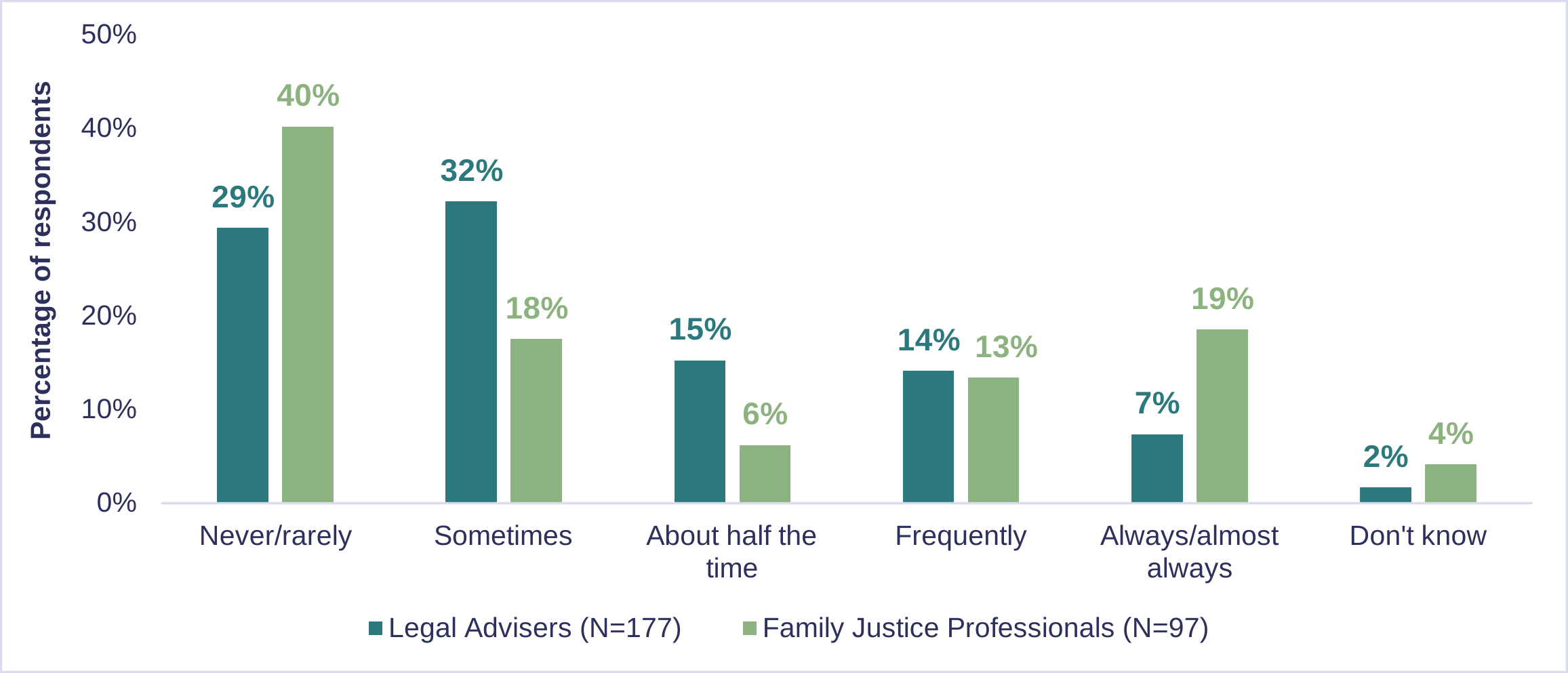
Figure 1. Frequency of children’s views and preferences sought in family law cases by profession, 2025 – Text version
This image is a grouped vertical bar chart entitled “Frequency of children’s views and preferences sought in family law cases by profession, 2025.” It compares responses from two groups: Legal Advisers (N=177) and Family Justice Professionals (N=97). The vertical axis shows the percentage of respondents from 0% to 50%, and the horizontal axis shows the frequency with which children’s views and preferences are sought in family law cases.
Children’s views are never/rarely sought by
- 29% of legal advisers
- 40% of family justice professionals
Children’s views are sometimes sought by
- 32% of legal advisers
- 18% of family justice professionals
Children’s views are sought about half the time by
- 15% of legal advisers
- 6% of family justice professionals
Children’s views were frequently sought by
- 14% of legal advisers
- 13% of family justice professionals
Childrens views were always/almost always by
- 7% of legal advisers
- 19% of family justice professionals
“Don’t know” was the response provided by
- 2% of legal advisers
- 4% of family justice professionals
Almost two in three legal advisers and half of family justice professionals reported that children’s views and preferences are most usually obtained through evaluative reports.
Legal advisers and family justice professionals were asked to rank the most frequent ways that the views and preferences of children are usually obtained in family law cases. Almost two in three legal advisers (62%) and one in two family justice professionals (48%) reported that children’s views are frequently obtained through an assessment or evaluative report prepared by a professional assessor.Footnote 5 Most legal advisers also indicated that children’s views are frequently obtained through the parents’ evidence that conveys the children’s views (58%) and the children’s legal representation (51%). The results for legal advisers were similar in 2018, where legal representation for the children (55%) and evaluative reports (51%) were the two most common ways that the children’s views were obtained.Footnote 6 Among family justice professionals, the other two most common ways that children’s views are obtained are through a non-evaluative report prepared by a lawyer, social worker or mental health professional (51%)Footnote 7 and by involving the children in the family dispute resolution processes (39%).Footnote 8
Where the views and preferences of the child were not obtained, most respondents had concerns about the child’s capacity.
Respondents were asked to specify in what situations they do not seek children’s views and preferences. As shown in Figure 2 below, most legal advisers and family justice professionals reported that they do not obtain the children’s views when there are concerns about the child’s capacity (80% and 62%, respectively)Footnote 9 and concerns about harming the child by involving them in the conflict (60% and 51%). In 2018, surveyed legal advisers also indicated that these two concerns were the most common reasons for not including the children’s views.Footnote 10 Legal advisers were significantly more likely than family justice professionals to report that children’s views are not sought when there are no disputes between the parties (70% and 40%, respectively) and when the cost is prohibitive to the client (63% and 33%).Footnote 11 The least common reason for not including children’s preferences in family law cases was a lack of time (22% of legal advisers and 9% of family justice professionals).
Figure 2. Reasons why children’s views and preferences are not obtained in family law cases by profession, 2025
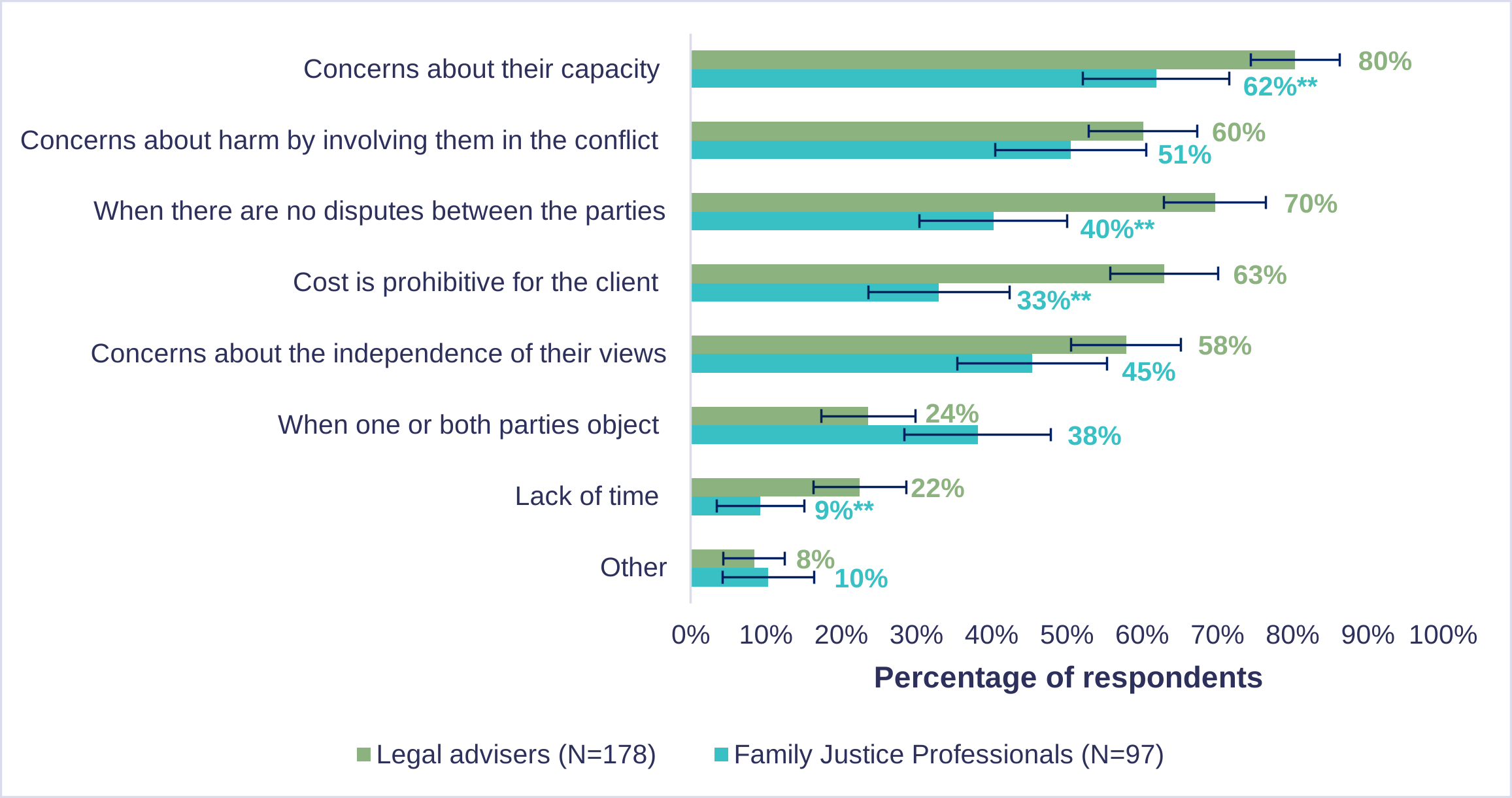
Figure 2. Reasons why children’s views and preferences are not obtained in family law cases by profession, 2025 – Text version
This image is a horizontal bar chart titled “Reasons why children’s views and preferences are not obtained in family law cases by profession, 2025.” The horizontal axis shows the percentage of respondents from 0% to 100%. The chart compares responses from Legal Advisers (N=178) and Family Justice Professionals (N=97). Error bars are shown for each percentage estimate.
Concerns about their capacity
- Legal Advisers: 80%
- Family Justice Professionals: 62%Figure 2 footnote ** (significantly different from legal advisers)
Concerns about harm by involving them in the conflict
- Legal Advisers: 60%
- Family Justice Professionals: 51%
When there are no disputes between the parties
- Legal Advisers: 70%
- Family Justice Professionals: 40%Figure 2 footnote ** (significantly different from legal advisers)
Cost is prohibitive for the client
- Legal Advisers: 63%
- Family Justice Professionals: 33%Figure 2 footnote ** (significantly different from legal advisers)
Concerns about the independence of their views
- Legal Advisers: 58%
- Family Justice Professionals: 45%
When one or both parties object
- Legal Advisers: 24%
- Family Justice Professionals: 38%
Lack of time
- Legal Advisers: 22%
- Family Justice Professionals: 9%Figure 2 footnote ** (significantly different from legal advisers)
Other reasons
- Legal Advisers: 8%
- Family Justice Professionals: 10%
Almost one in four legal advisers have seen a change in the way courts address the best interests of the child post-Divorce Act amendments.
Respondents were asked several questions about the impacts of the 2021 Divorce Act amendments related to the best interests of the child. Since the Divorce Act amendments came into force, almost a quarter (22%) of legal advisers have noticed a change in the way the courts address the best interests of the child in their cases. In contrast, legal advisers were significantly more likely to report not having seen changes in how courts address the best interests of the child (57%).Footnote 12
Of the legal advisers who noticed a change (n=38), the two most common responses were that there is more consideration of family violence and its impact on the best interests of the child (37%) and that judges are more frequently exploring and discussing the best interests of the child (26%). Family justice professionals were asked a comparable question about what changes they have encountered since the amendments came into force (n=58). One in three (33%) reported also seeing more consideration of family violence and its impact on the best interest of the child. An additional 19% reported that the recent terminology changes in the Divorce Act (i.e., moving from custody and access to parenting time and decision-making responsibility) have helped to reduce conflict and make parties more focused on the impact of the divorce or separation on their children.
Three in ten legal advisers agreed that more arrangements and decisions reflect the best interests of the child following the amendments.
Legal advisers were also asked whether the new best interests of the child provisions have resulted in more client arrangements and decisions reflecting the best interests of the child. Surveyed legal advisers were significantly more likely to neither agree nor disagree (45%) than agree (22%) or disagree (19%) that their clients’ arrangements and decisions were reflecting the best interests of the child more frequently post-amendments.Footnote 13 Since these results are based on a small sample of legal advisers, it is important to remember not to generalize them as representing the experiences of all legal advisers in Canada.
Over half of respondents reported that the new best interests of the child provisions provided them with greater guidance when working with clients on parenting arrangements and responsibilities.
Legal advisers and family justice professionals were asked whether the new provisions provided greater guidance to them when advising or working with clients on parenting arrangements and responsibilities. As shown in Figure 3, about half (54%) of legal advisers and two in three (68%) family justice professionals agreedFootnote 14 with the statement. Less than two in five respondents (16% of legal advisers and 8% of family justice professionals) disagreed that the provisions gave them greater guidance when working on parenting arrangements and responsibilities with their clients.
Figure 3. The extent to which the Divorce Act amendments related to the best interests of the child provide greater guidance, by profession, 2025
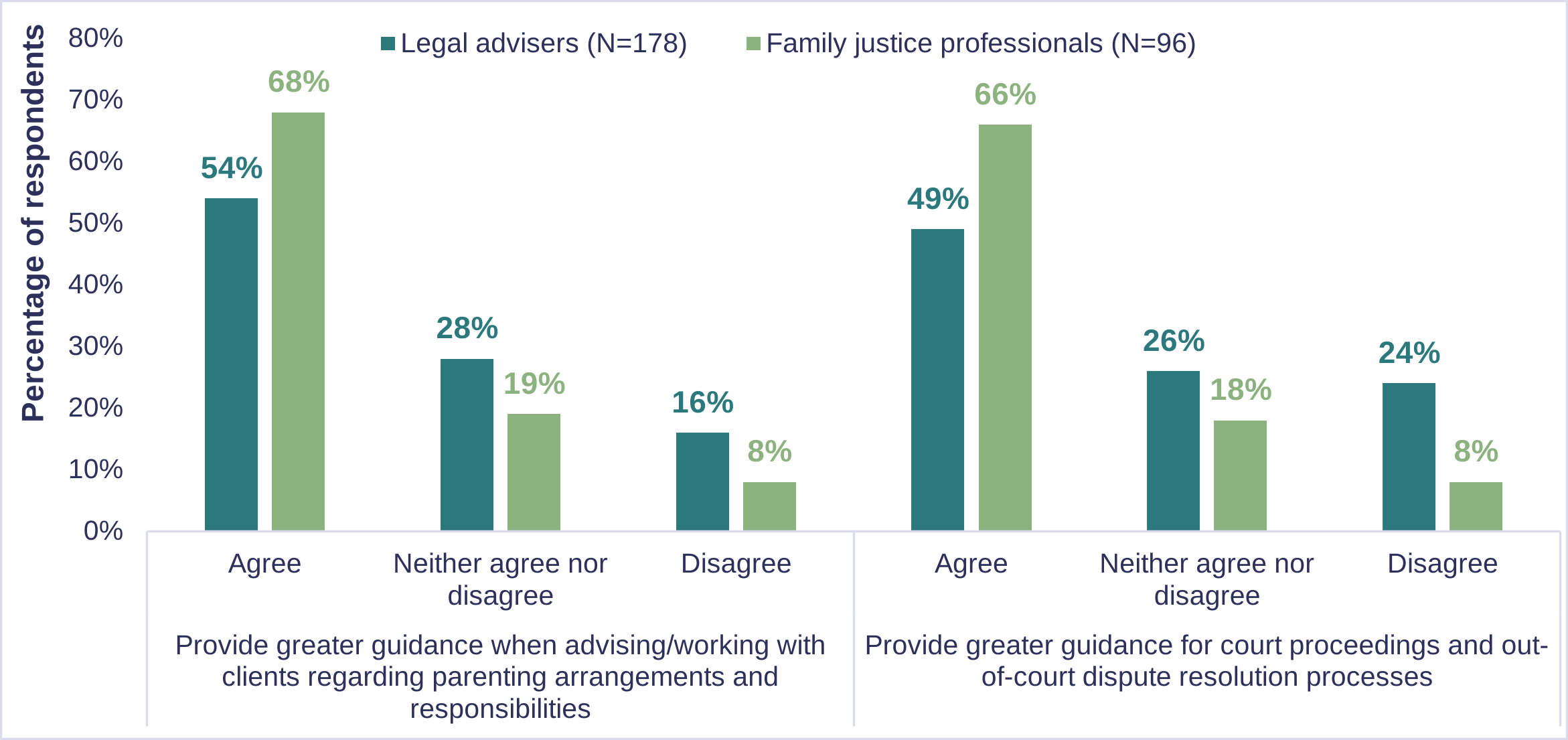
Figure 3. The extent to which the Divorce Act amendments related to the best interests of the child provide greater guidance, by profession, 2025 – Text version
This image is a clustered bar chart titled “The extent to which the Divorce Act amendments related to the best interests of the child provide greater guidance, by profession, 2025.” The vertical axis shows the percentage of respondents, ranging from 0% to 80%. The chart compares responses from Legal Advisers (N=178) and Family Justice Professionals (N=96) across two areas of guidance. Response categories are Agree, Neither agree nor disagree, and Disagree.
Provide greater guidance when advising or working with clients regarding parenting arrangements and responsibilities
- Legal Advisers:
- 54% agree
- 28% neither agree nor disagree
- 16% disagree
- Family Justice Professionals:
- 68% agree
- 19% neither agree nor disagree
- 8% disagree
Provide greater guidance for court proceedings and out-of-court dispute resolution processes
- Legal Advisers:
- 49% agree
- 26% neither agree nor disagree
- 24% disagree
- Family Justice Professionals:
- 66% agree
- 18% neither agree nor disagree
- 8% disagree
Half of legal advisers and two-thirds of family justice professionals shared that the new provisions gave them greater guidance for court proceedings and for out-of-court dispute resolution processes.
Almost one in two (49%) legal advisers and two in three (66%) family justice professionals agreed that the new best interests of the child provisions provided them with greater guidance for court proceedings and out-of-court dispute resolution processes (see Figure 3 above). Less than a quarter (24%) of legal advisers and less than one in ten (8%) family justice professionals disagreed with the statement. The remaining respondents neither agreed nor disagreed that the new provisions provided them with greater guidance (26% of legal advisers and 18% of family justice professionals).
Most family justice professionals reported that the new best interests of the child provisions provide clarity on what information to obtain from clients and make the decision-making process more child centric.
Family justice professionals were significantly more likely to agree (35%) and strongly agree (31%) than to disagree (4%) or strongly disagree (4%) that the Divorce Act amendments related to the best interests of the child provide clarity regarding the relevant information to obtain from their clients to inform the alternative dispute resolution process and/or the court’s decision-making process.Footnote 15 Similarly, a significantly higher proportion of family justice professionals agreed (38%) and strongly agreed (38%) that the best interests of the child amendments have made the decision-making process more child centric and child focused compared to those who disagreed (4%) and strongly disagreed with the statement (2%).Footnote 16
Seven in ten family justice professionals agreed that the amendments and PLEI materials related to the best interests of the child provisions have reduced conflict among their clients, and three in ten legal advisers held the same view.
Respondents were asked whether the Divorce Act amendments and public legal education and information (PLEI) materials that clarified and increased awareness of the best interests of the child provisions helped to reduce conflict for their clients. Overall, most family justice professionals agreed that these amendments (70%) and PLEI materials (63%) reduced conflict among their clients. Among legal advisers, similar proportions agreed or disagreed that the amendments (30% and 31%) and the PLEI materials (30% and 29%) that provide greater clarification and awareness of the best interests of the child provisions reduced conflict for their clients.
More than one in three legal advisers and two in three family justice professionals indicated that the amendments and materials that put the focus on parenting responsibility reduced conflict among their clients.
Over a third (37%) of legal advisers agreed that the amendments and PLEI materials that put the focus on parenting responsibility, for example by changing terminology to parenting time and decision-making responsibility, have helped reduce conflict for their clients. Less than one in three disagreed (30%) and neither agreed nor disagreed (30%) that the amendments and PLEI materials have reduced conflict for their clients.
Among family justice professionals, almost seven in ten (69%) agreed that the amendments and PLEI materials that put the focus on parenting responsibility contributed to a decrease in conflict for the families they work with. Smaller proportions disagreed (10%) and neither agreed nor disagreed (16%) with the statement.
Over one-third of legal advisers and seven in ten family justice professionals reported that the amendments that specified the duties of the parties to a proceeding decreased conflict among their clients.
Over seven in ten (71%) family justice professionals agreed that the amendments that specified the duties of the parties to a proceeding, for example acting in the best interests of the children and protecting the children from conflict, helped to reduce conflict among the families they work with. Less than one in ten (9%) disagreed that these amendments have contributed to a decrease in conflict. For legal advisers, similar proportions agreed (35%), neither agreed nor disagreed (29%) and disagreed (33%) that the amendments that specified the duties of the parties to a proceeding reduced conflict for the clients.
Conclusion
This report presented findings from the 2025 National Family Law Survey on children’s best interests and their views and preferences. Results on the children’s views and preferences remained largely consistent with findings from the 2018 survey. Children’s views and preferences continued to be infrequently sought in family law cases, most commonly due to concerns about the child’s capacity and about causing them harm by involving them in the conflict. Evaluative reports prepared by a professional assessor also continued to be one of the most common ways that children’s views and preferences are obtained.
Most of the results presented in this report focused on the impact of the Divorce Act amendments related to the best interests of the child provisions. Overall, the survey findings showed that these new provisions gave most legal advisers and family justice professionals greater guidance for court proceedings, out-of-court dispute resolution processes, and when working with clients on parenting arrangements and responsibilities. Family justice professionals reported positive impacts from the amendments, with most sharing that they provided clarity on what information to obtain from clients and also made the decision-making process more child centric. Most family justice professionals also reported a decrease in conflict among their clients because of the best interests of the child amendments and PLEI materials, the amendments and PLEI materials that put a focus on parenting responsibility, and the amendments that specified the duties of the parties to a proceeding.
Among legal advisers, the experiences with the best interests of the child amendments were more mixed, particularly on whether the amendments and PLEI materials on the best interests of the child, parenting responsibility and the duties of the parties to a proceeding helped to reduce conflict. Similarly, most legal advisers were unable to agree or disagree that more of their clients’ arrangements and decisions reflect the best interests of the child post-Divorce Act amendments. Over half of legal advisers also did not report noticing a change in how the courts consider the best interests of the child in decisions about parenting. When interpreting these results, it is important to remember that legal advisers were familiar with the best interests of the child considerations prior to the amendments. This is because federal and provincial/territorial legislation included the best interests of the child as the test for all parenting matters before the 2021 amendmentsFootnote 17 and the courts were already considering the best interests of the child in decisions about parenting.Footnote 18
The difference in the responses from legal advisers and family justice professionals may be, in part, because family justice professionals, such as mediators, may have been more focused on negotiations between the two parents without consideration or involvement of the children before the amendments came into force,Footnote 19 thereby contributing to the higher proportion of these professionals’ reporting changes in the survey. While the survey was circulated four years after the Divorce Act amendments came into force, it can take time to see the impacts of legislative changes. As such, it will be important to keep monitoring the effects of these new provisions to examine whether more changes are observed over time.
While some of the results point towards positive changes, such as the best interests of the child provisions providing greater guidance to legal advisers and family justice professionals during proceedings, it is important to remember that these findings cannot be generalized as representing the experiences of all family law professionals in Canada, as only a small proportion of legal advisers (n=178) and family justice professionals (n=97) answered the survey. The 2025 National Family Law Survey also marked the first time that the experiences of family justice professionals were included in the survey cycle. Continued data collection among these professionals will help to monitor trends over time.
For more information, please contact:
Rsd-drs@justice.gc.ca
Children’s views and best interests: Results from the 2025 National Family Law Survey of Legal Advisers and Family Justice Professionals
J4-209/2026E-PDF
978-1-100-00841-7
- Date modified: