
Relocation amendments: Results from the 2025 National Family Law Survey of Legal Advisers and Family Justice Professionals
October 2026
Under the Divorce Act, relocation refers to a change in residence that is likely to have a significant impact on a child’s relationship with someone who has, or is applying for, parenting time, decision-making responsibility or contact. A relocation can occur when a child moves or when a person with parenting time or decision-making responsibility moves.Footnote 1
This JustFacts summarizes results from the relocation amendment questions in the 2025 National Family Law Survey. In total, 178 legal advisers and 97 other family justice professionalsFootnote 2 answered the survey. For more information about the survey and its methodology, see Children’s Views and Best Interests: Results from the 2025 National Family Law Survey of Legal Advisers and Family Justice Professionals.
More than two in three respondents agreed that the relocation amendments provide useful guidance to them and their clients when discussing relocation; very few disagreed.
When the Divorce Act amendments came into force in 2021, they introduced new provisions related to relocation. These provisions established rules for relocating with a child, such as a notice requirement, which focus on the best interests of the child.Footnote 3 As shown in Figure 1 below, legal advisers (78%) and family justice professionals (68%) were significantly more likely to agreeFootnote 4 than disagree (7% and 8%, respectively) that the Divorce Act amendments related to relocation provide useful guidance to them and their clients when discussing relocation.Footnote 5 The remaining respondents (15% of legal advisers and 19% of family justice professionals) neither agreed nor disagreed about the guidance that these relocation amendments provide to them and their clients.
Figure 1. Percentage of legal advisers and family justice professionals by their level of agreement or disagreement that the 2021 relocation amendments provide useful guidance, 2025
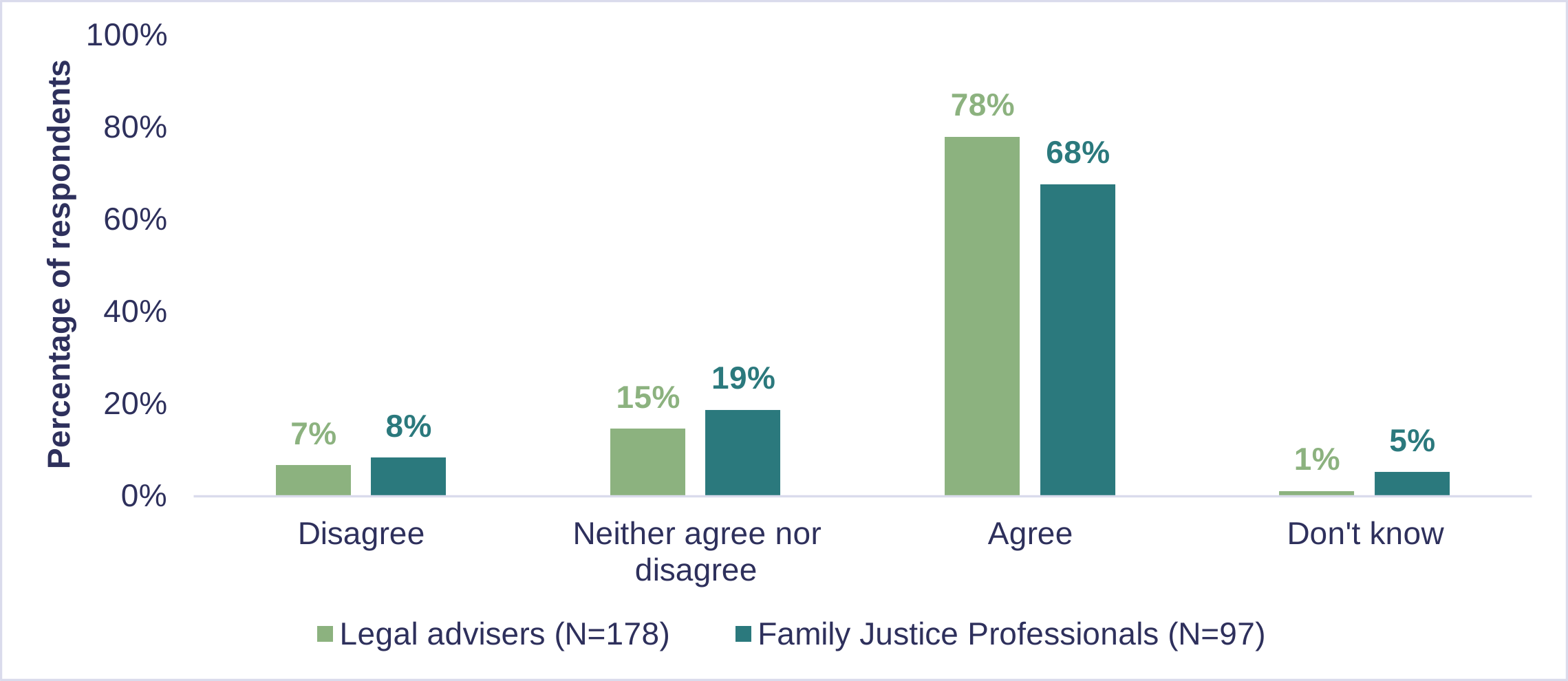
Figure 1. Percentage of legal advisers and family justice professionals by their level of agreement or disagreement that the 2021 relocation amendments provide useful guidance, 2025 – Text version
This image is a grouped vertical bar chart entitled “Percentage of legal advisers and family justice professionals by their level of agreement or disagreement that the 2021 relocation amendments provide useful guidance, 2025.” It compares responses from two groups: Legal Advisers (N=178) and Family Justice Professionals (N=97). The vertical axis shows the percentage of respondents from 0% to 100%, and the horizontal axis shows respondents’ level of agreement that the 2021 relocation amendments provide useful guidance.
Percentage who disagree that the 2021 relocation amendments provide useful guidance
- 7% of legal advisers
- 8% of family justice professionals
Percentage who neither agree nor disagree that the 2021 relocation amendments provide useful guidance
- 15% of legal advisers
- 19% of family justice professionals
Percentage who agree that the 2021 relocation amendments provide useful guidance
- 78% of legal advisers
- 68% of family justice professionals
Percentage who don’t know if the 2021 relocation amendments provide useful guidance
- 1% of legal advisers
- 5% of family justice professionals
More than one in three respondents agreed that the relocation amendments help to settle relocation cases out of court.
When asked whether the Divorce Act amendments related to relocation help settle clients’ relocation cases outside of court, over one-third of respondents (37% of legal advisers and 34% of family justice professionals) agreed with the statement. As shown in Figure 2 below, a similar proportion of respondents (33% and 34%, respectively) reported neither agreeing nor disagreeing on whether the amendments have helped to settle these cases outside of court. The remaining respondents (28% and 12%, respectively) disagreed with the statement.
The lower levels of agreement with this survey question may be, in part, due to the proportion of relocation cases that are difficult to settle out of court. In fact, a previous study found that relocation cases tend to be more difficult to settle without a trial than most other family law cases.Footnote 6
Figure 2. Percentage of legal advisers and family justice professionals by their level of agreement or disagreement that the 2021 amendments help settle relocation issues out of court, 2025
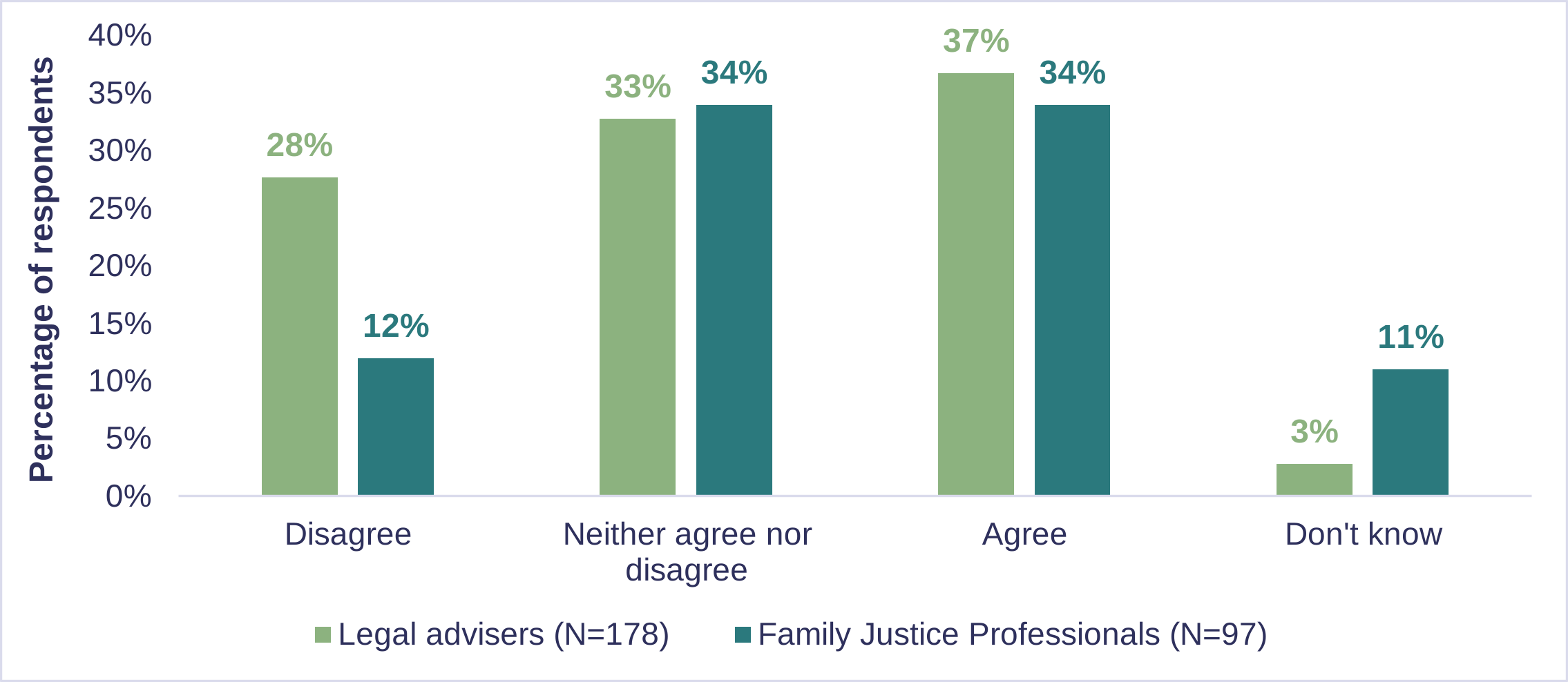
Figure 2. Percentage of legal advisers and family justice professionals by their level of agreement or disagreement that the 2021 amendments help settle relocation issues out of court, 2025 – Text version
This image is a grouped vertical bar chart entitled “Percentage of legal advisers and family justice professionals by their level of agreement or disagreement that the 2021 amendments help settle relocation issues out of court, 2025.” It compares responses from two groups: Legal Advisers (N=178) and Family Justice Professionals (N=97). The vertical axis shows the percentage of respondents from 0% to 40%, and the horizontal axis shows respondents’ level of agreement that the 2021 amendments help settle relocation issues out of court.
Percentage who disagree that the 2021 amendments help settle relocation issues out of court
- 28% of legal advisers
- 12% of family justice professionals
Percentage who neither agree nor disagree that the 2021 amendments help settle relocation issues out of court
- 33% of legal advisers
- 34% of family justice professionals
Percentage who agree that the 2021 amendments help settle relocation issues out of court
- 37% of legal advisers
- 34% of family justice professionals
Percentage who don’t know if the 2021 amendments help settle relocation issues out of court
- 3% of legal advisers
- 11% of family justice professionals
Four in five legal advisers agreed that the relocation amendments help explain which parent has the burden of proving that the relocation is in the best interests of the child.
The majority of legal advisers (82%) agreed that the Divorce Act relocation amendments help them to explain to their clients which parent has the burden of proving that the relocation is in the best interest of the child. They were also significantly more likely to agree with this statement compared to the proportion that disagreed (7%).Footnote 7 The remaining 10% neither agreed nor disagreed that the amendments help them explain the burden of proving the relocation is in the best interests of the child to their clients.
More than half of legal advisers indicated that they use the new prescribed forms for relocation.
Following the 2021 Divorce Act amendments, the Department of Justice Canada introduced forms indicating to parents the information they must provide a court when they seek a relocation. Legal advisers (59%) were significantly more likely than not (7%) to report using these new prescribed forms for relocation.Footnote 8 A further 10% of legal advisers reported that they were unaware of the prescribed forms.Footnote 9
Relocation amendments: Results from the 2025 National Family Law Survey of Legal Advisers and Family Justice Professionals
J4-210/2026E-PDF
978-1-100-00843-1
- Date modified: