
Awareness of Justice Canada products: Results from the 2025 National Family Law Survey of Legal Advisers and Family Justice Professionals
October 2026
Introduction
The Department of Justice Canada has conducted biennial surveys on the experiences and practices of Canadian family legal practitioners since 1998.Footnote 1 These surveys collect information about the characteristics of family law cases and various family law issues. The 2025 National Family Law Survey focused specifically on the experiences of practitioners with some of the Divorce Act amendments that came into force on March 1, 2021, such as the best interests of the child, family violence and relocation.
This report presents the results on respondents’ awareness of Justice Canada products, including public legal education and information (PLEI) materials, training courses and research reports, from the 2025 National Family Law Survey. For specific information on the awareness and use of Justice Canada’s family violence related reports, see: Family violence: Results from the 2025 National Family Law Survey of Legal Advisers and Family Justice.
Methodology
Historically, the National Family Law Surveys were administered at the National Family Law Program Conference. Since 2018, the questionnaire has been distributed as an online survey to increase the number of responses. In 2025, the distribution of the National Family Law Survey was expanded for the first time to include other family justice professionals, such as mediators, arbitrators and parenting coordinators.
The data collection period for the 2025 National Family Law Survey was from January 13 to March 11, 2025. Three versions of the survey were circulated: one for legal advisers;Footnote 2 one for family justice professionals; and one for judges. The surveys were similar; however, certain questions were only asked in one of the three surveys and at times, the questions were altered to reflect the distinctions between the professions.
The survey was distributed to legal advisers through the Federation of Law Societies of Canada and the Canadian Bar Association’s Family Law Section. Family justice professionals were invited to participate through Family Mediation Canada and nine provincial mediation and alternative dispute resolution organizations. Some practitioners and organizations were contacted based on the recommendations of members of the Coordinating Committee of Senior Officials – Family Justice, a federal-provincial-territorial committee. Efforts were also made to distribute the survey through judicial organizations to judges who hear family law cases. In total, 178 legal advisers, 97 family justice professionals and 6 judges answered the survey. Since the response rate from judges was low, the experiences of judges will not be included in this report. Where comparisons are made, only differences that are statistically significant at the 95% confidence level are presented in this report.
Limitations
The Department of Justice Canada used a snowball sampling approachFootnote 3 to distribute the survey to legal advisers and family justice professionals across Canada. The demographic information collected from respondents as well as the low response rate show that the sample is not representative of those working in the field. For example, a high proportion of responses came from the Prairies (56% of legal adviser respondents and 52% of family justice professional respondents), as well as from professionals who always or almost always take on family law matters (74% of legal advisers and 75% of family justice professionals) and have been working in the area for at least 10 years (75% of legal advisers and 62% of family justice professionals). As such, the results in this report should not be generalized as representing the experiences of all legal advisers and family justice professionals.
Respondents were able to select more than one of the following response options: being aware, having read or taken, having used in their work, having recommended to others, and none of the above. While the responses were not mutually exclusive, some of these response options overlap. For example, if a respondent were to have taken a training course, then they would also be aware of that course. However, when analyzing the survey responses, some respondents did not select being aware of a product when they had read the product or used the information in their work. As such, the data may not be reliable and the percentages in this report should be interpreted with caution. To address this issue, the overall awareness of respondents with each type of product was calculated, meaning if a respondent had selected at least one of the awareness-related response options (i.e., being aware, having read or taken, having used in their work, having recommended to others), then they were marked as being overall aware of the Justice Canada product.
Findings
More than half of respondents were aware of the PLEI materials that Justice Canada developed and updated regarding the 2021 Divorce Act amendments.
Three in five (60%) legal advisers and two in three (66%) family justice professionals indicated that they were aware of at least one of the PLEI materials developed or updated by Justice Canada regarding the 2021 Divorce Act amendments. These PLEI materials include documents that provide an explanation of the intent of the amendments, such as the Divorce Act Changes Explained and Legislative Background documents, and fact sheets, such as Parenting Arrangements After Separation and Divorce and Duties for Parents and Others. The PLEI materials also include updated flagship publications and tools, including Making plans: A guide to parenting arrangements after separation or divorce, The Federal Child Support Guidelines: Step-by-Step and Parenting Plan Checklist: Information to help you get started.
As shown in Figure 1 below, half (50%) of legal advisers and almost two in three (63%) family justice professionals had read at least one PLEI publication. Over half (59%) of family justice professionals had also used at least one of the materials in their work and almost one in two (47%) had recommended the materials to others. Among legal advisers, over two in five (44%) had used at least one of the materials in their work and one in three (34%) had recommended the materials to others. In total, family justice professionals (91%) were significantly more likely than legal advisers (74%) to report being overall aware of the PLEI materials, meaning that they selected being aware, having read, having used and/or having recommended at least one of these materials.Footnote 4 In contrast, only about one in four (26%) legal advisers and one in ten (9%) family justice professionals were unaware of these PLEI materials.
Figure 1. Percentage of respondents by their awareness and use of the Justice Canada PLEI materials developed or updated regarding the 2021 Divorce Act amendments, 2025
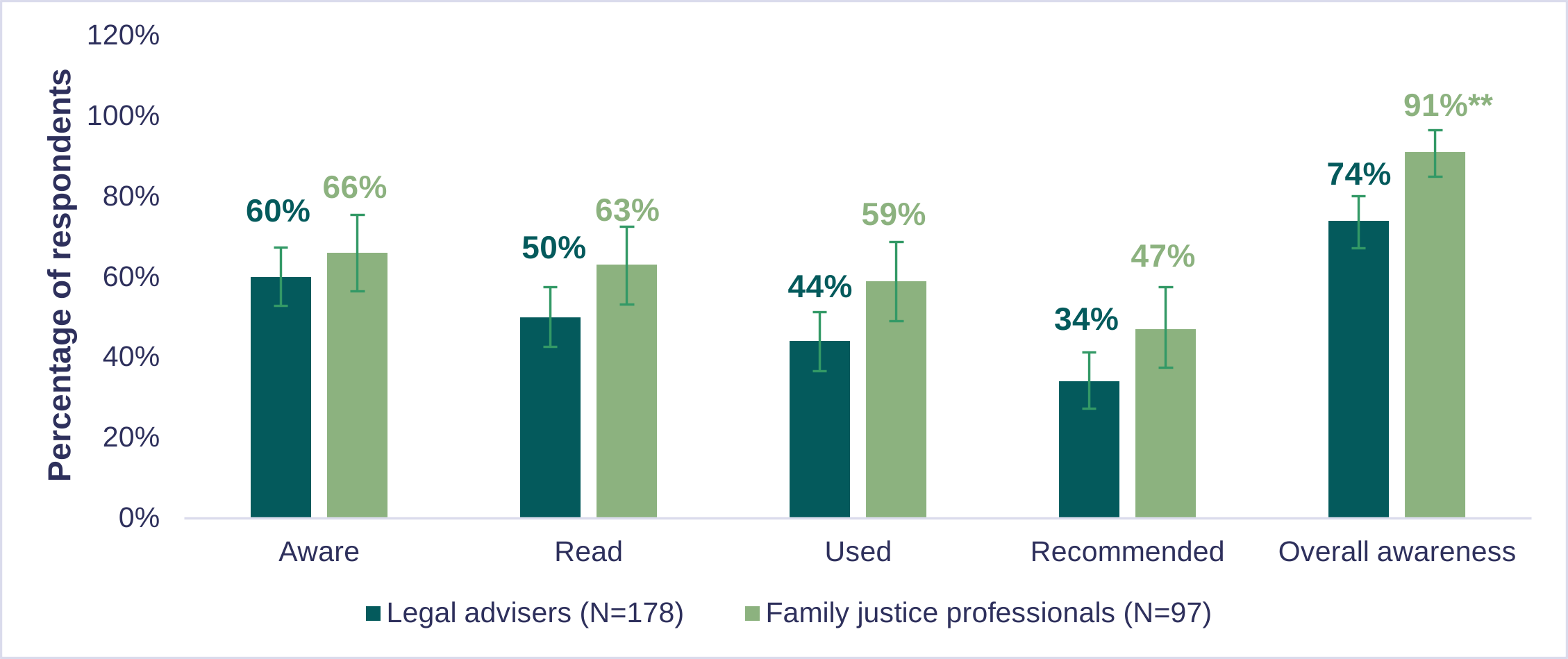
Figure 1. Percentage of respondents by their awareness and use of the Justice Canada PLEI materials developed or updated regarding the 2021 Divorce Act amendments, 2025 – Text version
This image is a grouped vertical bar chart entitled “Percentage of respondents by their awareness and use of the Justice Canada PLEI materials developed or updated regarding the 2021 Divorce Act amendments, 2025.” It compares responses from two groups: Legal Advisers (N=178) and Family Justice Professionals (N=97). The vertical axis shows the percentage of respondents from 0% to 120%, and the horizontal axis shows different levels of awareness and use of the Justice Canada public legal education and information (PLEI) materials. Each bar includes error bars indicating confidence intervals on the reported percentages.
Percentage of respondents aware of the PLEI materials
- 60% of legal advisers
- 66% of family justice professionals
Percentage of respondents who have read the PLEI materials
- 50% of legal advisers
- 63% of family justice professionals
Percentage of respondents who have used the PLEI materials
- 44% of legal advisers
- 59% of family justice professionals
Percentage of respondents who have recommended the PLEI materials
- 34% of legal advisers
- 47% of family justice professionals
Percentage of respondents who are overall aware of the PLEI materials (i.e., are aware, have read, have used and/or have recommended)
- 74% of legal advisers
- 91%Figure 1 footnote ** of family justice professionals (significantly different from legal advisers)
Almost two in three respondents reported being aware of, having taken, having used and/or having recommended at least one of Justice Canada’s family law training courses.
Justice Canada developed the following training courses on the 2021 Divorce Act amendments: Introduction to federal family law amendments, Family violence and family law for legal advisers, Family dispute resolution and duties for parties to a proceeding and legal advisers under the new Divorce Act, Relocation under the Divorce Act, Inter-jurisdictional support proceedings under the Divorce Act, and Parenting under the new Divorce Act.
Respondents were significantly more likely to report being aware of (49% of legal advisers and 44% of family justice professionals) and having used the material from at least one of the family law training courses developed by Justice Canada (31% and 38%, respectively) as opposed to having recommended these courses to others (19% and 15%).Footnote 5 As shown in Figure 2 below, over three in ten respondents also indicated that they had taken at least one of the training courses (39% of legal advisers and 31% of family justice professionals). In total, similar proportions of respondents, specifically two in three legal advisers (63%) and family justice professionals (62%), indicated being overall aware of the family law training courses by selecting being aware, having taken, having used and/or having recommended at least one of the courses to others. Over one in three respondents reported that they were unaware of the training courses (37% of legal advisers and 38% of family justice professionals).
Figure 2. Percentage of legal advisers and family justice professionals by their awareness and use of the Justice Canada training courses developed regarding the 2021 Divorce Act amendments, 2025
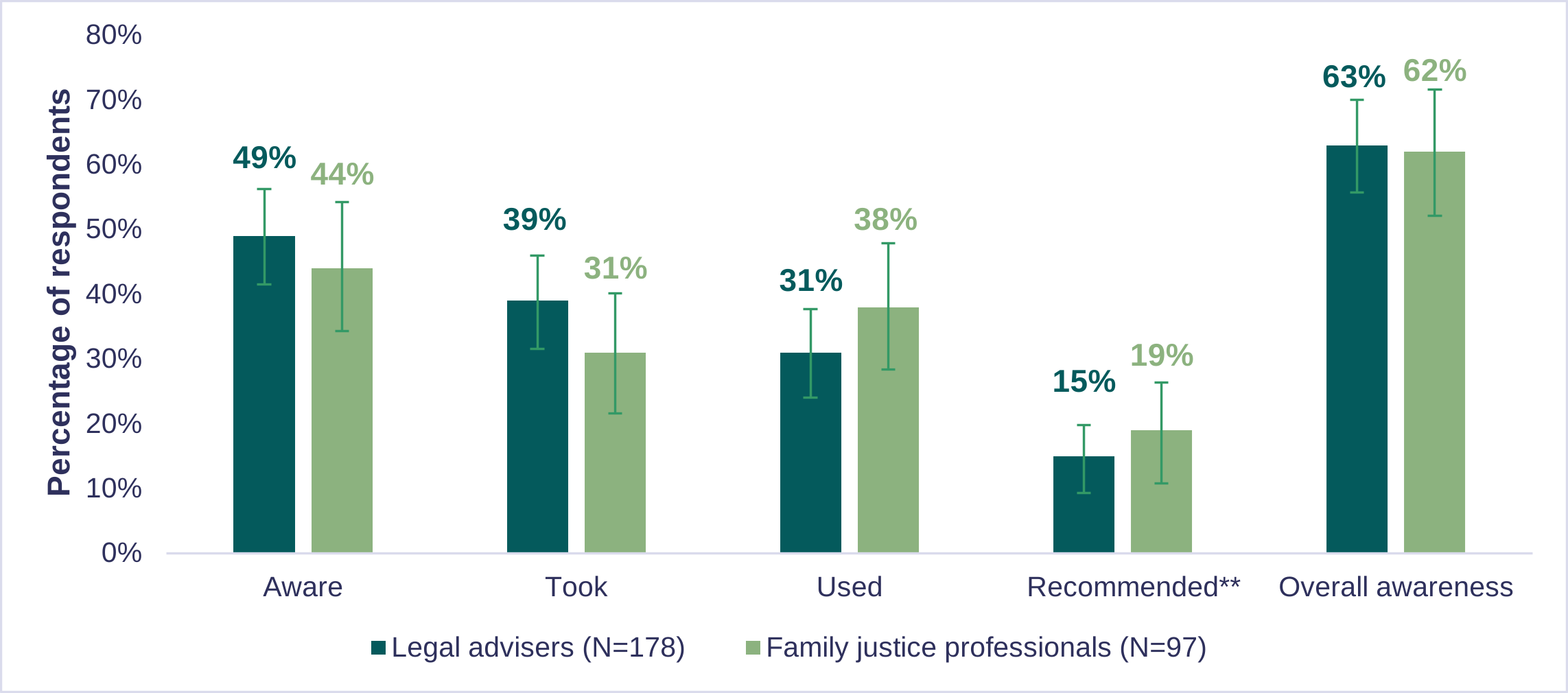
Figure 2. Percentage of legal advisers and family justice professionals by their awareness and use of the Justice Canada training courses developed regarding the 2021 Divorce Act amendments, 2025 – Text version
This image is a grouped vertical bar chart entitled “Percentage of legal advisers and family justice professionals by their awareness and use of the Justice Canada training courses developed regarding the 2021 Divorce Act amendments, 2025.” It compares responses from two groups: Legal Advisers (N=178) and Family Justice Professionals (N=97). The vertical axis shows the percentage of respondents from 0% to 80%, and the horizontal axis shows different levels of awareness and use of the Justice Canada training courses. Each bar includes error bars indicating confidence intervals on the reported percentages.
Percentage of respondents aware of the training courses
- 49% of legal advisers
- 44% of family justice professionals
Percentage of respondents who took the training courses
- 39% of legal advisers
- 31% of family justice professionals
Percentage of respondents who used the training courses
- 31% of legal advisers
- 38% of family justice professionals
Percentage of respondents who recommendedFigure 2 footnote ** the training courses (significantly different from being aware and having used the material from at least one training course)
- 15% of legal advisers
- 19% of family justice professionals
Percentage of respondents who are overall aware of the training courses (i.e., are aware, have taken, have used and/or have recommended)
- 63% of legal advisers
- 62% of family justice professionals
About two in five respondents were aware of at least one Justice Canada research report published since the 2021 Divorce Act amendments.
Justice Canada regularly publishes family law related research reports on their website.Footnote 6 Following the 2021 Divorce Act amendments, the department published several reports, including Perceptions of and confidence in the Canadian family justice system: Key findings from the 2022 National Justice Survey, Making appropriate parenting arrangements in family violence cases: Applying the literature to identify promising practices, 2023, Separated and Divorced Parents Experiences with Child Support and Related Issues, Experiences of Indigenous families in the family justice system: A literature review and perspectives from legal and frontline family justice professionals, and Estimating Expenditures on Children by Families in Canada, 2014 to 2017 (report).
Respondents’ awareness of Justice Canada research reports was lower than their awareness of the training courses and PLEI materials. In total, almost half (45%) of legal advisers and 53% of family justice professionals selected being overall aware of the research reports, meaning that they were aware, had read, had used and/or had recommended at least one of the reports to others. In contrast, just over half (55%) of legal advisers and almost half (47%) of family justice professionals were unaware of Justice Canada’s research reports.
As shown in Figure 3 below, two in five respondents were aware of at least one research report. Fewer respondents reported having read at least one report (22% of legal advisers and 31% of family justice professionals), having used the information from one of these reports in their work (13% and 24%) or having recommended the reports to others (5% and 13%).
Figure 3. Percentage of legal advisers and family justice professionals by their awareness and use of Justice Canada’s research reports, 2025
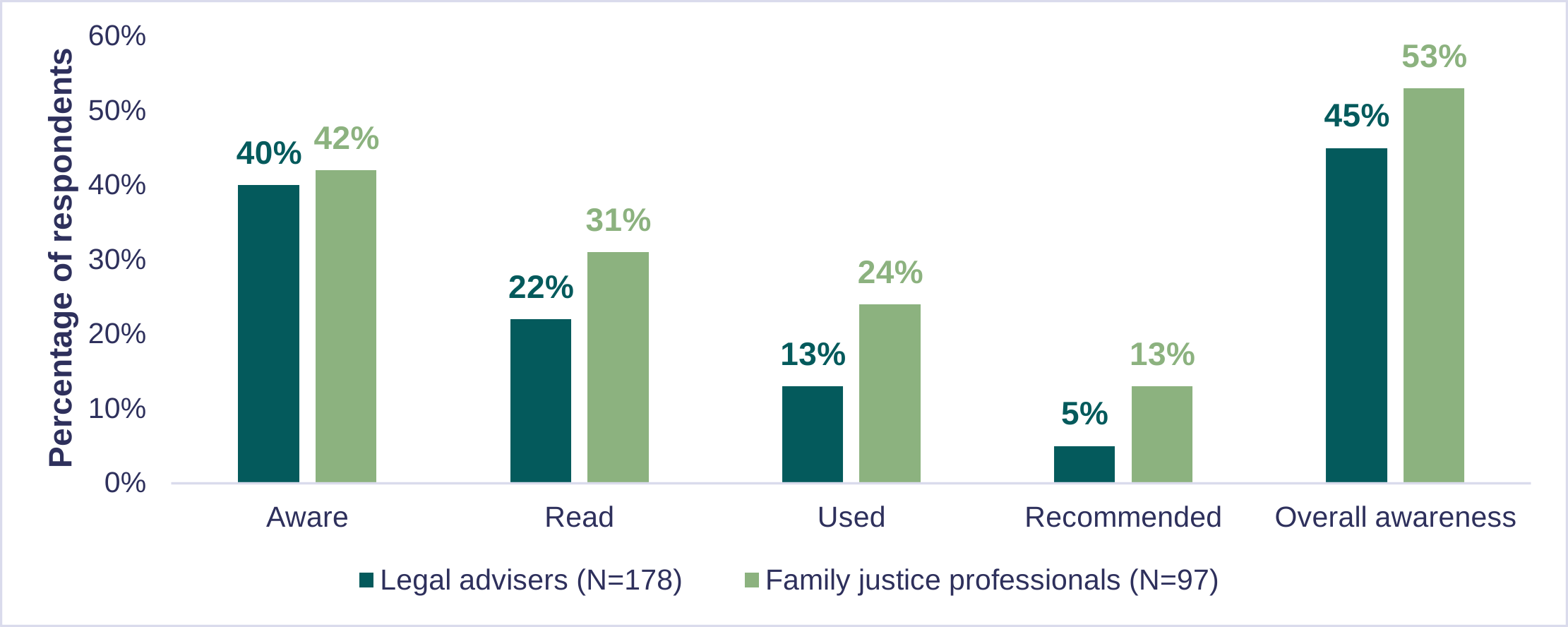
Figure 3. Percentage of legal advisers and family justice professionals by their awareness and use of Justice Canada’s research reports, 2025 – Text version
This image is a grouped vertical bar chart entitled “Percentage of legal advisers and family justice professionals by their awareness and use of Justice Canada’s research reports, 2025.” It compares responses from two groups: Legal Advisers (N=178) and Family Justice Professionals (N=97). The vertical axis shows the percentage of respondents from 0% to 60%, and the horizontal axis shows different levels of awareness and use of Justice Canada’s research reports.
Percentage of respondants aware of the research reports
- 40% of legal advisers
- 42% of family justice professionals
Percentage of respondants who have read the research reports
- 22% of legal advisers
- 31% of family justice professionals
Percentage of respondants who have used the research reports
- 13% of legal advisers
- 24% of family justice professionals
Percentage of respondants who have recommended the research reports
- 5% of legal advisers
- 13% of family justice professionals
Percentage of respondants who are overall aware of the research reports (i.e., are aware, have taken, have used and/or have recommended)
- 45% of legal advisers
- 53% of family justice professionals
Conclusion
This report summarizes the results of the 2025 National Family Law Survey on legal professionals’ awareness of Justice Canada products developed and/or updated regarding the 2021 Divorce Act amendments. This survey marks the first time that legal professionals were asked about their awareness and use of specific Justice Canada products through a national survey. These findings help Justice Canada gain a better understanding of what products legal professionals are aware of, what they use for their work, and what further distribution efforts may be needed to increase awareness among this audience. In addition, asking these questions in the survey also increased legal professionals’ awareness of the PLEI materials, training courses, and research reports. The survey included a comprehensive list of Justice Canada’s products to help respondents determine whether they were aware of the products, and this list introduced them to Justice Canada’s products if they were not previously aware of them. In fact, several legal advisers and family justice professionals contacted Justice Canada to ask for a copy of the list after completing the survey.
Overall, legal advisers and family justice professionals reported having higher levels of awareness of Justice Canada’s PLEI materials, followed by the training courses and the research reports. Family justice professionals were significantly more likely to report having an overall awareness of at least one of the PLEI materials compared to legal advisers. While higher proportions of family justice professionals indicated that they were aware of, had read, had used and had recommended at least one research report, higher proportions of legal advisers were aware of and had taken at least one of the family law training courses; however, these differences between legal advisers and family justice professionals were not found to be statistically significant. When interpreting these results, it is important to remember that this report is focused on practitioners’ awareness of Justice Canada products and does not account for any other PLEI materials, training courses or research reports that respondents may be aware of and use in their work.
In conclusion, the information on Justice Canada’s products that was obtained from the 2025 National Family Law Survey provides a baseline for future research. When similar questions are asked on the awareness of Justice Canada products in future surveys, it will be possible to examine whether further dissemination and knowledge mobilization efforts are helping to increase awareness of these products among legal professionals.
For more information, please contact:
Rsd-drs@justice.gc.ca
Awareness of Justice Canada products: Results from the 2025 National Family Law Survey of Legal Advisers and Family Justice Professionals
J4-211/2026E-PDF
978-1-100-00848-6
- Date modified: